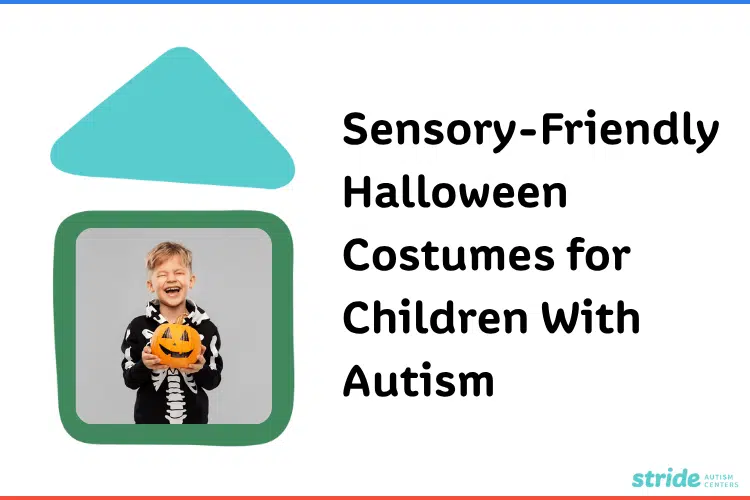
We can remember the itchy, tight, noisy, or smelly Halloween costumes we wore while trick-or-treating in our childhood. While they were uncomfortable for us, they can be overwhelming for kids with autism, often leading to stress, meltdowns, or avoidance. Here’s a comprehensive guide to costume ideas and tips to help your child with autism have a safe, comfortable, and fun Halloween.
Why Sensory-Friendly Costumes Matter for Young Children With Autism
Halloween is typically filled with spooks and scares, and while this can be fun for some, it can be very overwhelming for your child with autism. Sensory issues are common for those on the autism spectrum and can include all five senses: sight, sound, taste, touch, and smell. Finding a comfortable costume is something you can control for your child on a night that is already unpredictable and loud, helping them feel safe, confident, and included.
What to Look for in a Sensory-Friendly Costume
Creativity is the best approach when looking for a sensory-friendly Halloween costume. Here are a few materials and details to keep in mind:
Soft, breathable fabrics: For your child’s Halloween costume, look for soft, breathable, and nonirritating fabrics. Instead of scratchy materials like tulle or polyester, try to find cotton, bamboo, or other natural fibers. It’s also helpful to layer soft, familiar clothing under the costume so any itchy materials never directly touch your child’s skin.
Tagless and seamless designs: Tags and seams on costumes are often itchy and uncomfortable. If the costume has a tag, cut it off and adjust seams as needed for a comfortable fit.
Easy-on, easy-off features: When searching for costumes for children with autism, prioritize hook-and-loop fasteners, such as Velcro, or simple buttons. This way, you can easily remove the bothersome garment if necessary. Layering clothing beneath the costume is also helpful in these situations.
Adjustable and customizable options: Many costumes come with adjustable features, such as an elastic waist or Velcro closures. Consider sizing based on your child’s needs and preferences and adjust accordingly.
Avoid masks: Search for a costume that does not involve a mask that completely covers the face. These coverings can be stifling and may cause your child to panic.
Top Sensory-Friendly Halloween Costume Ideas for Ages 2-6
We’ve compiled a few store-bought or DIY costume ideas to use, but feel free to use your imagination for endless possibilities!
Store-Bought Options and Considerations
If your child wants a store-bought option or an official costume from their favorite franchise, here are a few places to start:
Harry Potter characters: To transform into a student from Hogwarts, all your child needs is a long, flowy robe and an oversized scarf in their house colors. This iconic and comfortable costume is perfect for a magical, sensory-safe Halloween.
Disney characters: Disney characters offer a wide range of costume options, from princesses to villains and more. Better yet, these costumes are often designed for easy on and off, with Velcro or button closures — and they rarely ever need masks!
Animal onesies: A onesie costume is a cute and comfortable alternative. These one-piece costumes come in various animal types, including pandas, cats, dinosaurs, cows, and sharks.
DIY and Adaptable Costumes
If budgeting is a concern or you prefer to do your own thing, making your own costumes can be a fun craft to do with your child. Browse Pinterest to find ideas that use:
Sweatshirts: A thrifted sweatshirt or one you already own makes a great base for a costume. Sew felt triangles on the back of a hoodie to be a dinosaur or yellow and black stripes on a crewneck to be a bumble bee — the opportunities are limitless.
Everyday clothes: Gather clothes you already own or go to a thrift store to piece together an iconic outfit. For example, you can find an old cheerleading outfit and pair it with pom poms or wear a red and white striped shirt to be Waldo from Where’s Waldo.
Themed pajamas: Every year around Halloween, many stores have a wide variety of themed pajamas. Wearing patterns ranging from spiders to witches, your child can trick or treat in comfort.
Preparing Your Child for Halloween: Tips for a Positive Experience
While every child’s needs are different, here are some general tips for making Halloween a positive experience for everyone:
Practice wearing the costume: Suggest that your kiddo wear their costume around the house ahead of Halloween to get used to it. If they complain about any discomfort, you have time to tweak any design flaws.
Experience Halloween decor beforehand: Before Halloween, you can expose your child to the Halloween decor in a department store. This controlled environment can offer a safe space for them to explore and experience everything on their terms.
Create a code word or signal: Create a code word or signal with your child in case they feel overwhelmed and need a break. This way, you can know how they are feeling and respond quickly.
Make your own traditions: If trick-or-treating is too much, stay close to home and make your own fun Halloween traditions. Hand out candy at your house, or go out to visit other loved ones in costume before Halloween.
Help Your Child Thrive Every Day With Stride Autism Centers®
With Stride Autism Centers®, we use applied behavior analysis (ABA) therapy programs to help children with autism function in overstimulating environments for Halloween and beyond. Together, we can craft a personalized care plan to help your child thrive.
Contact us to get started today.
Eating out is a family event that offers quality time connecting with the people you love. If you have a child with autism, this seemingly simple activity becomes a bit more complex. Your child’s needs take precedence — and since dining out can come with strict social expectations and unfamiliar environments that could overstimulate your kiddo, you may be tempted to skip these outings altogether.
Thankfully, there are many autism-inclusive restaurants in Chicago that can make eating out an enjoyable experience for everyone in your family.
Why Sensory-Friendly Matters When Eating Out
The laughter of diners, the clatter of dishes and cutlery, bright lights, strong smells — a typical restaurant is filled with a staggering amount of sensory input. The overstimulation and unfamiliarity of these environments may be a lot to deal with, making it difficult for your kiddo to stay calm and focused.
A sensory-friendly restaurant recognizes and honors the needs of individuals on the autism spectrum or with sensory sensitivities. By creating a calm, comfortable, and controlled environment, your family can enjoy a dining experience that reduces sensory overload, promotes inclusion, and makes dining out a more positive experience for everyone.
5 Autism-Inclusive Restaurants in Chicago and Surrounding Areas
Here is our list of five Chicago-area restaurants for families with children on the autism spectrum and what you can expect from this sensory-friendly experience.
1. Prairie Grass Cafe in Northbrook
Prairie Grass Cafe in suburban Northbrook wants to create a safe space where all diners feel welcomed. As such, families of children with autism, input disorders, noise sensitivities, and other disabilities are welcome to attend the restaurant’s Sensory-Friendly Dining Hour on the last Saturday of each month. This inclusive event allows individuals of all ages and abilities to enjoy a meal with their loved ones in a more relaxed environment. The experience includes these unique features:
Crowd-free dining
Dimmed lights
Reduced noise
Minimal wait times
The staff at Prairie Grass Cafe has also been carefully trained about how to create a sensory-friendly dining experience — minimizing contact with patrons while remaining respectful and flexible to their needs.
2. Brazil Express Grill in Schaumburg
Brazil Express Grill is a family-friendly restaurant located in the northwestern suburb of Schaumburg. Along with its delicious menu of unlimited grilled meats, this restaurant boasts a special honor — it is the first autism and sensory‑approved restaurant in Chicago through the Autism Hero Project.
By making a reservation at this autism-inclusive eatery, your family can enjoy a dining experience that recognizes your child’s unique needs. The restaurant proudly provides the following:
Quiet, dimly lit dining areas
Sensory bins with headphones and fidget toys
An enhanced menu with kid-friendly options
Staff specially trained in autism awareness and sensory accommodations
3. Chuck E. Cheese in the Chicago Suburbs
When you think of sensory-friendly, Chuck E. Cheese is probably not the first place that comes to mind. After all, this restaurant and entertainment venue is known for its flashy arcade games, boisterous atmosphere, and animatronic musical shows.
Yet, on Sensory Sensitive Sundays, kids with autism can enjoy two hours of stress-free dining and fun. The game area is quieter, allowing children to enjoy their favorite games without the sensory overload. The dining space also has softer lighting and reduced sounds so families can eat in peace. The trained team members are always available to provide thoughtful assistance, ensuring every child has a safe and fun experience.
Sensory Sensitive Sundays are available at participating locations throughout Chicagoland, including:
Arlington Heights
Crystal Lake
Gurnee
Skokie
Streamwood
4. The Chicago Diner in Lakeview
The Chicago Diner is a vegan and vegetarian restaurant that wants all diners to feel welcome and included — no matter their sensory needs. Held every third Wednesday at their Lakeview location, Sensory-Friendly Nights are designed to let everyone in your family unwind and enjoy a peaceful dining experience. The event offers the following:
Lower lights and music
Sensory supports like headsets and fidgets
Sensory-conscious menus with meal adjustments as needed
5. Autism Eats Special‑Needs Nights at Partnering Restaurants
Autism Eats is a nonprofit that makes eating out accessible to families with children who have autism. By partnering with local Chicago restaurants, the organization hosts special dinners adjusted to accommodate the needs of individuals with sensory sensitivities. These special events allow you to enjoy a night out with other families with similar stories.
The family dining experience is designed to be calm, accepting, and low-pressure, with these sensory-friendly features:
Dim lighting
No music
No rushing
No checks at the table
Buffet-style or set menus
Reach out to Stride Autism Centers® for Support
At Stride Autism Centers®, we believe that eating out and other social activities can be a more enjoyable experience — for you and your child. Our high-quality clinics in Chicagoland exist to help young children with autism reach their potential. We focus on the social aspect of ABA therapy and skills development so that your child can learn how to manage life beyond our center — whether that’s the classroom or a local restaurant.
With two Chicago locations in South Loop and Oak Park, our compassionate team looks forward to partnering with your family. Contact us today to get started.
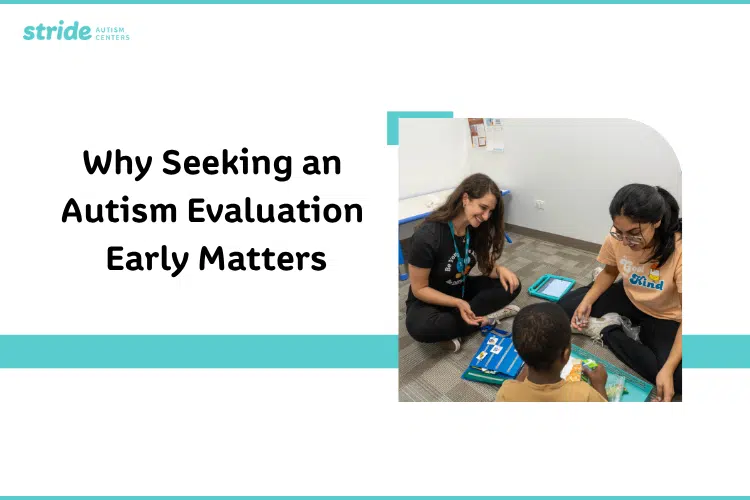
If you’ve noticed your child is developing differently, whether that’s in speech, social interactions, or daily routines, you may be wondering if autism might be a possibility. The thought of an evaluation can feel overwhelming, and it’s common to wonder if you should “wait and see.”But here’s the truth: the sooner you seek an evaluation, the better. Early evaluations are not about labeling your child, they’re about unlocking support, therapies, and resources during the years when they matter most.
What an Autism Evaluation Involves
Autism evaluations are typically conducted by developmental pediatricians, child psychologists, neurologists, or multidisciplinary teams. While every clinic or hospital may do things a little differently, most evaluations include:
Parent or Caregiver Interview: You’ll share your child’s developmental history, behavior patterns, and everyday routines.
Observation and Interaction: A professional will watch how your child communicates, plays, and responds to different prompts.
Standardized Tool: Tests such as the ADOS-2 or ADI-R are often used to guide diagnosis.
Review of Records: The clinician may consider notes from your pediatrician, teachers, or other therapists.
The goal is to gather a clear picture of your child’s strengths, challenges, and developmental profile so you can access the right support.
Why Timing Is Critical
One of the biggest hurdles families face is waitlists. In many areas, it can take 6–12 months or more to get an appointment for an evaluation. Every month matters in early childhood, when the brain is most adaptable and children are learning at lightning speed.By getting on a waitlist right away:
You secure your spot, even if the appointment is months away.
You prevent the regret of realizing, a year later, that your child could already be receiving support.
You open the door to insurance-covered therapies like ABA, speech, and OT, which generally require a formal diagnosis.
Even if you’re unsure, acting now gives you clarity. If your child does not receive a diagnosis, you’ll walk away with peace of mind and often valuable developmental recommendations. If your child does, you’ll be positioned to start services without further delay.
A To-Do List for Parents
If you suspect your child may have autism, here are steps you can take today:
Call your pediatrician – Ask for referrals to specialists who conduct autism evaluations.
Contact your insurance company – Request a list of in-network providers who perform developmental assessments.
Reach out to local hospitals or university clinics – Many children’s hospitals have developmental centers, though waitlists can be long.
Ask about Early Intervention programs – If your child is under age three, state-funded early intervention may help connect you to evaluators quickly.
Get on multiple waitlists – Don’t stop with one provider. Call several and book the earliest available appointment, even if it’s months away.
Consider nearby communities – While evaluations typically need to be completed in-state for insurance purposes, many families travel outside their immediate city to secure an earlier appointment. If a diagnostic provider in a neighboring community has shorter wait times, it may be worth the extra drive.
Write everything down – Keep notes on who you called, dates offered, and any paperwork required. This will help you stay organized and avoid delays.
The most important thing is to take action now. Even one phone call today can make a huge difference six months from now.
What Happens After a Diagnosis
If your child receives a diagnosis, it opens doors to services that may otherwise be difficult to access. For most insurance providers, a formal autism diagnosis is required before they will cover ABA therapy and related supports.With a diagnosis in hand, families often move forward with:
ABA therapy, which helps build communication, social, and self-care skills.
Speech therapy, supporting language or augmentative communication.
Occupational therapy, strengthening independence in daily routines.
Educational supports, such as early intervention or IEPs once your child begins school.
At that stage, many families choose providers like Stride Autism Centers®, where children receive center-based ABA therapy. Stride is unique in combining ABA with joyful learning, peer interaction, and multidisciplinary services (speech and OT through Stride360®). The combination helps children thrive not only in therapy, but also at home, school, and in the community.
Managing the Emotions
Hearing the words “autism diagnosis” can bring up a mix of emotions, relief, sadness, fear, or uncertainty. All of these feelings are normal.Here’s what’s important to remember:
Autism is not your fault. Parenting doesn’t cause autism. It’s how your child’s brain is wired.
A diagnosis doesn’t change who your child is. They are the same child you love today as they were yesterday.
Autism is part of your child’s identity. It shapes their perspective, their creativity, and what makes them uniquely them.
Support is available. With the right therapies, coaching, and community, your child can build confidence, independence, and joy.
Many parents say that while the diagnosis was hard to hear at first, it became a turning point. It was the moment they finally had clarity, tools, and a plan to move forward with hope.
Take the Step Now
If you suspect autism, the most important thing you can do today is schedule an evaluation. Even if you’re placed on a long waitlist, you’ll be moving forward, and your future self will thank you.Every child deserves timely support. An evaluation is not a label, it’s a key to unlocking resources, therapies, and strategies that can help your child flourish. And once you have that clarity, programs like Stride Autism Centers® are ready to partner with you in turning that diagnosis into meaningful growth, joyful learning, and preparation for the future.Don’t wait. Make the call. Get on the list. Take the first step today.
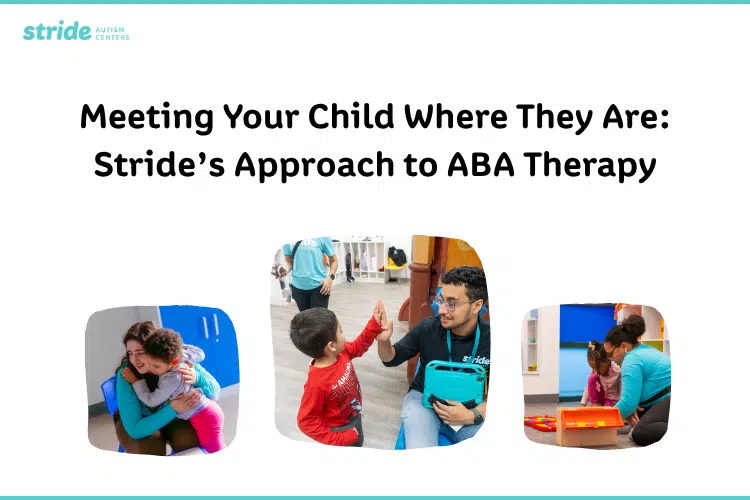
No two children are the same. Each child has a unique story, strengths to be celebrated, challenges to be supported, and goals that matter deeply to their family. At Stride Autism Centers®, our foundation is simple: we meet your child where they are.
ABA therapy is often misunderstood as rigid or one-size-fits-all. Our approach is different. Stride’s full-day, center-based programs are designed to nurture the whole child, building skills through joyful experiences, peer interactions, and individualized support that carries over into everyday life.
Personalized Goals, Meaningful Progress
From day one, our team takes time to listen to you. What does success mean for your child and your family? For one family, it may mean initiating more communication. For another, it could be learning toileting routines, gaining comfort in new environments, or preparing for kindergarten.
At Stride, therapy goals are never abstract. They are practical, personal, and relevant to your daily life. We track progress carefully, celebrate every achievement, and adjust plans as your child grows. Parents often tell us that the progress they notice at home, more words spoken, greater independence in daily routines, more confidence in social settings, is what matters most. And we agree.
Stride children consistently make developmental gains at twice the rate of national ABA averages, and 98% of parents report meaningful improvements in their child’s communication. Behind those numbers are countless individual victories that bring joy to families.
The Power of Group Settings
While one-on-one instruction is a cornerstone of ABA, children also benefit immensely from learning alongside peers. Our full-day program creates structured opportunities to practice sharing, taking turns, following group directions, and making friends.
These social moments, at snack time, circle time, or during group play, help lay the foundation for school readiness and lifelong social skills. For many families, seeing their child wave goodbye to a friend or join in a group game for the first time is just as powerful as hearing new words.
Adventures in the Clinic and Community
Children learn best when therapy is engaging and fun. That’s why Stride clinics are filled with creative, immersive adventures that prepare children for real-world experiences in a safe, supportive way.
Movie Theater Days complete with tickets, a red carpet, and popcorn.
Airplane “flights” on “Stride Airways,” where children practice boarding, finding a seat, and hearing the captain’s announcement.
Carnival Days with games, prizes, and the excitement of navigating crowds.
Community Outings to local parks, libraries, and events, where children practice skills beyond the clinic walls.
These experiences are joyful, memorable, and confidence-building. They give children the chance to practice big milestones with friends and therapists by their side, so that when the real moment comes, boarding a plane, going to the movies, or attending a birthday party, they feel brave, prepared, and excited.
A Joyful, Full-Day Approach
One of the things that sets Stride apart is our commitment to full-day ABA therapy for preschool-aged children. Research shows that children who receive more immersive therapy, 30+ hours per week, tend to make greater gains in communication, self-care, and socialization.
But full-day at Stride doesn’t mean long hours of repetition. It means:
More time for variety: games, crafts, structured lessons, free play, and community adventures.
More opportunities for peer interaction and friendship.
More chances to weave therapy goals into natural routines like meals, transitions, and group activities.
More integration of speech and occupational therapy through our Stride360® program.
Stride360® is already launched in every one of our Nebraska clinics and is rolling out in Iowa, South Dakota, and Chicagoland. By bringing speech and OT under the same roof as ABA, we make therapy more convenient for families while also ensuring children’s developmental goals are reinforced across disciplines.
Meeting Children (and Families) Where They Are
We know that a full-day program can feel like a big step, especially if your child still naps, isn’t potty trained, or has a unique daily rhythm. At Stride, we embrace all of that. Children nap in our centers when they need to. They practice toileting routines at their own pace. They can arrive however they feel comfortable, even in pajamas.
This flexibility is part of what makes families feel at home at Stride. We are committed to making therapy not only effective, but also welcoming, affirming, and manageable for children and caregivers.
A Holistic, Family-Centered Model
We believe that therapy should extend beyond the clinic walls. That’s why Stride builds in weekly parent coaching and ongoing communication. You’ll learn strategies to reinforce progress at home and in the community, so your child’s gains are not temporary, they become part of your family’s everyday life.
Our holistic model means we see progress not just in data and assessments, but in how children thrive at home and at school. Parents describe the difference when their child can join the family at dinner, participate in story time, or independently get ready for the day. These are the outcomes that matter most.
Why Stride’s Approach is Different
Families choose Stride because we offer more than therapy, we offer a trusted partnership. Here’s what makes us unique:
Full-day, center-based programs focused on preschool-aged children with autism.
Outcomes that exceed national benchmarks, validated by parent reports and clinical data.
Joyful learning through games, crafts, play, and real-world adventures.
Peer group settings that build friendships and social confidence.
Stride360® multidisciplinary care, integrating ABA with speech and occupational therapy.
Family coaching and support, ensuring progress carries over at home.
A culture of stability and excellence, with staff retention rates well above the industry average and repeated recognition as a Top Workplace.
Final Thoughts
Your child’s story is their own, and their journey is unique. At Stride Autism Centers®, our role is to walk alongside you, celebrating strengths, supporting challenges, and helping your child grow in confidence, communication, and independence.
By meeting children where they are and creating joyful, full-day learning environments, we prepare them not just for kindergarten, but for the connections and opportunities that will shape their future.
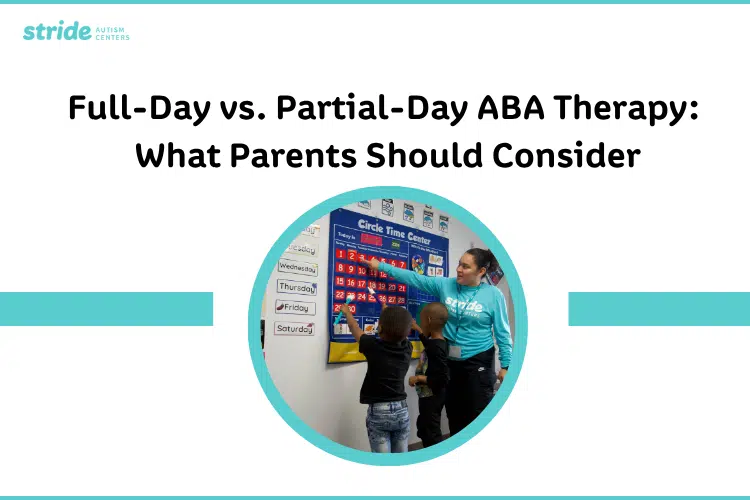
When your child is newly diagnosed with autism, you may suddenly face a cascade of questions and decisions you never expected to make. One of the most pressing is: what kind of therapy schedule will be best for my child?Applied Behavior Analysis (ABA) therapy can be delivered in a range of settings and schedules. Some families start with short, home-based sessions of one to three hours. Others consider half-day clinic programs. And some choose a full-day, center-based program, typically around 30 or more hours per week.Each approach has value. But for many preschool-aged children, research and lived experience suggest that full-day programs provide the consistency, immersion, and variety of opportunities needed to make the most meaningful gains. Still, there are real considerations parents should weigh, and every child is unique.This article will walk through the evidence, address common concerns, and explain how Stride Autism Centers® approaches full-day ABA therapy with flexibility, joy, and family-centered care.
Why the Number of Hours Matters
ABA is a practice-based therapy, which means children learn and reinforce skills through repeated opportunities in natural and structured contexts. More time in therapy generally means more chances to practice.A large body of research supports this. For example:
A 2021 systematic review in Frontiers in Psychology found that children who received higher-intensity ABA (30+ hours per week) showed greater improvements across cognitive, language, and adaptive domains than those in lower-intensity programs.
Many clinical programs and insurance guidelines are based on this evidence, often recommending between 25–40 hours per week of ABA for young children.
Of course, more hours are not always better for every child. Some may thrive with fewer hours, especially when other therapies are also part of the picture. The key is to match the schedule to your child’s needs and your family’s circumstances.
What Immersion Looks Like
When children participate in a full-day program, the extra time is not about “drilling” or sitting at a desk for long stretches. Instead, it’s about immersion: creating multiple, varied opportunities across the day to practice communication, social, and self-care skills in ways that feel natural and engaging.At Stride, immersion also means learning through joy. Children in our centers get to:
Play games that encourage turn-taking, sharing, and communication.
Create crafts that build fine motor skills while also sparking imagination.
Join group activities that make practicing social interactions exciting.
Experience special clinic-wide adventures like riding “Stride Airways” (our pretend airplane complete with boarding passes and snacks), enjoying carnival day, or visiting the local library with therapists and friends.
Because children are with peers and staff for a full day, they enjoy more variety, more creativity, and more opportunities to learn through play.
Common Concerns About Full-Day Programs
It’s natural to wonder whether your child is ready for an all-day schedule. Parents often share worries like:“My child still naps.”“They aren’t potty trained yet.”“All day seems overwhelming.”“We already have other therapy appointments.”“Our work or family schedule doesn’t line up.”These are valid concerns. In fact, they show how well you know your child and your family’s needs. The good news is that full-day programs can often be tailored with flexibility:
At Stride, we meet children exactly where they are. If your child needs a nap, we build it into the day. If they arrive in pajamas, that’s fine, we’ll help with transitions. If toileting is a work-in-progress, we practice those routines with patience and consistency.
Our Stride360® program brings speech and occupational therapy into the same center, reducing the need for separate appointments. This means your child can receive multidisciplinary support in a coordinated way, and you have fewer logistical hurdles to manage. Stride360® is now offered in all of our Nebraska clinics and is rolling out in Iowa, South Dakota, and Chicagoland.
And here’s an important note: at Stride, we focus solely on full-day programs because we see the profound benefits they provide. We don’t offer half-day schedules, but we are always happy to talk with you about your family’s needs and work around scheduling concerns to make therapy possible.
Preparing for Kindergarten and Beyond
Early childhood is a critical window for development. Skills practiced in these years can lay the groundwork for independence, learning, and social connection throughout life.Full-day ABA programs, with their immersive structure, often give children the best preparation for school. In fact, Stride’s data show that children in our programs make gains at twice the rate of national ABA averages, and 94% of parents report meaningful improvements in communication.And beyond the numbers, the impact is felt at home: children who can express themselves more clearly, manage daily routines, and engage with peers are better equipped for the challenges and joys of kindergarten.
Finding the Right Fit
Choosing between full-day and partial-day ABA therapy is not just a clinical decision, it’s an emotional one. As a parent, you know your child best, and you carry the weight of wanting to make the right choice.What’s important is to have a trusted partner who respects your knowledge, provides clear information, and offers high-quality, joyful options. At Stride, we aim to be that partner:
Full-day immersion with joyful, real-world practice.
Games, crafts, and adventures that make learning fun.
Multidisciplinary services (ABA, speech, OT) through Stride360®.
A warm, child-centered approach that celebrates each child’s progress and meets families where they are.
We’re Here to Help your Child Thrive
Whether you’re just starting to explore ABA therapy or are weighing full-day against shorter options, know this: your decision is a powerful step in supporting your child’s growth.The research is clear that more immersive ABA can yield greater developmental outcomes, and at Stride we have seen firsthand how full-day programs help children thrive not only in communication and self-care, but also in confidence, joy, and readiness for school.Our focus is on creating full-day programs filled with opportunities for growth, creativity, and fun, supported by caring staff and multidisciplinary services like Stride360®. We’ll be here to walk alongside you every step of the way.
I’m excited to share that Stride Autism Centers® has been named a 2025 Iowa Top Workplace by the Des Moines Register. This award is based entirely on feedback from our employees, making it especially meaningful. It tells us that our team feels supported, valued, and inspired in their work, something we strive for every day.
This recognition comes at an exciting time for Stride. In May, we opened our 10th center in Cedar Rapids, and this week we’re celebrating the grand opening of our 11th Iowa center in Des Moines. Stride also recently became Fully Accredited by the Autism Commission on Quality (ACQ), an achievement that reflects our commitment to clinical excellence. Together, these milestones highlight our growth and dedication to delivering exceptional care for young children with autism.
To our incredible team, thank you. This award belongs to you. And to the families we serve, we are honored to walk this journey with you.
Finally, I want to give special thanks to Ryhanna Singleton, who took a leap of faith five years ago to become Stride’s very first BCBA. Since then, she has been a driving force behind our growth, leading our clinical team with unwavering dedication. Her leadership has not only helped us expand our services across Iowa but has also set the standard for the compassionate, high-quality care that defines us. We are incredibly grateful for her five years of service and her tireless commitment to our mission.
Family routine helps smooth out our busy days. It’s especially important for children with autism spectrum disorder (ASD). Daily routines are really a series of gentle touchpoints that give your kiddo a sense of safe predictability as they learn new skills and thrive.
To put your mind at ease, there’s no need to round up the colored markers or fire up a spreadsheet. Building a daily routine for a child with autism can be as simple as creating patterns with daily tasks you would be doing anyway.
In this guide, you’ll find practical, evidence-based advice — rooted in Applied Behavior Analysis (ABA) therapy — to help you build routines that work for your child and your family.
Four Steps and You’re Done!
Building routines for children with autism doesn’t have to be overwhelming. Start small, focus on your child’s strengths, and use visual supports to make each step clear and achievable.
1. List Daily Activities
These are usually centered on morning activities, mealtimes, play, learning, quiet time, and bedtime. Then break it down into tasks:
Use the bathroom
Wash face
Brush teeth
Get dressed
2. Say It With Pictures
Kids with autism often thrive on visual prompts, so use photos, icons, or drawings to represent each step wherever possible. A fun, easy way to do this is to take a photo of your child completing each task. Write each task on a peel-and-stick label and assign it to the relevant photo. Cover with self-seal laminating sheets from an office supply store, then add a Velcro strip or sticky tack to attach it to a felt board or poster board.
Create a “to-do” and “finished” column and move the images between the two. Place the schedule in a visible spot like the fridge or their bedroom.
3. Use Timers and Cues
Visual timers or gentle alarms can help signal when it’s time to move to the next activity or count down brushing teeth for a full two minutes. “First/Then” boards can map out what happens now and what comes next.
4. Start Small and Practice Together
Introduce one routine at a time. Walk through the routine with your child — bedtime bath, brush teeth, pajamas, one bedtime story, turn off the light. Offer support and encouragement and celebrate each completed step, no matter how small.
When your child is comfortable with one routine, gradually add more steps or introduce another. Routines for children with autism should include some flexibility or transition time to help them navigate change.
Tips for Managing Transitions and Unexpected Changes
Some children are attached to the predictability of a routine and may get upset if something changes. With a little planning and the right tools, you can help your child handle changes with more confidence. Here’s how:
Prepare in advance: Talk about upcoming changes as early as possible. This might be adding in a new step, like using the toilet before bed, or sticking to the routine while staying over at a family member’s house during the holiday season. Present the change as a positive or new adventure, be calm and upbeat, and give yourself some grace — building routines for children with autism is a journey, and you’re doing great.
Practice transitions: Roleplay new situations at home and use countdowns or visual timers to signal when a transition is coming.
Offer choices: When possible, let your child choose between two options. For example, you might ask, “Do you want to brush your teeth or wash your face first?”
Coping strategies: Encourage them to use comfort items, like a favorite toy or pair of headphones, and practice calming techniques, like deep breathing or squeezing a stress ball.
Stay flexible: Reassure your child when their routine gets disrupted, and use visual supports to show what will happen next.
Encouraging Independence and Confidence
One of the greatest gifts you can give your child is the confidence to do things on their own. By celebrating progress, you help your child build independence and self-esteem.
Fade Support Gradually
Start by guiding your child through a routine, modeling each task and offering hands-on help or verbal prompts. As your child becomes more comfortable, step back and let them try the steps on their own. Over time, you can move from giving physical help to gentle reminders, and eventually to simply offering encouragement.
Celebrate Small Wins
Praise your child for every step they complete independently. Offer specific, enthusiastic praise for each achievement, no matter how small — for example, “Great job putting on your shoes by yourself!”
Positive reinforcement, like stickers, tokens, or extra playtime, can be very motivating. Share your child’s successes with other family members to foster a feeling of pride. Remember, every bit of progress counts, so be sure to acknowledge your child’s effort as much as the results.
Involve Your Child
Let your child pick out pictures or drawings for their schedule, making it more personal and engaging. While creating a daily routine for a child with autism, allow them to decide the sequence of certain activities whenever possible. This can give them a sense of control. Encourage them to check off or move completed tasks on their board so they build ownership and responsibility. Asking for their input on what helps them feel ready for each part of the day can also make routines more successful.
Yay to Problem Solving
If your kiddo gets stuck, ask guiding questions and resist giving the answer right away. Use prompts like, “What comes next on your schedule?” or “What do we do after breakfast?” to encourage them to think through solutions, even if it takes a little extra time. If they need support, offer hints or choices, but let them make the final decision. Celebrate their effort to figure things out — this helps reinforce valuable problem-solving skills.
Model Independence
Show your child how you follow routines and handle changes calmly. Demonstrate your own routines and talk through your actions, like saying, “Now I’m brushing my teeth, just like you!” When plans change, talk through your feelings and coping strategies aloud — for example, “I wasn’t expecting this, but I’ll take a deep breath and adjust.”
Let your child see you using visual schedules, timers, or checklists, so these supports feel normal and helpful. By being patient and positive, you’re setting a reassuring example for your child to follow. Remember, you’re making a meaningful difference in their life every day. Be kind to yourself, and know that it’s OK to learn and grow alongside your child as you build these routines together.
Partnering With Your ABA Therapy Team
As a parent, daily routines for children with autism offer natural opportunities to strengthen their communication and social skills. Your ABA therapy team is here to support you and your child every step of the way. We help you recognize these teachable moments within your family’s routines and show you how to make the most of them, turning everyday activities into meaningful learning experiences.
Here’s how we can support you:
Collaborate on goals: Share your child’s strengths and goals with your therapy team as we work together to reach realistic, meaningful milestones.
Consistency across settings: We love hearing about your daily routine successes so we can use similar visual supports and language in the center.
Let’s Help You Build Routines That Work for Your Family
If you need help or advice on how to create a routine for a child with autism, Stride Autism Centers® is here for you. Our center-based, play-based ABA therapy programs are for kids with autism ages 2 through 6 and are designed to meet your child’s individuality and your family’s unique needs. Our team works closely with you to establish practical routines with hands-on guidance and ongoing reinforcement every step of the way.
Call our caring, experienced team at 515-207-5251 or connect with us online to see how we can help your child thrive with routines that truly make a difference.
Every child deserves the opportunity to experience the fun and excitement of sporting events. Watching a game is a fantastic way for your little one to experience new things and enjoy quality family time.
Sensory-friendly sporting venues celebrate your child and offer thoughtful supports that reduce stimuli, helping them feel calm and at ease. From fidget toys to quiet sensory rooms, you can plan an unforgettable day out with your kiddo.
How Sensory Rooms and Bags are Transforming Sporting Arenas
Thanks to KultureCity® — a nonprofit group that trains venues on how to be more sensory inclusive — more arenas are ready to support fans who prefer a quieter, less stimulating environment. From the moment you arrive, supportive features help your kiddo enjoy the excitement in a way that feels good to them.
KultureCity has helped design and certify sensory rooms at several venues across the country. These are quiet places you and your child can visit any time they need a break from the cheering crowds. Sensory areas often feature adjustable lighting, interactive sensory toys, textured walls, and comfortable seating to help your kiddo rejuvenate and find their calm. Many venues also offer KultureCity sensory bags with comfort items such as:
Noise-cancelling headphones
Sunglasses
Fidget toys
Verbal cue cards
Weighted lap pads
21 Accessible Sporting Arenas for Children With Autism
Help your child enjoy the action and excitement at their own pace when you visit these sensory-friendly venues:
1. Petco Park — San Diego
Petco Park, home of the San Diego Padres, was the first sensory-inclusive stadium on the West Coast.
Before heading to a game, walk your little one through their stadium adventure with the illustrated “We’re Going to a Padres Game!” storyboard. Then, on the day, use a stadium map to locate a sensory bag at the Sensory Activation Vehicle in Park Blvd Plaza or at Guest Services locations in sections 108, 131, or 303.
If your kiddo needs a break from the excitement, you can find designated quiet areas on your map or ask a friendly staff member who is trained to support special guests with sensory needs.
2. United Center — Chicago
United Center is a sensory-inclusive stadium where you and your family can catch a Chicago Bulls or Chicago Blackhawks game. Staff are trained to recognize and support guests with sensory needs, so you can rest assured that your family is welcome and cared for during your visit.
Grab a sensory bag from Guest Relations near Gates 2 and 6 to create a cozier experience for your child. You and your kiddo can also visit United Center’s sensory room at Gate 2 ½ for a relaxing break from the stadium’s excitement.
3. Rate Field — Chicago
Rate Field is home to the Chicago White Sox and hosts an annual Autism Inclusion Night. During this event, your family can enjoy the game without fireworks for a gentler sensory experience. If your little one needs a quiet space to enjoy the game, you can watch from the peaceful sensory pod in section 530. You can also take a fun break in Suite 460’s sensory room or grab a sensory bag from Guest Services.
4. Allstate Arena — Rosemont, Illinois
Allstate Arena in Rosemont is a Certified KultureCity arena where your kiddo can enjoy a sensory bag during their visit. You can use KultureCity’s Social Story App to familiarize yourself with the arena’s environment through pictures, and consider bringing a weighted lap pad to help them feel comfy and cozy during the game. Whether your family enjoys hockey, wrestling, bull riding, or college basketball, you can all have a wonderful time at Allstate Arena.
5. Denny Sanford PREMIER Center — Sioux Falls, South Dakota
Denny Sanford PREMIER Center is another certified KultureCity venue, making it easier for families with sensory needs to enjoy events. Your little one can attend a Sioux Falls Stampede hockey game with a free sensory bag full of comfort items and fun fidgets. If they need a break from the thrill of the game, they can also rest in the quiet sensory pod located outside section 118.
6. Kinnick Stadium — Iowa City, Iowa
As a certified KultureCity venue, Kinnick Stadium welcomes you and your family to enjoy events in comfort. Staff are trained in sensory inclusion and are ready to offer support whenever you need it. You can also check out the KultureCity app before you arrive and grab a sensory bag full of everything they need to enjoy the event. With these extra supports, you and your little one can cheer on the University of Iowa Hawkeyes at your own pace and volume.
7. Werner Park — Papillion, Nebraska
Treat your family to a memorable Omaha Storm Chasers game at Werner Park. You can request a sensory kit at every home game and visit the venue’s Autism Action Partnership Quiet Zone if your little one wants a break from all the action.
8. Wrigley Field — Chicago
Wrigley Field is a must-visit venue if your kiddo is a big baseball fan. Thanks to KultureCity sensory bags and a certified sensory room, you and your family can enjoy this iconic stadium to the fullest. Help your little one manage sensory input with fidget toys and noise-cancelling headphones, and decompress in the sensory room if they need a calmer space. The sensory room is equipped with soft lighting, a sound machine, a texture wall, and interactive light cubes.
9. Ford Field — Detroit
Ford Field is home to the Detroit Lions and offers support to help your family have a fantastic experience. Ask Guest Services for a sensory kit or pause for a moment in the Sensory Room. Your little one can cuddle up in a cozy sensory pod, hang out on a bean bag chair, and play with the room’s sensory toys until they feel refreshed.
10. GEHA Field at Arrowhead Stadium — Kansas City, Missouri
Enjoy a Kansas City Chiefs or Kansas Jayhawks game in the way that works best for you and your family. GEHA Field at Arrowhead Stadium offers sensory kits and features two sensory rooms on the Plaza level inside Gate G for your child can ground themselves in a calm atmosphere until they’re ready to rejoin the action on their timeline.
11. PNC Park — Pittsburgh
Take your kiddo to a Pittsburgh Pirates game to create a core memory they’ll cherish. The stadium’s KultureCity sensory bags are filled with calming tools to help children remain comfortable watching the game from their seats. You and your little one can also visit the quiet sensory room in Suite 62 to explore sensory touch panels, art panels, bean bags, and bubble walls. This serene area is the perfect place to catch a breath between innings or any time a quiet moment feels right.
12. Pocono Raceway — Long Pond, Pennsylvania
NASCAR races are known for speeding cars, roaring motors, and cheering crowds. If your child wants to see their favorite cars zip past without the extra noise, help them enjoy the excitement in comfort with the raceway’s sensory bags.
When they start feeling restless or need to get up and move, your kiddo can run and play at the Lehigh Valley Reilly Children’s Hospital Inclusive Playground right outside the raceway. You can also stop at one of the raceway’s two sensory rooms for a calm, quiet recharge.
13. Lincoln Financial Field — Philadelphia
Whether your family wants to catch a Philadelphia Eagles game, watch the annual Army vs. Navy game, or attend a soccer match, Lincoln Financial Field has your back. As one of the first certified KultureCity Sensory Inclusive Venues, this stadium features sensory bags and a fantastic, state-of-the-art sensory room. Your little one can relax in a soundproof space and enjoy comfort items such as weighted blankets, visual light panels, bean bags, and sensory toys any time they need a break.
14. Sports Illustrated Stadium — Harrison, New Jersey
Treat your soccer fan to an exciting New York Red Bulls game at Sports Illustrated Stadium. If they need to move around or rest for a bit, you can take them to the stadium’s Altec Lansing Sensory Room. This KultureCity-approved space on the 5th floor provides a calm environment with dim lighting, fidget toys, and bean bags. The stadium also offers sensory bags so your kiddo has some comfort items they can use at their seat.
15. Mercedes-Benz Stadium — Atlanta
Enjoy an Atlanta Falcons football game or an Atlanta United soccer game with your family at Mercedes-Benz Stadium. You and your little one can step away from the stadium’s sights and sounds in a sensory room full of weighted animals, fidget toys, and bubble walls. The stadium also offers KultureCity sensory bags, which you can find at any of the Guest Services Booths.
16. Highmark Stadium — Orchard Park, New York
Highmark Stadium makes it easy to enjoy a Buffalo Bills game with sensory-inclusive features. Grab a Sensory Inclusion Kit from a Guest Experience Booth or visit the sensory room on the fifth floor of the stadium’s Old Admin building. This peaceful space offers the perfect breather from the game’s bright lights and big sounds.
17. M&T Bank Stadium — Baltimore
If your kiddo is a Baltimore Ravens fan, you and your family can enjoy an unforgettable time at M&T Bank Stadium. Sensory kits are available, and multipurpose rooms in the lower level provide a quiet, private space for your child to relax whenever a calm moment helps.
18. Angels Stadium — Anaheim, California
Catch a Los Angeles Angels game at Angels Stadium, which partners with Easterseals to provide sensory bags full of fidget toys and comfort items. You and your little one can also take a moment away from the crowds in the stadium’s sensory room, where you’ll find tactile toys, calming lights, and a peaceful space to unwind.
19. Oakland Coliseum — Oakland, California
The Oakland Coliseum is a fun venue to catch an Oakland Roots soccer match or a Major League Cricket (MLC) game. If your little one wants a break from the cheering crowd, you and your child can enjoy the sensory room’s soothing atmosphere and head back to your seats when they feel ready.
You can also treat your kiddo to a fun hockey game, monster truck show, concert, or Disney on Ice event at the Oakland Arena. This certified KultureCity Sensory Inclusive Venue is in the same sports and entertainment complex as the Oakland Coliseum and hosts various events throughout the year. Your little one can enjoy their favorite artist or watch Disney characters glide across the ice with noise-cancelling headphones and a sensory bag.
20. Yankee Stadium — New York City
Visiting Yankee Stadium in the Bronx is an unforgettable moment for any baseball fan. Your family can enjoy this iconic New York landmark’s vibrant atmosphere, delicious food, and fascinating history help from sensory bags and access to a sensory room on Section 320C’s Terrace Level.
21. CitiField — New York City
While exploring the Big Apple, continue the fun at CitiField in Queens and catch a New York Mets game. Ask for a KultureCity sensory bag, and be sure to visit the Sensory Nook on the Empire Level any time your kiddo wants a quieter moment from the game.
Sensory-Friendly Preparation Tips
Navigating sporting events and autism is easier than ever thanks to supportive features and welcoming venues. These helpful tips can help you plan a fun, memorable day out together:
Bring a favorite toy or comfort item: If your child has a favorite blanket, stuffed animal, or toy, they may find comfort in it during a game.
Identify quiet areas ahead of time: Map out quieter zones before you arrive so you know where to go if your kiddo needs a break. Sensory rooms, upper concourses, and outdoor patio spaces are some of the best places your little one can explore, stretch their legs, and enjoy quiet moments.
Schedule movement and exploration moments: Children often let us know when they need a break, but scheduling quiet or movement moments ahead of time is a fantastic way to proactively meet your child’s sensory needs. Take a walk or visit a sensory room between innings to help keep your little one’s energy and spirits high.
Help your child know what to expect: Adjusting to a new environment is easier and more fun when you know what to expect. Help your child feel comfortable by taking time to explain the venue’s atmosphere, what happens at a game, and the reasons to get excited for the day through printed pictures or storytelling.
Pick comfortable clothing: What outfit is your little one most comfortable in? Let them wear a cozy hoodie and slip-on sneakers if that’s what makes them feel snug and safe. You can also take a compression vest to help your child feel calm and grounded during your fun day together.
Bring sunglasses and a brimmed hat: Sunglasses and a brimmed hat can reduce the light and visual buzz that may become overstimulating.
Arrive early or after the game starts: Arrive a little early — or a bit after the first inning or kickoff — to skip the busiest lines and settle in at your family’s pace.
Help Your Child Thrive With Supportive ABA Therapy
Sensory-friendly venues help your child discover the world around them in comfort. Stride Autism Center is also dedicated to helping your kiddo experience as much as they can at the pace that works best for them.
We offer tailored, compassionate ABA therapy that supports your child’s growth, builds everyday confidence, and honors their pace. Contact us online or call us at (515) 207-5251 to schedule a consultation and learn more about how we can help your little one thrive.
We were so grateful to join QBS’s recent Customer Spotlight webinar to share more about Stride Autism Centers®, who we are, why we exist, and how we support children with autism and their families . It was energizing to connect with fellow professionals who care deeply about creating safe, supportive spaces where kids can thrive.
Who We Serve
At Stride, we specialize in center-based Applied Behavior Analysis (ABA) therapy for children ages 2–6 with autism. Our full-day programs are designed around school readiness skills so that children not only build communication and social abilities, but also learn to participate confidently alongside their peers. Each child has an individualized treatment plan and one-on-one support as needed, all woven into a warm, preschool-like setting with circle time, play, and structured learning.
Why Safety-Care Matters
During the webinar, we shared how our team has embraced Safety-Care® training as a foundational part of our model. Every new Registered Behavior Technician (RBT) who joins Stride is trained in Safety-Care right from the start. This equips our clinicians with proactive and preventative strategies, and, if necessary, physical safety techniques, so they can support children through both joyful moments and challenging experiences.For us, it’s about more than safety; it’s about dignity and respect. We want families to know their children are cared for in an environment that prioritizes well-being, for both learners and staff.
Supporting Families on the Waitlist
We also talked about how we care for families even before their child begins at Stride. With demand for services so high, many families spend time on a waitlist. During this period, we provide a resource packet with helpful strategies, from encouraging communication to managing daily transitions, as well as access to our “Welcome to Stride” webinar led by our clinicians. Families are invited to tour our centers and ask questions, so they feel informed and supported right away.
Moving Forward Together
Being featured in QBS’s Customer Spotlight reminded us why we do this work. Our mission is to prepare children with autism for kindergarten and beyond by providing evidence-based therapy and fostering joyful, inclusive environments. We’re honored to be part of a community committed to empowering children, families, and caregivers every step of the way.At Stride, safety and compassion go hand-in-hand, and we’re grateful to continue building a place where children can grow, learn, and flourish.
Parenting a young child with autism can be both rewarding and challenging. As you navigate diagnosis, services, and daily life, you may be curious about autism support groups for parents in Chicago. These groups can offer information, a sense of community, or simply a chance to connect with others who share similar experiences.
At the same time, support groups aren’t for everyone. You may not feel comfortable identifying with a broader autism community, or you may simply not have time, especially when work, caregiving, and family leave you little room for yourself. Both perspectives are valid. The resources below are provided so you are aware of some of the groups that currently exist in the Chicago area.
Autism Parent Support Groups in Chicago
We’re happy to share six organizations that host autism-related support groups for parents and caregivers in or around Chicago:
Chicago Autism Network This nonprofit offers free virtual parent workshops each month on a wide range of autism-related topics.
The Answer, Inc. Provides co-ed and men’s support groups for parents and caregivers. Meetings often include educational presentations followed by discussion time.
Ascension Autism Spectrum and Developmental Disorders Resource Center Offers groups where parents and caregivers can meet, share experiences, and discuss resources.
Global and Regional Autism Spectrum Partnership (GRASP) A national nonprofit with virtual support group options, including a program specifically for parents.
Association for Autism and Neurodiversity (AANE) Provides online, facilitated peer groups where you can connect with other parents and caregivers of autistic individuals.
If you are considering joining an autism support group in Chicago, here are a few things to think about:
Time and capacity: Caregiving leaves little free time, and you may not be able to add meetings to your schedule.
Privacy: Support groups usually set confidentiality guidelines, but it’s best to limit sharing personal details such as your address, your child’s school, or last names.
Different experiences: Every family’s journey with autism is unique. What works for others may not be right for you, and that’s perfectly okay.
Support groups are not a replacement for professional therapy or medical care. If you are struggling with your own mental health, it may be helpful to connect with a licensed therapist.
Supporting Your Family at Stride
At Stride Autism Centers®, our focus is on providing Applied Behavior Analysis (ABA) therapy for preschool-aged children with autism (ages 2–6). Our full-day, center-based programs help children build communication, social, and school readiness skills in a structured, supportive environment.
While we are not affiliated with the groups listed above, we know that some families find them useful while others prefer different kinds of support. What matters most is finding what works for you and your child.
We’re always looking to keep this list as helpful as possible. If you find other autism support groups in Chicago that you think are worthwhile, please share them with us so we can continue updating our resources for families.





 Kids with autism often

 KultureCity has helped design and certify sensory rooms at several venues across the country. These are quiet places you and your child can visit any time they need a break from the cheering crowds. Sensory areas often feature adjustable lighting, interactive sensory toys, textured walls, and comfortable seating to help your kiddo rejuvenate and find their calm. Many venues also offer KultureCity sensory bags with comfort items such as:
 Petco Park, home of the San Diego Padres, was the first sensory-inclusive stadium on the West Coast.
Before heading to a game, walk your little one through their stadium adventure with the illustrated “
Petco Park, home of the San Diego Padres, was the first sensory-inclusive stadium on the West Coast.
Before heading to a game, walk your little one through their stadium adventure with the illustrated “ Wrigley Field is a must-visit venue if your kiddo is a big baseball fan. Thanks to KultureCity sensory bags