Now Enrolling Ages 2-6!

Learn more

Full-Day vs. Partial-Day ABA Therapy: What Parents Should Consider

When your child is newly diagnosed with autism, you may suddenly face a cascade of questions and decisions you never expected to make. One of the most pressing is: what kind of therapy schedule will be best for my child? Applied Behavior Analysis (ABA) therapy can be delivered in a range of settings and schedules. Some families start with short, home-based sessions of one to three hours. Others consider half-day clinic programs. And some choose a full-day, center-based program, typically around 30 or more hours per week. Each approach has value. But for many preschool-aged children, research and lived experience suggest that full-day programs provide the consistency, immersion, and variety of opportunities needed to make the most meaningful gains. Still, there are real considerations parents should weigh, and every child is unique. This article will walk through the evidence, address common concerns, and explain how Stride Autism Centers® approaches full-day ABA therapy with flexibility, joy, and family-centered care.

Why the Number of Hours Matters

ABA is a practice-based therapy, which means children learn and reinforce skills through repeated opportunities in natural and structured contexts. More time in therapy generally means more chances to practice. A large body of research supports this. For example:
  • A 2021 systematic review in Frontiers in Psychology found that children who received higher-intensity ABA (30+ hours per week) showed greater improvements across cognitive, language, and adaptive domains than those in lower-intensity programs.
  • Many clinical programs and insurance guidelines are based on this evidence, often recommending between 25–40 hours per week of ABA for young children.
  • Of course, more hours are not always better for every child. Some may thrive with fewer hours, especially when other therapies are also part of the picture. The key is to match the schedule to your child’s needs and your family’s circumstances.

What Immersion Looks Like

When children participate in a full-day program, the extra time is not about “drilling” or sitting at a desk for long stretches. Instead, it’s about immersion: creating multiple, varied opportunities across the day to practice communication, social, and self-care skills in ways that feel natural and engaging. At Stride, immersion also means learning through joy. Children in our centers get to:
  • Play games that encourage turn-taking, sharing, and communication.
  • Create crafts that build fine motor skills while also sparking imagination.
  • Join group activities that make practicing social interactions exciting.
  • Experience special clinic-wide adventures like riding “Stride Airways” (our pretend airplane complete with boarding passes and snacks), enjoying carnival day, or visiting the local library with therapists and friends.
Because children are with peers and staff for a full day, they enjoy more variety, more creativity, and more opportunities to learn through play.

Common Concerns About Full-Day Programs

It’s natural to wonder whether your child is ready for an all-day schedule. Parents often share worries like: “My child still naps.” “They aren’t potty trained yet.” “All day seems overwhelming.” “We already have other therapy appointments.” “Our work or family schedule doesn’t line up.” These are valid concerns. In fact, they show how well you know your child and your family’s needs. The good news is that full-day programs can often be tailored with flexibility:
  • At Stride, we meet children exactly where they are. If your child needs a nap, we build it into the day. If they arrive in pajamas, that’s fine, we’ll help with transitions. If toileting is a work-in-progress, we practice those routines with patience and consistency.
  • Our Stride360® program brings speech and occupational therapy into the same center, reducing the need for separate appointments. This means your child can receive multidisciplinary support in a coordinated way, and you have fewer logistical hurdles to manage. Stride360® is now offered in all of our Nebraska clinics and is rolling out in Iowa, South Dakota, and Chicagoland.
  • And here’s an important note: at Stride, we focus solely on full-day programs because we see the profound benefits they provide. We don’t offer half-day schedules, but we are always happy to talk with you about your family’s needs and work around scheduling concerns to make therapy possible.

Preparing for Kindergarten and Beyond

Early childhood is a critical window for development. Skills practiced in these years can lay the groundwork for independence, learning, and social connection throughout life. Full-day ABA programs, with their immersive structure, often give children the best preparation for school. In fact, Stride’s data show that children in our programs make gains at twice the rate of national ABA averages, and 94% of parents report meaningful improvements in communication. And beyond the numbers, the impact is felt at home: children who can express themselves more clearly, manage daily routines, and engage with peers are better equipped for the challenges and joys of kindergarten.

Finding the Right Fit

Choosing between full-day and partial-day ABA therapy is not just a clinical decision, it’s an emotional one. As a parent, you know your child best, and you carry the weight of wanting to make the right choice. What’s important is to have a trusted partner who respects your knowledge, provides clear information, and offers high-quality, joyful options. At Stride, we aim to be that partner:
  • Full-day immersion with joyful, real-world practice.
  • Games, crafts, and adventures that make learning fun.
  • Multidisciplinary services (ABA, speech, OT) through Stride360®.
  • A warm, child-centered approach that celebrates each child’s progress and meets families where they are.

We’re Here to Help your Child Thrive

Whether you’re just starting to explore ABA therapy or are weighing full-day against shorter options, know this: your decision is a powerful step in supporting your child’s growth. The research is clear that more immersive ABA can yield greater developmental outcomes, and at Stride we have seen firsthand how full-day programs help children thrive not only in communication and self-care, but also in confidence, joy, and readiness for school. Our focus is on creating full-day programs filled with opportunities for growth, creativity, and fun, supported by caring staff and multidisciplinary services like Stride360®. We’ll be here to walk alongside you every step of the way.

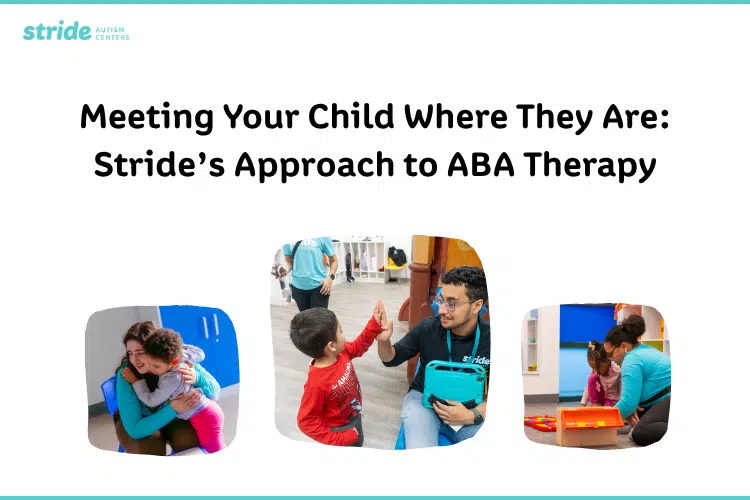
Meeting Your Child Where They Are: Stride’s Approach to ABA Therapy

No two children are the same. Each child has a unique story, strengths to be celebrated, challenges to be supported, and goals that matter deeply to their family. At Stride Autism Centers®, our foundation is simple: we meet your child where they are.

ABA therapy is often misunderstood as rigid or one-size-fits-all. Our approach is different. Stride’s full-day, center-based programs are designed to nurture the whole child, building skills through joyful experiences, peer interactions, and individualized support that carries over into everyday life.

Personalized Goals, Meaningful Progress

From day one, our team takes time to listen to you. What does success mean for your child and your family? For one family, it may mean initiating more communication. For another, it could be learning toileting routines, gaining comfort in new environments, or preparing for kindergarten.

At Stride, therapy goals are never abstract. They are practical, personal, and relevant to your daily life. We track progress carefully, celebrate every achievement, and adjust plans as your child grows. Parents often tell us that the progress they notice at home, more words spoken, greater independence in daily routines, more confidence in social settings, is what matters most. And we agree.

Stride children consistently make developmental gains at twice the rate of national ABA averages, and 98% of parents report meaningful improvements in their child’s communication. Behind those numbers are countless individual victories that bring joy to families.

The Power of Group Settings

While one-on-one instruction is a cornerstone of ABA, children also benefit immensely from learning alongside peers. Our full-day program creates structured opportunities to practice sharing, taking turns, following group directions, and making friends.

These social moments, at snack time, circle time, or during group play, help lay the foundation for school readiness and lifelong social skills. For many families, seeing their child wave goodbye to a friend or join in a group game for the first time is just as powerful as hearing new words.

Adventures in the Clinic and Community

Children learn best when therapy is engaging and fun. That’s why Stride clinics are filled with creative, immersive adventures that prepare children for real-world experiences in a safe, supportive way.

  • Movie Theater Days complete with tickets, a red carpet, and popcorn.
  • Airplane “flights” on “Stride Airways,” where children practice boarding, finding a seat, and hearing the captain’s announcement.
  • Carnival Days with games, prizes, and the excitement of navigating crowds.
  • Community Outings to local parks, libraries, and events, where children practice skills beyond the clinic walls.

These experiences are joyful, memorable, and confidence-building. They give children the chance to practice big milestones with friends and therapists by their side, so that when the real moment comes, boarding a plane, going to the movies, or attending a birthday party, they feel brave, prepared, and excited.

A Joyful, Full-Day Approach

One of the things that sets Stride apart is our commitment to full-day ABA therapy for preschool-aged children. Research shows that children who receive more immersive therapy, 30+ hours per week, tend to make greater gains in communication, self-care, and socialization.

But full-day at Stride doesn’t mean long hours of repetition. It means:

  • More time for variety: games, crafts, structured lessons, free play, and community adventures.
  • More opportunities for peer interaction and friendship.
  • More chances to weave therapy goals into natural routines like meals, transitions, and group activities.
  • More integration of speech and occupational therapy through our Stride360® program.

Stride360® is already launched in every one of our Nebraska clinics and is rolling out in Iowa, South Dakota, and Chicagoland. By bringing speech and OT under the same roof as ABA, we make therapy more convenient for families while also ensuring children’s developmental goals are reinforced across disciplines.

Meeting Children (and Families) Where They Are

We know that a full-day program can feel like a big step, especially if your child still naps, isn’t potty trained, or has a unique daily rhythm. At Stride, we embrace all of that. Children nap in our centers when they need to. They practice toileting routines at their own pace. They can arrive however they feel comfortable, even in pajamas.

This flexibility is part of what makes families feel at home at Stride. We are committed to making therapy not only effective, but also welcoming, affirming, and manageable for children and caregivers.

A Holistic, Family-Centered Model

We believe that therapy should extend beyond the clinic walls. That’s why Stride builds in weekly parent coaching and ongoing communication. You’ll learn strategies to reinforce progress at home and in the community, so your child’s gains are not temporary, they become part of your family’s everyday life.

Our holistic model means we see progress not just in data and assessments, but in how children thrive at home and at school. Parents describe the difference when their child can join the family at dinner, participate in story time, or independently get ready for the day. These are the outcomes that matter most.

Why Stride’s Approach is Different

Families choose Stride because we offer more than therapy, we offer a trusted partnership. Here’s what makes us unique:

  • Full-day, center-based programs focused on preschool-aged children with autism.
  • Outcomes that exceed national benchmarks, validated by parent reports and clinical data.
  • Joyful learning through games, crafts, play, and real-world adventures.
  • Peer group settings that build friendships and social confidence.
  • Stride360® multidisciplinary care, integrating ABA with speech and occupational therapy.
  • Family coaching and support, ensuring progress carries over at home.
  • A culture of stability and excellence, with staff retention rates well above the industry average and repeated recognition as a Top Workplace.

Final Thoughts

Your child’s story is their own, and their journey is unique. At Stride Autism Centers®, our role is to walk alongside you, celebrating strengths, supporting challenges, and helping your child grow in confidence, communication, and independence.

By meeting children where they are and creating joyful, full-day learning environments, we prepare them not just for kindergarten, but for the connections and opportunities that will shape their future.

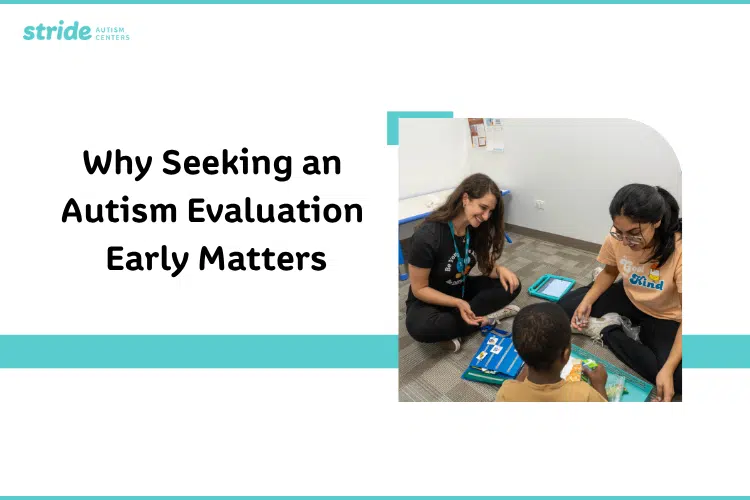
Why Seeking an Autism Evaluation Early Matters

If you’ve noticed your child is developing differently, whether that’s in speech, social interactions, or daily routines, you may be wondering if autism might be a possibility. The thought of an evaluation can feel overwhelming, and it’s common to wonder if you should “wait and see.” But here’s the truth: the sooner you seek an evaluation, the better. Early evaluations are not about labeling your child, they’re about unlocking support, therapies, and resources during the years when they matter most.

What an Autism Evaluation Involves

Autism evaluations are typically conducted by developmental pediatricians, child psychologists, neurologists, or multidisciplinary teams. While every clinic or hospital may do things a little differently, most evaluations include:
  • Parent or Caregiver Interview: You’ll share your child’s developmental history, behavior patterns, and everyday routines.
  • Observation and Interaction: A professional will watch how your child communicates, plays, and responds to different prompts.
  • Standardized Tool: Tests such as the ADOS-2 or ADI-R are often used to guide diagnosis.
  • Review of Records: The clinician may consider notes from your pediatrician, teachers, or other therapists.
The goal is to gather a clear picture of your child’s strengths, challenges, and developmental profile so you can access the right support.

Why Timing Is Critical

One of the biggest hurdles families face is waitlists. In many areas, it can take 6–12 months or more to get an appointment for an evaluation. Every month matters in early childhood, when the brain is most adaptable and children are learning at lightning speed. By getting on a waitlist right away:
  • You secure your spot, even if the appointment is months away.
  • You prevent the regret of realizing, a year later, that your child could already be receiving support.
  • You open the door to insurance-covered therapies like ABA, speech, and OT, which generally require a formal diagnosis.
Even if you’re unsure, acting now gives you clarity. If your child does not receive a diagnosis, you’ll walk away with peace of mind and often valuable developmental recommendations. If your child does, you’ll be positioned to start services without further delay.

A To-Do List for Parents

If you suspect your child may have autism, here are steps you can take today:
  1. Call your pediatrician – Ask for referrals to specialists who conduct autism evaluations.
  2. Contact your insurance company – Request a list of in-network providers who perform developmental assessments.
  3. Reach out to local hospitals or university clinics – Many children’s hospitals have developmental centers, though waitlists can be long.
  4. Ask about Early Intervention programs – If your child is under age three, state-funded early intervention may help connect you to evaluators quickly.
  5. Get on multiple waitlists – Don’t stop with one provider. Call several and book the earliest available appointment, even if it’s months away.
  6. Consider nearby communities – While evaluations typically need to be completed in-state for insurance purposes, many families travel outside their immediate city to secure an earlier appointment. If a diagnostic provider in a neighboring community has shorter wait times, it may be worth the extra drive.
  7. Write everything down – Keep notes on who you called, dates offered, and any paperwork required. This will help you stay organized and avoid delays.
The most important thing is to take action now. Even one phone call today can make a huge difference six months from now.

What Happens After a Diagnosis

If your child receives a diagnosis, it opens doors to services that may otherwise be difficult to access. For most insurance providers, a formal autism diagnosis is required before they will cover ABA therapy and related supports. With a diagnosis in hand, families often move forward with:
  • ABA therapy, which helps build communication, social, and self-care skills.
  • Speech therapy, supporting language or augmentative communication.
  • Occupational therapy, strengthening independence in daily routines.
  • Educational supports, such as early intervention or IEPs once your child begins school.
At that stage, many families choose providers like Stride Autism Centers®, where children receive center-based ABA therapy. Stride is unique in combining ABA with joyful learning, peer interaction, and multidisciplinary services (speech and OT through Stride360®). The combination helps children thrive not only in therapy, but also at home, school, and in the community.

Managing the Emotions

Hearing the words “autism diagnosis” can bring up a mix of emotions, relief, sadness, fear, or uncertainty. All of these feelings are normal. Here’s what’s important to remember:
  • Autism is not your fault. Parenting doesn’t cause autism. It’s how your child’s brain is wired.
  • A diagnosis doesn’t change who your child is. They are the same child you love today as they were yesterday.
  • Autism is part of your child’s identity. It shapes their perspective, their creativity, and what makes them uniquely them.
  • Support is available. With the right therapies, coaching, and community, your child can build confidence, independence, and joy.
Many parents say that while the diagnosis was hard to hear at first, it became a turning point. It was the moment they finally had clarity, tools, and a plan to move forward with hope.

Take the Step Now

If you suspect autism, the most important thing you can do today is schedule an evaluation. Even if you’re placed on a long waitlist, you’ll be moving forward, and your future self will thank you. Every child deserves timely support. An evaluation is not a label, it’s a key to unlocking resources, therapies, and strategies that can help your child flourish. And once you have that clarity, programs like Stride Autism Centers® are ready to partner with you in turning that diagnosis into meaningful growth, joyful learning, and preparation for the future. Don’t wait. Make the call. Get on the list. Take the first step today.

Stride Airlines Takes Off Again: A Summer Tradition at Hickory Hills

At Stride Autism Centers®, therapy isn’t just effective, it’s joyful, playful, and deeply thoughtful. That spirit is on full display each summer at our Hickory Hills, Illinois clinic, where an imaginative and therapeutic tradition has taken flight (literally!) for three years running. Welcome aboard Stride Airlines, a flight simulation experience designed to help young children with autism feel more comfortable with the idea of flying. What began as a personalized intervention for one client has since blossomed into a beloved annual event, one that brings smiles, snacks, and some serious skill-building to our summer programming.

From One Client’s Needs to a Whole-Clinic Tradition

The tradition started when Emily Rodman, a Board Certified Behavior Analyst (BCBA) at Hickory Hills, was supporting a child who felt anxious about flying. With a summer vacation approaching, Emily worked closely with the family to prepare him for the experience. “We created custom social stories, connected the family with TSA Cares, and introduced role-playing to help him understand what to expect,” she explained. “To bring it to life, we set up a full simulation of a flight, from boarding to snack service.” The impact was so positive that the team decided to make it a yearly event for all Stride clients at Hickory Hills.

A Journey With Therapeutic Purpose

While the flight simulation is packed with fun, it’s rooted in meaningful therapy goals. During the simulation, children practice:
  • Receptive language skills, like following directions (“Come here,” “Sit down”) 
  • Group participation, such as sitting with peers and engaging in a shared activity 
  • Waiting and transitioning, through lining up to “board” and remaining seated during the “flight” 
  • Requesting and choice-making, like picking between snack options or asking for help 
“The kids get to practice real-world behaviors in a setting where they feel safe and supported,” Emily shared. “This makes it easier to carry over those skills to actual experiences outside of Stride.”

Bringing the Magic of Flying to Life

Thanks to a little help from Emily’s fiancé, who works for a major airline, the experience feels extra real. He provides authentic first flight wings, activity books, and airline snacks that make the simulation feel just like the real thing. “We prepare boarding passes, simulate airport lines, and even announce the destination, this year, the kids flew to Hawaii!” said Emily. “They love choosing their snacks, flipping through their activity books, and earning their wings.” Children boarded a pretend aircraft, took their seats in rows, and listened carefully as staff made flight announcements. Some even peeked out imaginary windows as the “plane” took off.

Why It Matters

For many children with autism, new experiences, especially those that involve transitions, crowds, or unexpected sensory input, can feel overwhelming. That’s why Stride prioritizes real-world readiness in our programming. By embedding life-skill preparation into engaging and joyful experiences, our team helps children gain confidence, build tolerance for new environments, and learn how to navigate situations that they’ll likely encounter in their day-to-day lives. “Our approach at Stride is always guided by each child’s clinical goals, but we also know how important it is to make learning fun,” said Emily. “The flight simulation is a perfect example, it’s play-based, highly motivating, and full of learning opportunities.”

The Stride Difference

At Stride, we believe that therapy should feel meaningful and magical. Whether it’s simulating a flight, exploring a pretend grocery store, or participating in seasonal crafts and celebrations, our team is constantly designing activities that balance structure with joy. And while the kids may think they’re just having fun on their way to Hawaii, we know they’re also practicing skills that will serve them for a lifetime. We’re already counting down the days until Stride Airlines takes off again next summer, and we can’t wait to see where our clients venture to next.

Navigating the Insurance Process for ABA Therapy

What You Need to Know About ABA Therapy Insurance

For many families, navigating insurance for ABA therapy can feel overwhelming, making it tempting to put it off. But here’s the good news—you are not alone. With the right information and support, securing coverage for ABA therapy can be manageable and, more importantly, life-changing for your child.  At Stride Autism Centers®, we understand how daunting this can feel, and we’re here to walk this journey with you. Let’s break it down, step by step, so you feel empowered and informed every step of the way.

Why Is ABA Therapy Insurance Important?

ABA therapy is an evidence-based intervention that helps children develop communication, social, and daily living skills so they can thrive. Many young children require 25+ hours per week for therapy to be clinically meaningful, making insurance coverage essential for most families. Applied Behavior Analysis (ABA) is the scientific approach to understanding how learning occurs. It helps children develop skills step by step, enabling steady progress and long-term success. ABA therapy can take place in a clinic or at home, depending on the child’s needs and what works best for the family. Over the past few years, insurance coverage for ABA therapy has improved significantly. While some policies still have annual caps or exclusions, these plans are becoming fewer and far between. ABA therapy is evidence-based, and insurance companies see the value of early intervention. Studies have shown that children who receive appropriate ABA therapy early may require fewer services as they get older, making it a cost-effective approach for insurance companies in the long run. So, if you have heard stories from friends about coverage being challenging, take heart—things have improved a lot. 

Key Benefits of ABA Therapy Insurance Coverage:

  • Access to Care: Insurance helps make intensive ABA therapy more affordable by reducing out-of-pocket expenses.
  • Legislation Support: Many states require insurance companies to cover ABA therapy for autism, expanding availability.
  • Encouraging Changes: More policies are removing restrictive coverage caps to expand access to families.
One of the most important things you can do is to review your insurance policy carefully. While ABA providers, like Stride, can help clarify benefits, it’s essential for families to understand their insurance coverage, especially for ABA therapy.

Key Insurance Terms Every Parent Should Know

Insurance language can feel like a foreign language at times, but understanding a few key terms can make all the difference in feeling confident when discussing coverage.
  • Deductible: The amount you must pay before insurance starts covering costs.
  • Co-Pay/Co-Insurance: The portion of costs you are responsible for after meeting your deductible.
  • Pre-Authorization: Approval required before therapy can begin.
  • In-Network vs. Out-of-Network Providers: An In-Network Provider is a medical practice or clinician who has a contract with your insurance company. Using an in-network provider, your out-of-pocket costs (such as copays, deductibles, and coinsurance) are typically lower. On the other hand, an Out-of-Network Provider does not have a contract with your insurance company. As a result, services may be more expensive, and your insurance may cover a smaller portion of the cost—or none at all—depending on your plan.
  • Out-of-Pocket Maximum: The maximum amount you must pay in a benefit year before your insurance covers up to 100% of eligible claim costs. Given the high cost of ABA therapy, many families reach this maximum quickly. Stride offers payment plans, which can make this more manageable.
  • Explanation of Benefits (EOB): A statement sent by a health insurance company to the policyholder after a medical service is provided. It is not a bill but rather a summary of how a claim was processed. 
Being familiar with these terms allows you to advocate for your child with confidence and reduces the risk of unexpected costs.

How to Understand Your ABA Therapy Benefits:

Review Your Plan Carefully

Look for coverage details under behavioral health services or autism treatment. Be sure to check for any limitations, such as the number of sessions allowed and/or dollar or age caps.

Ask Questions

While many ABA therapy clinics, like Stride, handle insurance coverage determination, it’s not a bad idea to contact your carrier and get smart about your benefits and how things work. Below are some questions you can ask:
  • Is there a certain number of hours allowed per benefit year or is it based on medical necessity?
  • Are there any age-related restrictions?
  • Are there annual or lifetime dollar caps?
  • Are there diagnostic requirements/referrals required to begin ABA therapy?

Stay Proactive

Insurance policies often change from year to year. At the start of your new plan year, review updates and call your insurer to confirm if there are any modifications to your ABA/Behavioral health benefits. If insurance terminology feels overwhelming, don’t hesitate to ask for help. We love helping our families navigate this process and obtain clarification on their benefits. 

How to Verify Your ABA Therapy Insurance Coverage

Contact Your Insurance Provider

Call the number on the back of your insurance card and inquire about ABA therapy coverage. If pre-authorization is required, don’t stress—just make sure ABA is a covered benefit and ask about any caps and/or restrictions.

Gather Necessary Documentation

A formal autism diagnosis from a licensed medical provider, for example, an M.D., D.O., or Psychologist. There is variation on what type of medical provider is acceptable to insurance carriers.  In some areas, Nurse Practitioners may issue a diagnosis whereas in other states they may require a Psychologist or another Licensed Physician. Many therapy clinics, like Stride, will contact your prescribing physician for this documentation. We want to make the process as easy as possible for you. 

Check Provider Networks

Confirm if your ABA provider is in-network. Many clinics, like Stride, handle the verification process for families. Our goal is to make the experience easy and stress-free. If you are out-of-network, ask about coverage options or request a list of in-network providers.

Keep your ABA Provider Up to Date on Any Insurance Changes

To ensure your child’s ABA therapy claims are processed accurately and without delays or lapses in service, it’s important to keep the provider informed of any insurance updates. Whether you have primary, secondary, or tertiary coverage, providing the most current insurance details helps prevent denied claims, unexpected bills, or gaps in coverage.  If insurance information is outdated or missing, claims may not be processed correctly, leading to balances that could become your responsibility. Paying attention to these seemingly small details will go a long way in ensuring a smooth and stress-free billing experience.

Common ABA Therapy Insurance Problems and Solutions

Denials for Pre-Authorization

Most clinics, like Stride, have an Authorization Team that works directly with insurers to secure approvals and manage appeals to help you know what to expect

Limited Coverage

If your policy has restrictions, you may have options to appeal or request extended services based on medical necessity. Sometimes, a letter from your child’s physician can make a big difference in securing additional coverage.

High Out-of-Pocket Costs

Many families benefit from secondary insurance, such as Medicaid, which can help cover out-of-pocket costs. 

3 Tips for Getting the Most Out of Your ABA Therapy Insurance

  1. Keep Detailed Records Save all communication with your insurance provider, including emails, phone call notes, and paperwork. 
  2. Use an Advocate While not always necessary, some families choose to work with a medical billing advocate for complex claims. Stride’s billing team is also available to help answer ABA therapy insurance questions.
  3. Know Your Rights State laws and federal mandates, such as the Affordable Care Act, may provide additional protections for ABA therapy coverage. Being informed ensures you can advocate effectively for your child.

How Stride Autism Centers® Helps Families with ABA Therapy Insurance

Insurance Navigation Assistance Stride personally calls families in advance of the start of therapy to review benefits, potential costs, and answer any questions. We also provide a hard copy of the verification of benefits (VOB) for easy reference. Comprehensive Support From pre-authorization to claims submission, our team ensures that families can focus on their child’s progress. We are here to support you. 

Conclusion: Making ABA Therapy Insurance Work for Your Family

Navigating ABA therapy insurance doesn’t have to be overwhelming. With knowledge, preparation, and the right support, securing coverage can be a smooth process. Stride Autism Centers® specializes in helping families navigate ABA therapy insurance so their children can get the care they need. If you have questions or need guidance, don’t hesitate to reach out. We’re here to support your family every step of the way.  

Author: Megan Kanan, Sr. Prior Authorization Specialist

Headshot image of Megan Kanan is the Senior Prior Authorization Specialist at Stride Autism Centers®.

Megan Kanan is the Senior Prior Authorization Specialist at Stride Autism Centers®. With over a decade of experience in prior authorizations, she has spent nearly three years helping families navigate insurance and ABA coverage.

Her deep expertise and commitment to excellence ensure that clients receive the best possible guidance and advocacy throughout the process. Passionate about making a difference, Megan works diligently to streamline approvals and remove barriers to care, allowing children to access the services they need.

How to Prepare Your Child for ABA Therapy Sessions

Starting ABA therapy can be an emotional journey for both you and your child. You may feel a mix of excitement, anxiety, and even doubt. That’s completely normal. The good news? With a little preparation, this transition can be a positive, even empowering experience for your child and your family. If your child has recently been diagnosed with autism, you’ve likely heard that Applied Behavior Analysis (ABA) therapy is one of the most effective, evidence-based treatments available. Many children thrive in a clinic-based setting, where they can build social skills, increase independence, and receive structured learning opportunities.  While change can feel overwhelming at first, kids are resilient — and with the right support, they can adapt and flourish. To help them better transition into this new modality, the first step is to prepare for ABA therapy At Stride Autism Centers®, we’ve helped countless families navigate this journey, and we’re here to make starting ABA therapy as easy and stress-free as possible for you and your child.

Understanding What to Expect from ABA Therapy

ABA is the science of learning. Short for Applied Behavior Analysis, ABA helps children acquire skills in small, manageable steps, allowing them to build on their successes over time. This process, known as scaffolding, is similar to how construction workers use supports to build higher floors. Some children pick up new skills quickly, while others need more structured guidance, and that’s okay — ABA meets each child where they are. At Stride, therapy is designed to feel natural and fun, rather than like work. Our clinics are often described by team members and families as joyful because we believe learning should be an enjoyable experience.  At our centers, ABA therapy is play-based and personalized. We meet kiddos where they are. One little girl we worked with was hesitant at first, so her therapist spent the first sessions playing with her favorite toy — pretend food. Another child felt most comfortable wearing a lion costume, so we welcomed them every day as a little roaring cub. Small, thoughtful accommodations like these help children ease into therapy and find joy in the process. Recently, in Iowa, there was a big snowfall. We talked to the kiddos in our Des Moines clinic about weather and winter clothing accessories and the children were fascinated by the idea of playing in the snow. With parent consent, of course, we bundled the kiddos up and incorporated sledding into the schedule. Their giggles warmed the adults better than any jacket! Understanding the purpose behind ABA and how it works can help you prepare for ABA therapy with confidence rather than apprehension.

Preparing Emotionally: The Parent’s Role

Your mindset matters. Children pick up on their parents’ emotional cues, so the way you approach this transition will directly impact how your child feels about it.
  • Frame it Positively: Prepare for ABA therapy by presenting it as an exciting new adventure. Many parents refer to it as “school” or “playtime with friends.”
  • Model Calmness: Kids take cues from us. If you’re anxious, they’ll sense it. If you’re confident and upbeat, they’ll feel reassured.
  • Give Yourself Grace: This is a big change for your whole family. Progress is a journey.

Creating a Positive Environment for Transition

Helping your child feel comfortable with this new change starts before their first session. Here are a few strategies to ease the transition as you prepare for ABA therapy:
  • Introduce ABA Naturally: If your child enjoys books or visual stories, use them to explain what their new “school” will be like.
  • Get to Know the Therapists: Ask for a picture or a short video introduction from the therapist so your child sees a familiar face before their first day.
  • Make It Personal: One child we worked with insisted on bringing his favorite stuffed elephant to every session. Comfort items can make all the difference.

Stride team members walking hand in hand with a young child in blue shirt and blue shorts at the park.

Establishing a Routine to Build Predictability

Predictability helps reduce anxiety. Establishing a routine before therapy begins can help set your child up for success.
  • Create a Visual Schedule: A picture schedule outlining their day, including ABA therapy, can help children know what to expect.
  • Plan for Transitions: If getting dressed is a challenge, consider letting your child wear pajamas to the clinic and changing there.
  • Understand That Sleep & Meals Aren’t Always Perfect: Many children with autism experience sleep and eating challenges. ABA therapy can help address these issues.

Introducing Your Child to the Therapy Setting

A new environment can feel intimidating. Familiarity is key to reducing stress.
  • Take a Tour: Prepare for ABA therapy by visiting the clinic with your child before their first session.
  • Meet Other Kids: Arrange a playdate with another child attending the center.
  • Normalize the Experience: Refer to ABA as “school” or “playtime” rather than “therapy.”

Communicating with Your Child’s Therapist

Building a strong partnership with your child’s therapy team is essential for your child to get the most out of their therapy program.
  • Share Key Information: The more your child’s therapist knows about their likes, dislikes, fears, and communication style, the better they can tailor sessions.
  • Ask the BCBA Questions: How will progress be tracked? What’s a typical day like? How often will parents receive updates?
  • Stay Engaged: Some parents request more frequent updates in the first few days for peace of mind.
For non-verbal kiddos, let the ABA team know how your child communicates — whether through hand signs, facial gestures, or specific vocal sounds. This knowledge helps your child’s therapist better understand and support them as they prepare for ABA therapy together.

Tips for Building Comfort and Trust

Adjusting to ABA therapy is a process. Be patient with yourself and your child.
  • Celebrate Small Wins: Acknowledge participation, smooth transitions, or any progress.
  • Use a Reward System: Whether it’s a sticker chart, extra playtime, or a special treat, find what reward motivates your child.
  • Give It Time: Some children adapt quickly, while others take a few weeks. This is completely normal.

How To Prepare for ABA Therapy: Last Steps 

Starting ABA therapy is a significant milestone, but with the right preparation, it can be a smooth and empowering journey. Every child is capable – they adjust in their own way – and every family’s experience is unique. At Stride Autism Centers®, we’re here to support you every step of the way. If you have questions or need guidance, reach out. Together, we’ll help your child feel ready, confident, and excited for this next chapter.    

Author: Kristen Cooper, Chief Clinical Operations Officer

Kristen Cooper Borkenhagen is a Licensed and Board Certified Behavior Analyst (BCBA) and Licensed Marriage and Family Therapist (LMFT). Kristen is passionate about helping families achieve meaningful outcomes and has been providing behavior analytic services to individuals with developmental disabilities and their families since 2001. Kristen earned a bachelor’s degree in Psychology from the University of Wisconsin – Madison and a master’s degree in Counseling Psychology from John F. Kennedy University in Campbell, CA, before studying Applied Behavior Analysis at the Florida Institute of Technology. She held several clinical leadership positions with Trumpet Behavior Health in the San Francisco Bay Area and was the Director of Clinical Services with Achieving Collaborative Treatment in Verona, WI. The thing that excites her most about the science of behavior is its application to empower parents to create what matters most to them. Kristen lives in Madison, WI, with her husband, three kids, two cats, and six chickens. In her free time, she enjoys reading, creative projects, outdoor adventures with her family, and fostering kittens with a local animal rescue.

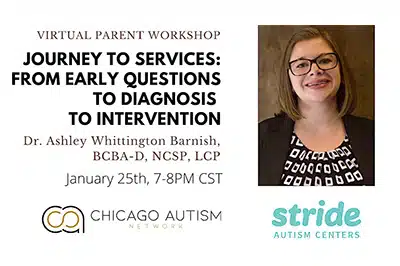
Webinar: Journey to Services: From Early Questions to Diagnosis to Intervention

Stride Autism Centers® invites you to a free virtual event tomorrow evening specifically tailored to parents of children with autism. Join Ashley Whittington-Barnish, PhD, LCP, BCBA-D, NCSP, our Clinical Director, as she explores “Journey To Services: From Early Questions to Diagnosis to Intervention.” The no-cost online event runs from 7–8 pm CST. Sign up here to join us.
Call Now Button