Now Enrolling Ages 2-6!

Learn more

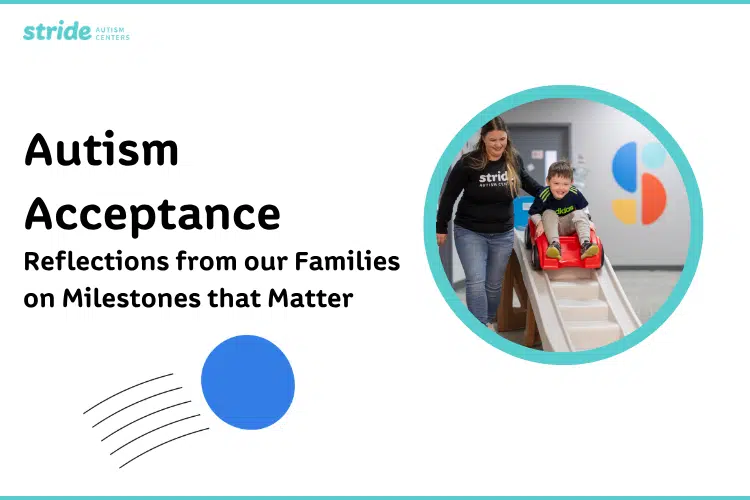
Autism Acceptance: Reflections from Our Families on Milestones that Matter

During Autism Acceptance Month, there’s often a lot of focus on awareness—learning the signs, understanding a diagnosis, recognizing differences. That matters. It’s where many journeys begin.

But for the families we work with every day, acceptance goes deeper than awareness.

It shows up in everyday moments. In the way a child is supported, understood, and given the space to grow in ways that feel right for them, not defined by anyone else.

This month, we asked a few families to share moments they’re proud of. Not just the big milestones, but the ones that reflect real progress, the kind that changes how daily life feels. What they shared was a powerful reminder: acceptance is often found in moments that might seem small from the outside, but mean everything to a family.

For one family, it looked like connection.

Luis, whose son Noah attends our Chicago – South Loop center, shared how meaningful it was to see Noah begin engaging with other children. As an only child, those interactions didn’t come easily at first. But over time, with goals that built gradually, Noah started to warm up to his peers in a way that felt safe and manageable.

“They gave goals that progressively worked up to him warming up to his peers, in a way that wasn’t too extreme,” Luis shared.

That progress wasn’t just about playing alongside other kids. It shifted how Luis feels about what’s ahead, especially with school on the horizon.

“It was a positive experience… I feel more confident in the future steps Noah will have to take when it’s time for him to go to school.”

Another family reflected on the importance of communication and a growing sense of independence.

Dalia shared that her son Isaiah had been working toward two important goals: communicating more effectively and becoming potty-trained. Both mattered not just for daily routines, but for Isaiah’s independence and confidence.

Before, difficulty communicating often led to frustration and challenging behaviors. As his communication improved, those moments became less frequent. In their place came something new: more clarity, more confidence, and the ability to express what he needed.

“He is truly a completely different child from when he first started,” Dalia shared.

That kind of progress didn’t happen overnight. It came from consistency and from a strong partnership, including regular parent training, open communication, and alignment between what was happening in sessions and at home.

“This made a significant difference because it allowed us to stay aligned on goals and strategies both in sessions and at home.”

When Isaiah reached these milestones, the impact was immediate.

“For Isaiah, being able to communicate his needs… has helped him feel more confident and less frustrated,” Dalia shared. “For me, it brings great happiness and peace knowing that he can now express himself.”

Stories like these are a reminder that acceptance starts with seeing a child as they are today, while still holding belief in who they can become.

That’s built over time, through small steps, consistency, and trust between families and care teams working toward the same goals.

At Stride, we see every day that progress looks different for every child. Sometimes it’s a first word. Sometimes it’s joining a group. Sometimes it’s a moment of independence that changes how a family experiences daily life.

Autism Acceptance Month gives us a reason to pause and recognize those moments and each milestone. Not because they’re big or small, but because they matter.

Because acceptance isn’t just about making space. It’s about seeing each child for who they are today, and supporting their growth on their terms, in their own time.
What Autism Acceptance Really Means (and Why It Matters More Than Awareness)

During Autism Awareness Month, the world gets a little louder. You’ll see more blue lights, more social media posts, and more resources than usual. Awareness is important because it’s where the conversation starts.

But for the families we work with every day, awareness is just the baseline. We hear it in conversations with parents all the time.

At Stride, we’ve seen that the real breakthroughs don’t happen when people simply recognize autism. They happen when we move toward something much deeper: acceptance, inclusion, and intentional action. It’s the difference between knowing a child is in the room and making sure that child feels like the room was built for them, too.

Awareness vs. Acceptance: Closing the Gap

Awareness is knowing the terminology and recognizing the signs. But acceptance means embracing a child exactly as they are today, then adjusting the environment around them so they can actually succeed.

  • Awareness says, “I see that you communicate and think differently.”
  • Acceptance says, “I’m going to learn your language and your world so we can truly connect.”

In short: Awareness says, “I see you.” Acceptance says, “You belong here.”

What Acceptance Looks Like on a Tuesday Morning

Acceptance lives in the small, quiet moments of daily life.

  • At Home: It’s a parent letting go of traditional “milestone” timelines and finding genuine joy in the progress their child is making. It’s about shifting expectations to meet the child’s reality, rather than the other way around.
  • In the Clinic: At Stride, acceptance is our starting line. We don’t try to fit children into a pre-made mold. Sometimes, that looks like meeting a child exactly where they are. If a child learns best through movement or specific interests, we follow their lead. 

For example, we recently worked with a child who would only engage by lining up toy cars – same color, same order, every time. Instead of redirecting, our team joined him there and that became the doorway to communication.

  • In the Community: It’s the neighbor who offers a smile instead of a stare, or the pediatrician who talks to the child, not just about them. Or kids who make room and offer an invitation to join in the game. These moments might seem small, but for a family, they feel like everything.

Why the Shift to Acceptance Changes Lives

When we move from simply knowing to truly accepting, it changes the trajectory for a child.

It creates a sense of safety and confidence. When a child feels understood rather than monitored, they’re more likely to branch out. Confidence grows when a child knows they are valued for their perspective, not judged for their challenges. They can be themselves.

It makes the journey feel less isolating for families. The path following a diagnosis can feel incredibly isolating. When a community practices true acceptance, it tells parents: You aren’t alone, and your child’s differences aren’t something we’re just tolerating—you all belong.

And importantly, it leads to real progress. We see the proof in our data, but more importantly, in our hallways. When care is compassionate and individualized, kids thrive. In fact, 98% of Stride parents report an improvement in their child’s ability to initiate communication. That’s not just a statistic; that’s the power of a child feeling empowered to speak up because they know they’ll be heard.

Modern ABA: Supporting the Whole Child

There’s a lot of old-school thinking out there about what therapy looks like. At Stride, our approach to ABA is rooted in honoring individuality. We focus on:

  • Building functional communication (giving a child a voice).
  • Supporting independence (giving a child agency).
  • Celebrating unique strengths (giving a child pride).

It’s never about changing who a child is. It’s about giving them the tools to navigate a complex world on their own terms.

From Acceptance to Action: How to Help

Creating an inclusive world is a team effort. Here’s how we can all move past “awareness” this month:

  • For Families: Trust your gut, advocate fiercely for your child’s unique needs, and celebrate every win—no matter how small it might seem to others.
  • For Educators & Providers: Listen to parents. They are the experts on their children. Aim for flexible, collaborative care that prioritizes the child’s dignity.
  • For the Rest of Us: Normalize differences. Be flexible. If you see a child struggling or playing differently, lead with kindness and curiosity instead of judgment.

The Power of Being Understood

We see the impact of acceptance every single day. It’s in the look of relief on a parent’s face when they realize our therapists really understand their child. It’s in the moment a child tries a new word because they finally feel safe enough to fail.

Awareness is the first step, but acceptance is the goal. When we move toward action, we don’t just “recognize” autism—we make the world bigger for the people who live with it.

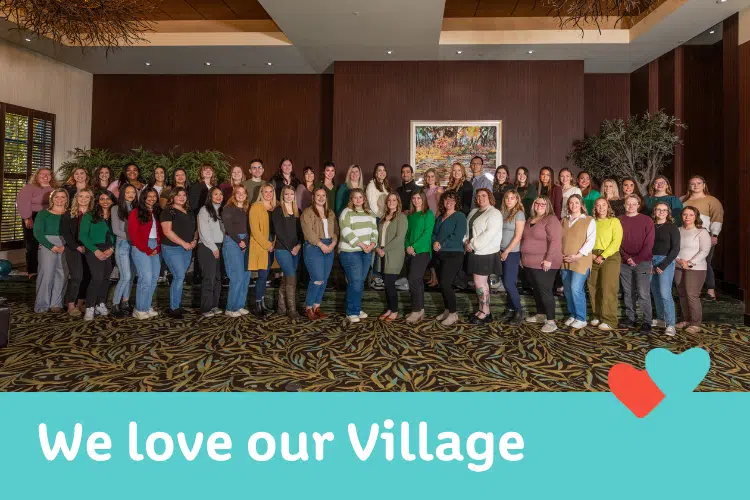
It Takes a Village: The Community Behind Every Child at Stride

By Emily Patrizi, COO, Stride Autism Centers®

When families first come to Stride, many arrive feeling overwhelmed. A diagnosis often brings a wave of questions: What comes next? What support will my child need? Will they be able to communicate, connect with others, and thrive?

These are big questions, and no family should have to face them alone. 

At Stride, we believe something deeply important: every child’s progress is powered by a community. Behind every milestone, a first word, a new skill, a breakthrough moment, is a team of people working together with your family to help your child grow.

A Personal Perspective

I began my career as a Board Certified Behavior Analyst (BCBA). I spent years working directly with children and families, designing therapy plans, coaching teams, and celebrating the small but powerful moments of progress that make this work so meaningful.

That experience shaped how I see our work today. I know firsthand how much dedication, creativity, patience, and collaboration goes into helping a child build new skills. Progress doesn’t happen overnight. It happens through thousands of thoughtful moments, adjusting a teaching strategy, encouraging a child to try again, celebrating a small step forward, and partnering closely with families every step of the way so outcomes are meaningful.

The kind of work we do requires both expertise and heart. To be good at our jobs, we must truly love what we do. And it’s why I am so proud of the clinical teams across our centers.

The Team Behind Every Breakthrough

One of the greatest privileges of my role at Stride is witnessing the extraordinary work our clinical teams do every day. Our BCBAs and behavior technicians bring together science, creativity, patience, and compassion to help children build the skills that expand their world. They make learning joyful, designing individualized therapy plans, celebrating every small step forward, and continuously adapting their approach to meet each child where they are.

While progress often happens in small steps, the impact over time can be remarkable. In our most recent parent/caregiver survey, an average of 95% reported improvements across essential skill areas within the first six months of treatment. 

These improvements include communication, social interaction, play skills, self-care, and school readiness, the everyday skills that help children participate more fully in the world around them. We also see the long-term impact as children move forward in their educational journeys. 

Seventy-one percent of children who complete therapy at Stride transition into mainstream general education classrooms, a milestone that reflects years of dedication from families and care teams working together. 

Beyond the data lies something far more profound: a child discovering new ways to express themselves, build connections, and navigate the world with confidence. Whether it’s finding their first words, making their first friends, or mastering the skills of independence, every milestone is a life expanded.

What Makes Stride Different

While evidence-based therapy is the foundation of our work, we believe progress happens best when children feel supported, understood, and joyful. Our centers are designed to be places where children feel safe to explore, try new things, and celebrate successes. And our teams work closely with families to ensure therapy reflects each child’s unique strengths, needs, and goals.

Parents are never bystanders in this journey, they are our partners. Your insights, your advocacy, and your trust help shape the care we provide. When families and clinicians work together, the results can be extraordinary.

  • Gratitude for Our Healthcare Partners: We’re also deeply grateful for the pediatricians, developmental specialists, therapists, and educators who partner with us in supporting families navigating autism. Your referrals and collaboration allow more children to access the care they need and ensure families receive coordinated support across their child’s development. It truly takes a community to help children thrive.
  • The Values That Guide Our Work: Recently, we introduced a set of core values that reflect what matters most to us as an organization. These values guide how we care for children, support families, and work together as a team.
  • Do What’s Right: We do the right thing, even when it’s hard. Our work has a direct impact on vulnerable lives so we show up and behave as though everyone is watching.
  • Continuous Improvement: We’re not chasing perfection, just progress. We learn forward, ask questions, and celebrate wins along the way.
  • Collaborate, Collaborate, Collaborate: We share ideas, lift each other up, and develop solutions side by side.
  • Infuse Joy: We find reasons to smile, laugh and make work feel a little lighter. Joy fuels creativity, connection, and our best days.
  • Care BIG: Kindness isn’t soft, it’s our superpower.

These values reflect something I see every day across our centers: a team that cares deeply about the children and families we serve.

A Community That Makes Progress Possible

Stride’s mission is simple: to make worlds bigger and lives better for children with autism and their families. 

Every day, I see that mission come to life, in the patience of a therapist helping a child try again, in the encouragement shared between families, and in the quiet moments when a child achieves something that once felt impossible.

During Autism Acceptance Month, we celebrate the incredible progress children make. But we also celebrate the people who help make that progress possible: families, clinicians, healthcare partners, and the broader community that surrounds every child with support. Because when we work together, children can accomplish amazing things.

And at Stride, it is our honor to be part of your village.

When Early Support Makes a Difference: A Stride Family’s Story Featured on KMTV

We were proud to see one of our Northwest Omaha families recently featured on KMTV, sharing their experience supporting their young son, Cooper. In the interview, Cooper’s parent Ryan spoke with our CEO Brad Zelinger about what their family’s journey has looked like since beginning early intervention.
Stories like Cooper’s matter because many families are walking a similar path. When a child is diagnosed with autism, parents are often asked to make important decisions quickly, sometimes before they have had time to fully process the diagnosis. Hearing from another family can help parents feel less alone and better understand why early ABA therapy is often recommended after diagnosis. Many clinicians agree that the years between ages two and six are an especially important time for learning and development. During these early years, children’s brains are more open to learning new skills. Early, consistent support can help children build communication, social, and daily living skills that support independence over time. For many families, learning how to choose the right ABA program for their child is one of the first steps after diagnosis At Stride, progress is not based on observation alone. Outcomes are measured so families and care teams can understand how children are developing over time. This focus on data and individualized goals is part of the Stride approach to ABA therapy, which emphasizes consistent measurement, collaboration with families, and treatment plans tailored to each child Across Stride centers, caregivers report meaningful improvement across many areas within the first six months of therapy. According to collected outcomes data, caregivers report improvement in transitions for 100 percent of children within six months. Improvement is also reported in initiating communication at 98 percent, and in motor skills, self-care skills, and understanding communication at 96 percent. Progress is also reported in play skills and social interaction, both at 95 percent. % of patients improving skills in 6 months of ABA treatment + skills improved are listed Families also report improvement in areas that can strongly affect daily routines, including challenging behaviors, school readiness, and social-emotional skills, each reported at 93 percent. Even mealtime behaviors, which can be especially stressful for families, show improvement in 91 percent of cases. Across all of these areas, caregivers report improvement in an average of 95 percent of essential therapeutic goal areas within the first six months of treatment. These outcomes are often associated with intensive, center-based ABA therapy during the preschool years, where children benefit from structured routines, consistent expectations, and frequent opportunities to practice skills.  Center-based ABA therapy allows care teams to work closely together and adjust plans as children grow and develop. For many families, this level of coordination and consistency is difficult to achieve in less structured settings. Cooper’s story, as shared on KMTV, is one example among many families we serve. We are grateful to his family for sharing their experience and helping other parents better understand what early intervention can look like. Early support cannot remove every challenge, but it can help families build skills and routines during a time that is especially important for development. We are grateful to KMTV for featuring Cooper and his family and for helping bring thoughtful attention to early autism intervention in Nebraska. Stride is the leading center-based ABA therapy program in Nebraska serving children 2-6 years old who have received an autism diagnosis. We have locations across the state in: All Nebraska centers are currently enrolling, accept most major insurance plans including Medicaid, and do not have a waitlist at this time. Stride is also the only ABA therapy provider in the state of Nebraska fully accredited by the Autism Commission on Quality (ACQ), reflecting an ongoing commitment to clinical quality, consistency, and accountability in care delivery.

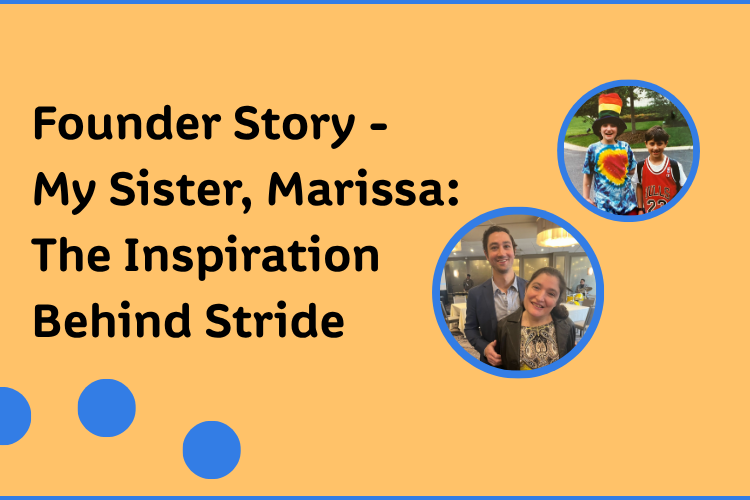
My Sister, Marissa: The Inspiration Behind Stride

Author: Brad Zelinger – CEO and Founder of Stride Autism Centers®

My older sister, Marissa, is the reason behind Stride Autism Centers®. Marissa has Rett Syndrome, a rare genetic disorder on the autism spectrum.

I have a vivid early childhood memory of calling out, “Hi, Marissa!” and hoping she would answer me. While I was often met with her beautiful smile, her voice remained silent. 

To this day, my family and I long to truly communicate with her and that yearning has fueled a lifetime of purpose. 

I remember being a shy kid in elementary school, but I also remember Marissa. We went to school in the same building, and her unique cries would often echo through the hallways as she transitioned between classes. Those sounds always cut through to me. I would hear them from my own classroom and feel a knot in my stomach, wondering: Is she okay? Is she hurt? Does she need something? I wanted so desperately to help her and understand what was going on, but I was just a child myself, busy in my own class and unable to do anything to make a difference. That feeling of wanting to help but being unable to is a driving force behind Stride.

My passive shyness transformed on a family trip to Washington D.C. when I was 12. We were at a museum, and my parents were momentarily distracted. For a fleeting second, I was just the shy, embarrassed kid again—the one who felt the awkward distance between himself and his unique sister, especially in public. As Marissa began to wander off towards a large group of students, I had a clear choice: let her drift unsafely, or act and reveal that I was her brother, in front of everyone. Without a second thought—and in full view of that entire group—I chose to reach for her hand to ensure she stayed with us and was safe. That distinct moment was a powerful turning point. By choosing to grab her hand, I shed my self-consciousness and fully embraced my role. From that moment on, I have felt pride and joy about the opportunity to be her brother, friend, and advocate.

Turning a Personal Mission into a Professional One

Growing up, supporting my sister’s special needs was not just a part of our  family life, it was central to everything we did. It ignited a deep-seated passion to help others like her. 

This drive led my grandparents to establish the Goldstick Initiative at the University of Illinois College of Education over 20 years ago to advance research and cultivate the next generation of leaders in the field of communication disorders. A decade ago, I launched Reverse Rett Chicago, an annual fundraiser for Rett Syndrome, the autism-related disorder affecting Marissa. Since then, we’ve raised over $3 million for Rett research. These efforts were always deeply personal – an extension of our family’s mission to help Marissa and others.

My journey to found Stride happened during my post-MBA finance career. Despite landing a job I’d worked so hard for, I felt a deep longing for more meaningful work. It was then that I found a way to apply my business background to a mission-driven pursuit that directly supported people with disorders like my sister and touched my heart.

 A friend suggested I read the book Autism Matters by Ronit Molko, which outlined the lack of  quality autism services throughout the country. I realized that my years of family advocacy and business training had prepared me for this exact moment: to build Stride from the ground up to provide the resources I wish my sister had always had. This work wasn’t a new direction for me; it was the culmination of everything I’d learned and cared about.

Finding My Calling in Applied Behavior Analysis (ABA)

The more I learned about the life-changing power of ABA, the more passionate I became. I spent a year traveling the country to study the best possible model for designing my own ABA center.

Learning about the power of ABA was both a revelation and a bittersweet moment. It was an enormous opportunity to help others, but it also made me reflect on my sister’s past. I grew up participating in her therapy sessions, and while they were filled with love, they lacked the tangible progress we all hoped for. I came to realize that if those dedicated therapists had the tools and techniques of ABA, my sister might have had more independence and had her voice heard. 

The Stride Difference: Early Intervention and Gold Standard ABA

This realization fuels Stride’s mission. My hope is to provide other families with the resources and tools I wish my sister had. This is why Stride is committed to providing the highest standard of ABA therapy, with a focused approach on early intervention for young children.

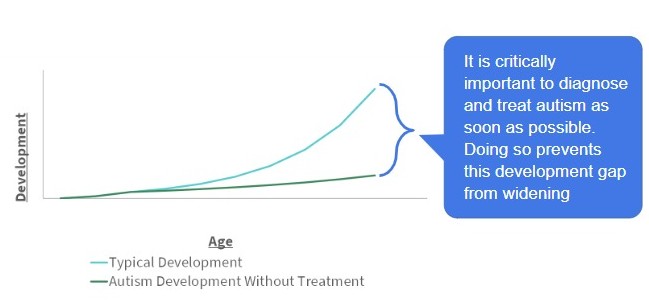
A chart showing how age and development correspond as it relates to autism

At Stride, we understand that early intervention is paramount. The graph above illustrates a crucial truth: the earlier effective treatment begins, the greater the potential to bridge developmental gaps. Just as it was harder to make a significant difference later in life for my sister, we know that the greatest impact for children with autism comes when support is provided during their formative years. This understanding shapes our unwavering commitment to reaching children as soon as possible, empowering them with foundational skills that will serve them throughout their lives.

We specialize in Applied Behavior Analysis (ABA) because it is the gold standard for autism therapy, backed by decades of research demonstrating effectiveness. Our focus is delivering top-tier ABA for young children. This specialization allows us to channel all our resources and expertise into what makes the biggest, most impactful difference.

Beyond the specific ABA techniques, our center-based model is a cornerstone of success. It provides an environment rich with social interaction, which is vital for children to develop relationships and learn social cues so they can successfully navigate school and beyond. In our centers, children engage with peers and therapists in varied structured and natural settings, building communication and social skills that are often difficult to replicate in other environments, like home-based therapy. At Stride, we enable children with autism to graduate successfully into neurotypical kindergarten classrooms, and in doing so, pave the path towards an independent and joyous life.

A Top Workplace in Iowa: Celebrating Our Team and Our Newest Center in Des Moines

By Brad Zelinger, Founder & CEO

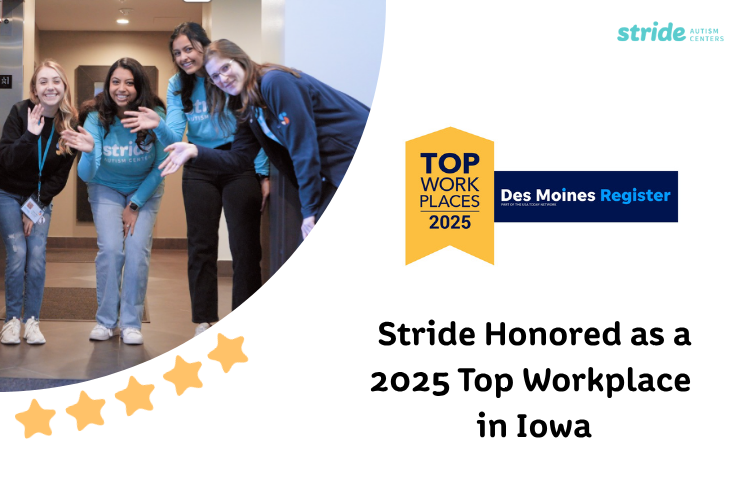
I’m excited to share that Stride Autism Centers® has been named a 2025 Iowa Top Workplace by the Des Moines Register. This award is based entirely on feedback from our employees, making it especially meaningful. It tells us that our team feels supported, valued, and inspired in their work, something we strive for every day.

This recognition comes at an exciting time for Stride. In May, we opened our 10th center in Cedar Rapids, and this week we’re celebrating the grand opening of our 11th Iowa center in Des Moines. Stride also recently became Fully Accredited by the Autism Commission on Quality (ACQ), an achievement that reflects our commitment to clinical excellence. Together, these milestones highlight our growth and dedication to delivering exceptional care for young children with autism. To our incredible team, thank you. This award belongs to you. And to the families we serve, we are honored to walk this journey with you.

Finally, I want to give special thanks to Ryhanna Singleton, who took a leap of faith five years ago to become Stride’s very first BCBA. Since then, she has been a driving force behind our growth, leading our clinical team with unwavering dedication. Her leadership has not only helped us expand our services across Iowa but has also set the standard for the compassionate, high-quality care that defines us. We are incredibly grateful for her five years of service and her tireless commitment to our mission.

From Brad: A Milestone That Means So Much

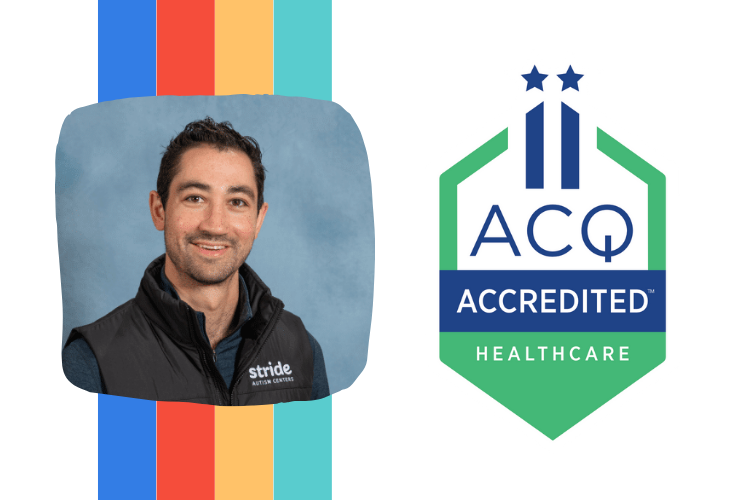
At Stride Autism Centers®, we’ve always believed that quality isn’t a goal, it’s a responsibility. Today, I’m thrilled to share a major milestone that speaks to that belief. Stride is now fully accredited by the Autism Commission on Quality (ACQ) in Illinois, Iowa, and Nebraska. Even more exciting, we’re the first ABA provider in the state of Nebraska to earn this prestigious honor.

This accreditation is a big deal. The ACQ holds organizations to some of the highest standards in our field. To meet these standards, our team went through a long and detailed review of our clinical care, business practices, safety systems, and more. Every aspect of what we do was examined. The result? A perfect score. That’s right, Stride passed every single part of the ACQ’s rigorous evaluation.

Why did we do this? Because we want families and communities to know that they can trust us. We want them to feel confident that their children are receiving care that’s thoughtful, evidence-based, and driven by compassion. And we also want current and future team members to know that when you join Stride, you’re joining an organization that sets a high bar, and clears it.

Our journey to accreditation took time, energy, and unwavering dedication. I want to give a heartfelt thank you to everyone who helped make this happen, whether you were part of our clinical team, our central support team, or helping behind the scenes. You played an integral role. 

This recognition isn’t just about meeting standards. It’s about exceeding them, for the families we serve, the children we support, and the communities we’re proud to be part of, especially in places where quality autism care hasn’t always been easy to find.

It’s also a moment to reflect on our culture. Stride has been named a Top Workplace for two years in a row, with special recognition for our Professional Development and Employee Wellbeing programs. That’s not a coincidence. High-quality care starts with a team that feels valued and empowered. We’re nothing without our team members. 

This is a proud moment for all of us. We are honored to achieve this milestone and are committed to lead with excellence and purpose.

Stride On!

Brad Zelinger

Founder & CEO, Stride Autism Centers®

Exciting News: Stride Autism Centers® Named a 2025 Top Workplaces USA Today Award Winner During Autism Acceptance Month

When I founded Stride Autism Centers®, my vision was to create an environment where children with autism receive exceptional early intervention therapy, and where our team members feel valued and supported.   Today, I am honored to announce that Stride Autism Centers® has been recognized as a 2025 Top Workplaces USA Today Award winner by Energage. This accolade, based entirely on employee feedback, reflects our dedication to fostering a positive and empowering workplace culture.  

What This Award Means to Us

  The Top Workplaces USA Today Award evaluates organizations on aspects such as culture, leadership, employee engagement, and values—fundamental principles that define Stride’s identity. Knowing that our team feels supported and inspired affirms that we are on the right path.   As we continue to expand across the Midwest, with new centers opening in Iowa and Nebraska—including our tenth center in Iowa and sixth in Nebraska—maintaining our people-first culture remains a top priority.   Our work is demanding but deeply rewarding. We serve communities where early intervention ABA therapy may not otherwise be available, and we do so with a team that believes in our mission and supports one another every step of the way.


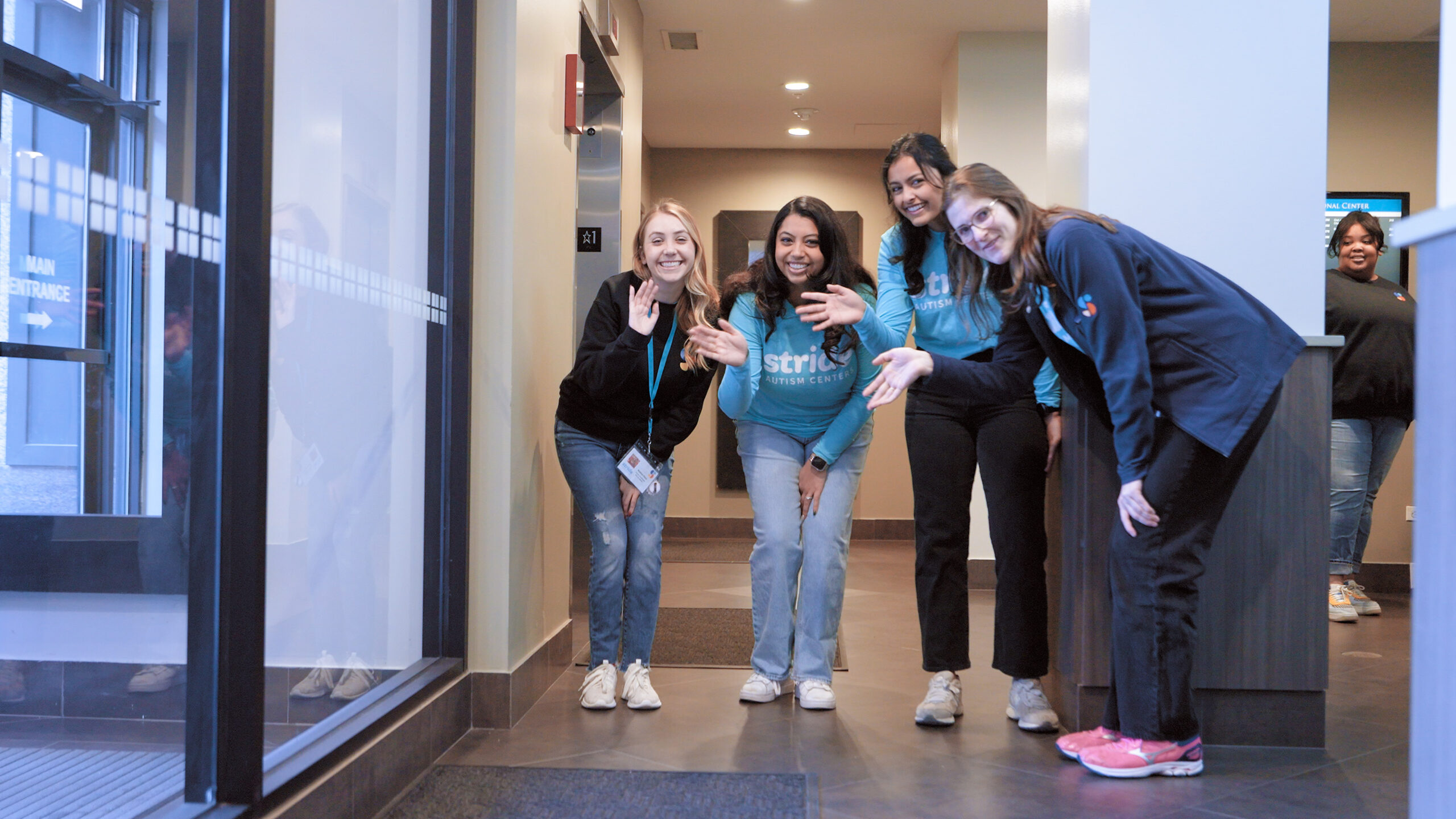
Team members posing at the Stride Autism Center


The Heart of Stride: Our People

  At the core of Stride’s success is our people. Our therapists, clinical supervisors, and administrative staff bring their best every day, ensuring that the children and families we serve receive unparalleled care. Their commitment to evidence-based, compassionate therapy is what makes Stride a trusted resource in our communities.   As a company, we make it a priority to invest in professional growth, well-being, and a workplace environment that fosters collaboration and innovation. From mentorship programs to leadership training, we are committed to ensuring that every team member has the tools and support they need to thrive.  

A Personal Mission

  For me, Stride Autism Centers® is more than just an organization—it is a deeply personal mission. My sister’s experience with an autism-related disorder shaped my understanding of the challenges that families face in accessing high-quality services. It is this personal connection that fuels our drive to expand access to early intervention therapy, and to do so in a way that honors the dedication of our team members.   This award is a milestone, but it is also a reminder of our responsibility to continue creating a workplace where people love to work. We are not only transforming lives through ABA therapy; we are building a culture where professionals feel valued, respected, and inspired to make a difference.  

Looking Ahead

  As we look to the future, our commitment remains unwavering. We will continue to grow, innovate, and refine how we support both our employees and the families who trust us with their children’s care. With several new centers opening this year—including Des Moines and Cedar Rapids in Iowa and Bellevue, Nebraska—we are excited to expand our impact.   To our incredible team: Thank you for making Stride Autism Centers® a Top Workplace. This honor belongs to you, and I am grateful to be on this journey with such an extraordinary group of people.   For those looking to join an organization that is making a real impact, we are always looking for passionate individuals to be part of our mission. Stride Autism Centers® is hiring—come grow with us.     Happy Autism Acceptance Month!   Brad Zelinger Founder & CEO, Stride Autism Centers®

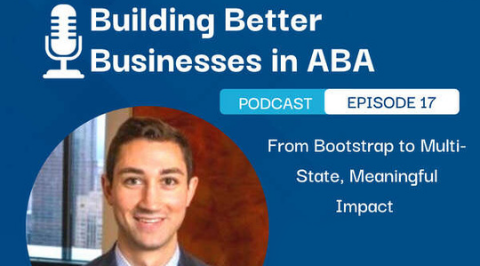
Brad Zelinger, Stride’s Founder and CEO Featured on “Building Better Businesses in ABA” Podcast

Brad Zelinger, Founder & CEO of Stride Autism Centers®, was recently a featured guest on the “Building Better Businesses in ABA” podcast, hosted by Jonathan Mueller. He talked about how his sister’s autism-related disorder drew him into working with people with developmental disabilities. He also provided some insight into what distinguishes Stride from other applied behavior analysis (ABA) therapy organizations. Check it out!

https://elementrcm.ai/building-better-businesses-in-aba/

Stride’s Founder Helps Raise Over $2,000,000 Towards Autism-Related Disorder

Stride is proud to announce that it’s Founder & CEO, Brad Zelinger, has helped raise over $2,000,000 towards Rett Syndrome research. Brad’s sister, Marissa, and the challenges she’s faced due to her autism-related disorder, is the inspiration behind Stride Autism Centers®. This year’s Reverse Rett Chicago event was held virtually and raised nearly $250,000. Since inception, Reverse Rett Chicago has raised over $2,000,000.


About Brad Zelinger

Brad Zelinger joined the RSRT board of trustees in 2016. A strong and steadfast advocate and fundraiser for Rett research and RSRT, Brad is inspired by his adult sister, Marissa, who suffers from Rett Syndrome. In 2015 Brad created and launched, along with his and Marissa’s parents, the Reverse Rett Chicago gala. The annual event has been highly successful, raising more than $2 million for RSRT over the last five years and increasing Rett Syndrome awareness in Chicago.

Brad began his career in New York City in investment banking at Moelis & Company. He then returned to Chicago, where he grew up, to work in private equity at Madison Dearborn Partners. Brad holds an undergraduate degree from the Ross School of Business at the University of Michigan and graduated in 2018 with an MBA from Harvard Business School.

Call Now Button