If you’ve been wondering whether your 2-year-old may be showing signs of autism, you’re not alone. Many parents notice small differences in communication, play, or social interaction during the toddler years — and paying attention to those early signs can help your child access support sooner. Stride Autism Centers® has compiled a guide to help you identify the first signs, validate your feelings, and organize your observations.
Why Early Autism Screening Matters at Age 2
The 18- to 24-month period is a time of growth in social and communication skills for children, making it a critical window for observation. The American Academy of Pediatrics (AAP) recommends a universal autism screening during this time to identify developmental delays, including autism. Early detection and intervention can lead to the best possible long-term outcomes for young children.
Early Signs of Autism in 2-Year-Olds: A Parent’s Guide
While this is not a diagnostic tool, this guide outlines some of the most common early signs of autism and developmental differences in children around age 2.
Social and Emotional Signs
Here are some early signs that are associated with autism:
Don’t share smiles or other joyful expressions with you
Show little interest in play with or near other children
Have difficulty making or holding eye contact
Rarely responds to their name
Communication and Language Signs
If you notice these signs, your child may have some communication and language delays:
Doesn’t use two-word phrases by 24 months
Loses words or skills they once had
Doesn’t point at things to show interest
Repeats words or phrases (sometimes called echolalia)
Behavioral Signs
Look out for restricted or repetitive behaviors, including:
Lining up toys or objects and getting upset when the order is changed
Showing an intense interest in specific topics or objects
Following very specific routines and having difficulty with change
Engaging in repetitive movements, like hand-flapping, rocking, or spinning
Parents are often the first to notice when something feels different in their child’s development — and trusting those instincts matters. Every child develops differently, and showing one or even several of these signs does not automatically mean your child is autistic. But if you have concerns, it’s always worth discussing them with your pediatrician or a developmental specialist.
Finding the Right Support
If your child is showing autism signs and symptoms as a 2-year-old, the next step is to seek a professional evaluation. An early diagnosis can open the door to proven therapies like Applied Behavior Analysis (ABA).
At Stride, we offer an up to full-day ABA program for children aged 2-6 using a play-based, naturalistic ABA approach designed to build communication, social, and daily living skills in ways that feel meaningful and engaging for young children. Here’s a closer look at what to expect:
One-on-one therapy sessions with an experienced, dedicated therapist
Focus on building foundational communication, social, and daily living skills
A collaborative approach where parents are involved in their child’s progress
Research consistently shows that early intervention can improve communication, social interaction, and daily living skills for many children with autism. With the right support, many children make meaningful progress, build confidence, and continue developing important life skills over time.
You Don’t Have to Navigate This Alone
Stride is here to partner with you and help your child thrive. Reach out to a Stride location near you to learn about next steps, including how to secure a diagnostic evaluation in your area, support services, and early intervention options.
When families first come to Stride, many arrive feeling overwhelmed. A diagnosis often brings a wave of questions: What comes next? What support will my child need? Will they be able to communicate, connect with others, and thrive?
These are big questions, and no family should have to face them alone.
At Stride, we believe something deeply important: every child’s progress is powered by a community. Behind every milestone, a first word, a new skill, a breakthrough moment, is a team of people working together with your family to help your child grow.
A Personal Perspective
I began my career as a Board Certified Behavior Analyst (BCBA). I spent years working directly with children and families, designing therapy plans, coaching teams, and celebrating the small but powerful moments of progress that make this work so meaningful.
That experience shaped how I see our work today. I know firsthand how much dedication, creativity, patience, and collaboration goes into helping a child build new skills. Progress doesn’t happen overnight. It happens through thousands of thoughtful moments, adjusting a teaching strategy, encouraging a child to try again, celebrating a small step forward, and partnering closely with families every step of the way so outcomes are meaningful.
The kind of work we do requires both expertise and heart. To be good at our jobs, we must truly love what we do. And it’s why I am so proud of the clinical teams across our centers.
The Team Behind Every Breakthrough
One of the greatest privileges of my role at Stride is witnessing the extraordinary work our clinical teams do every day. Our BCBAs and behavior technicians bring together science, creativity, patience, and compassion to help children build the skills that expand their world. They make learning joyful, designing individualized therapy plans, celebrating every small step forward, and continuously adapting their approach to meet each child where they are.
While progress often happens in small steps, the impact over time can be remarkable. In our most recent parent/caregiver survey, an average of 95% reported improvements across essential skill areas within the first six months of treatment.
These improvements include communication, social interaction, play skills, self-care, and school readiness, the everyday skills that help children participate more fully in the world around them. We also see the long-term impact as children move forward in their educational journeys.
Seventy-one percent of children who complete therapy at Stride transition into mainstream general education classrooms, a milestone that reflects years of dedication from families and care teams working together.
Beyond the data lies something far more profound: a child discovering new ways to express themselves, build connections, and navigate the world with confidence. Whether it’s finding their first words, making their first friends, or mastering the skills of independence, every milestone is a life expanded.
What Makes Stride Different
While evidence-based therapy is the foundation of our work, we believe progress happens best when children feel supported, understood, and joyful. Our centers are designed to be places where children feel safe to explore, try new things, and celebrate successes. And our teams work closely with families to ensure therapy reflects each child’s unique strengths, needs, and goals.
Parents are never bystanders in this journey, they are our partners. Your insights, your advocacy, and your trust help shape the care we provide. When families and clinicians work together, the results can be extraordinary.
Gratitude for Our Healthcare Partners: We’re also deeply grateful for the pediatricians, developmental specialists, therapists, and educators who partner with us in supporting families navigating autism. Your referrals and collaboration allow more children to access the care they need and ensure families receive coordinated support across their child’s development. It truly takes a community to help children thrive.
The Values That Guide Our Work: Recently, we introduced a set of core values that reflect what matters most to us as an organization. These values guide how we care for children, support families, and work together as a team.
Do What’s Right: We do the right thing, even when it’s hard. Our work has a direct impact on vulnerable lives so we show up and behave as though everyone is watching.
Continuous Improvement: We’re not chasing perfection, just progress. We learn forward, ask questions, and celebrate wins along the way.
Collaborate, Collaborate, Collaborate: We share ideas, lift each other up, and develop solutions side by side.
Infuse Joy: We find reasons to smile, laugh and make work feel a little lighter. Joy fuels creativity, connection, and our best days.
Care BIG: Kindness isn’t soft, it’s our superpower.
These values reflect something I see every day across our centers: a team that cares deeply about the children and families we serve.
A Community That Makes Progress Possible
Stride’s mission is simple: to make worlds bigger and lives better for children with autism and their families.
Every day, I see that mission come to life, in the patience of a therapist helping a child try again, in the encouragement shared between families, and in the quiet moments when a child achieves something that once felt impossible.
During Autism Acceptance Month, we celebrate the incredible progress children make. But we also celebrate the people who help make that progress possible: families, clinicians, healthcare partners, and the broader community that surrounds every child with support. Because when we work together, children can accomplish amazing things.
And at Stride, it is our honor to be part of your village.
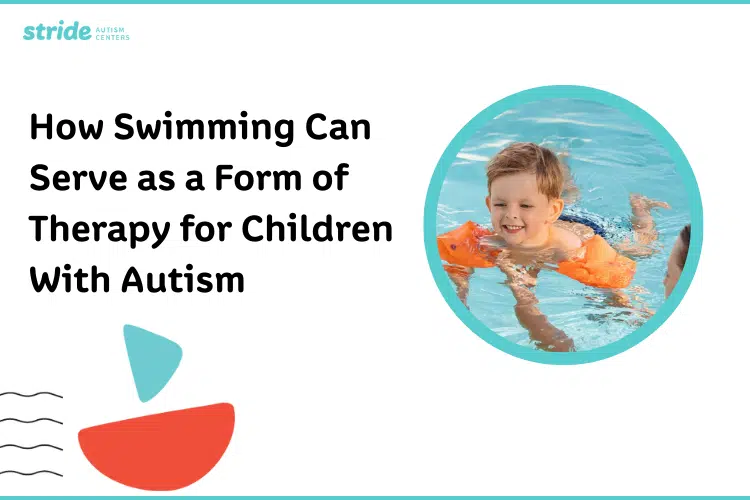
Supportive therapies help children thrive in all aspects of their development, including social, physical, emotional, and cognitive growth. Swimming is a powerful therapeutic tool that can help your kiddo learn and gain confidence while having fun.
Children with autism often benefit from swimming because it offers calm, sensory input and opportunities to practice various skills. Combining autism swimming classes with applied behavioral analysis (ABA) therapy can be a fantastic way to support learning and development.
Why the Water Is a Uniquely Supportive Environment
Water is a supportive environment for children with autism because it offers the following benefits:
Buoyancy for a low-impact workout: Water supports your kiddo’s body weight, making it easier for them to move freely and build strength without straining their joints. This is especially beneficial if your child experiences motor planning challenges or low muscle tone.
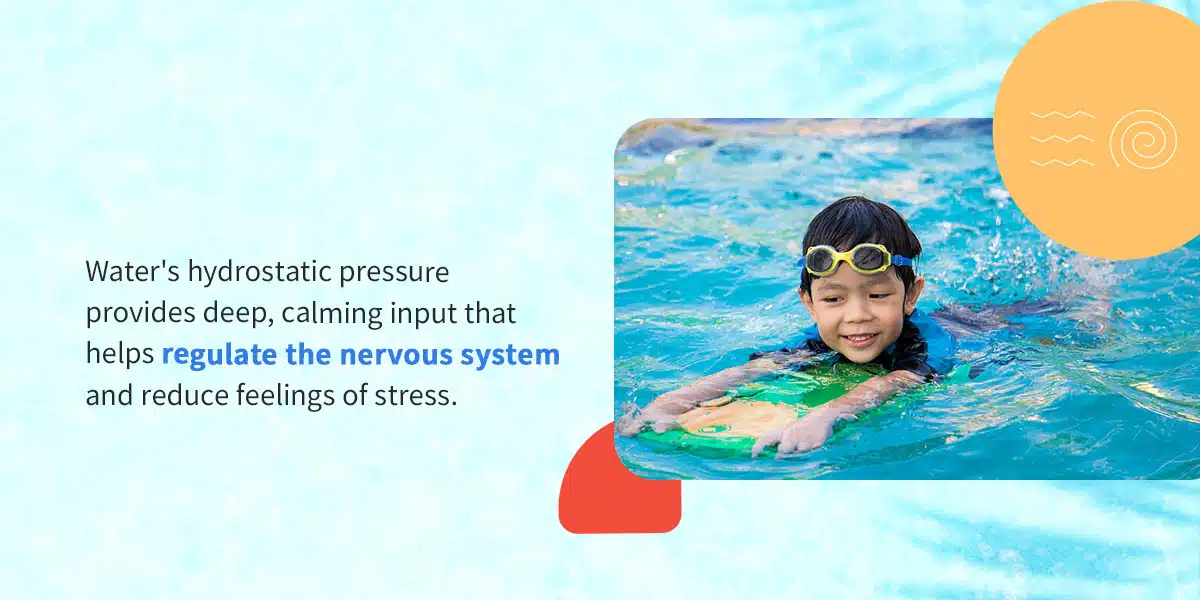
Natural hydrostatic pressure: Water places gentle, consistent pressure on the body, which can have a calming effect on the nervous system. They may find that it feels similar to a weighted blanket. Spending time in the water is an excellent way to support sensory regulation.
A focused, distraction-free setting: The pool environment naturally limits auditory and visual distractions, helping your child focus on their instructor and the tasks at hand.
The Physical Benefits of Swimming for Autism
Learning to swim offers many physical benefits for children with autism:
Improved Motor Skills and Coordination
Swimming incorporates the entire body. This helps improve gross motor skills such as kicking and pulling. It also lets your kiddo practice using both sides of the body together in a controlled manner.
Enhanced Strength and Endurance
Water’s natural resistance can help your child build muscle strength and cardiovascular health. As they have fun moving their arms and legs through the water, they work multiple muscle groups. The water’s hydrostatic pressure boosts circulation and increases heart rate, strengthening your little one’s heart and lungs.
Better Body Awareness
Swimming provides continuous feedback to the joints and muscles, helping your little one learn where their body parts are in relation to their surroundings and how much force to use when moving. This develops a stronger sense of their physical self in space. Water’s buoyancy reduces the effects of gravity, allowing them to move easily with less fear of falling.
Your kiddo can explore new movements and gradually strengthen:
Balance
Coordination
Motor planning skills
How Swimming Helps With Sensory Processing
Swimming can regulate or manage sensory processing in children with autism through the following benefits:
A calming sensory experience: Water’s hydrostatic pressure provides deep, calming input that helps regulate the nervous system and reduce feelings of stress. This is especially helpful if your kiddo is sensory-seeking or sensory-avoidant.
Management of sensory overload: Water provides consistent sensory input, which can help filter out more jarring sensations. A pool or body of water is a comfortable environment for children who often experience overwhelm.
Tolerance of new textures and temperatures: Swimming is a gentle way to adapt to different sensations and temperatures.
Swimming Helps Children With Autism Build Social and Communication Skills
When it comes to autism and swimming lessons, the following aspects can build social and communication skills:
Structured group learning: Swimming lessons provide a structured social setting. Your little one can practice following group instructions, waiting their turn, and interacting with peers in a supervised environment.
Natural opportunities for communication: Swimming instructors often use a combination of verbal cues, prompts, and songs that encourage children to listen and respond. This can strengthen receptive and expressive language skills.
Shared interests and peer interaction: Swimming provides a fun environment for children to connect with peers, build friendships, and develop a sense of belonging.
Practical Tips for a Successful Start
Use the following tips to introduce your little one to autism swimming lessons:
Choosing the Right Program
Choosing a supportive swimming program specifically designed for individuals with autism is essential for helping your little one thrive and build confidence. Ask if the program uses visual aids or schedules to help children adjust to the lessons. You can also ask about class sizes. Smaller groups may provide the most comfortable experience.
Introducing Your Child to the Pool
Start with short, fun visits without any pressure to swim. Let your kiddo explore the water at their own pace. They may want to sit on the steps, splash with their hands, or kick their feet. Bringing comfort items or fun sensory toys can create a sense of fun and familiarity, so they feel more comfortable in a new learning environment.
Addressing Water Safety
Learning water safety early in life can help your child avoid accidents, especially if they are drawn to water. Constant supervision is essential, but you can also help your little one learn safety with visual tools. For example, you might use picture cards or video modeling to teach rules such as only entering the pool with an adult.
Your family can also collaborate with the swim instructor to teach survival skills, like treading water, floating, and identifying exit points. Instructors with specialized training can tailor lessons and strategies to meet the needs of learners with autism.
How Swimming Complements ABA Therapy
ABA therapy helps little ones learn functional skills and build confidence. Swimming lessons complement ABA therapy in the following ways:
Opportunities to practice skills: ABA therapy teaches foundational skills, and swimming provides a new environment to practice them. For example, your child might learn how to follow multistep directions during ABA therapy and then strengthen that skill when a swim instructor asks them to kick their feet and blow bubbles.
Reinforced positivity: You can use swimming as a natural reinforcer within ABA therapy. The fun of the activity can motivate your kiddo to work on challenging tasks.
Improved focus for therapy sessions: The physical exertion and sensory regulation of swimming can strengthen focus and encourage engagement in ABA therapy.
Swim Therapy Opportunities Near ABA Therapy Centers
Stride Autism Centers® offers ABA therapy for children ages 2-6, and we are happy to collaborate with your little one’s swim therapist on goals and tracking progress. Explore the following swim therapy opportunities near Stride locations:
Sunsational Swim School:Sunsational Swim School offers swim lessons for children with autism in Chicago, Illinois.
SafeSplash Swim School: SafeSplash Swim School provides adaptive swim lessons in Waukee, Iowa.
Taking your kiddo to a movie theater is a fun way to make memories, but it’s always best to have a plan when approaching new situations and introducing a new environment. With the right preparation, you and your child can both have a fantastic time enjoying a new favorite on the big screen.
Preparing for Your Movie Adventure
When it comes to movie theaters and autism, your little one may need support as they navigate new sensory input and a change in routine. A theater’s sudden darkness, booming sound system, smell of popcorn, and presence of unfamiliar faces may feel overwhelming to them at first. With a bit of loving preparation and gentle guidance, you can help your kiddo feel secure in their new adventure.
Here are some helpful tips to know when taking a child with autism to the movies:
Talk About the Movies
Surprises can be overwhelming for some kids with autism. It’s best to talk about a movie theater before your fun day out. Start the conversation early so they know what to expect. You can discuss what a theater is and what it looks like, and watch movie trailers together to build excitement. You can also look up online photos and videos of movie theaters to help them better conceptualize the experience.
Discuss specific sensory experiences your little one may encounter. Explain that the lights will dim completely, leaving the room dark. Please let them know that the sound will be loud, especially during action scenes. Talk about the distinct smell of candy and popcorn, and how many people may be sitting close together. Explain that, while people are not supposed to talk or shine lights during a movie, it could still happen. Help them understand the best ways to respond in these scenarios.
Create a Social Story
A social story is a powerful tool. Create a simple, personalized book or a short video that walks your kiddo through the entire movie theater process. This teaches what to expect at each stage, including:
Packing snacks
Leaving the house
Walking into the theater
Buying tickets and snacks
Using the bathroom before the movie
Finding your seats
Watching the movie
Leaving the theater
Choose the Right Movie and Showtime
Choose a movie that will capture your child’s interest. Try to find one that seems similar to books, characters, or TV shows they enjoy. You can also show them multiple movie trailers and let them pick the one they like best. The more they like a film, the more likely they are to enjoy their time at the theater.
Try to go to the movies during off-peak hours, such as a weekday matinee, when the theater is likely to be less crowded. This allows for a more comfortable, less stimulating environment. You might also consider planning to arrive after most of the commercials and advertisements have finished.
Pick Your Seats
Many movie theaters offer reserved seating. Choose seats near an exit so you can leave quickly if your little one needs a break. An aisle seat also provides a little extra room to move. If you anticipate your child needing more extra space to fidget or adjust, try waiting to reserve your seats until the day of the movie so you can pick a spot that has an empty seat on at least one side.
Look for Inclusive Moviegoer Experiences
If you can, take your child to the movies at a theater that offers inclusive experiences for individuals with autism or sensory needs. These types of screenings vary across theaters, but may include lowered sound levels, fidget toys, and more space for movement. They may also eliminate pre-show advertisements to reduce sensory overload before the main feature begins. This supports a calmer, easier transition.
To find these special screenings, check your local movie theater chains or theater websites. Many larger cinema companies offer sensory-friendly showings on a regular basis, and they are often on weekend mornings. This provides a welcoming and understanding environment where your little one can talk, move, or make sounds without worry.
What to Bring for a Successful Trip
These items can help you and your kiddo enjoy a successful trip to the movies:
Sensory toolkit: Pack a bag with sensory essentials. Depending on your little one’s needs, this might include noise-canceling or -dampening headphones, sunglasses, or a favorite hat to block visual stimulation. A weighted lap pad and quiet fidget toys can provide a sensory outlet during the movie.
Comfort items: Take a favorite blanket or stuffed animal to the theater. These comfort items can create a sense of security in an unfamiliar environment.
Familiar snacks: Bringing your child’s favorite snacks from home can provide a sense of comfort and routine.
On the Day of the Movie
The following tips can help you and your little one have a calm, fun time together on the day of the movie:
Arrive Early, But Not Too Early
Get to the theater with enough time to get settled without feeling rushed. However, you should also try to avoid arriving too early. Give yourselves enough time to use the restroom and find your seats, but not so much time that you have to wait in the lobby for an extended time.
Know When to Push and When to Pivot
You know your little one best. Provide comfort and encouragement through moments of anxiety, and be prepared to leave if the experience becomes too overwhelming. It’s OK if the first visit doesn’t go as planned.
Celebrate the Small Victories
Acknowledge you and your little one’s success. Even making it through the trailers or the first 20 minutes of a movie is reason to celebrate. Every stride forward is a win.
Play-based therapy for exploration in a safe, comfortable environment
Individualized attention for a personalized pace and approach
Guided group activities to strengthen and practice learning
Stride Autism Centers® offers compassionate ABA therapy. From kindergarten readiness to family activities, our therapists can help your child learn to cope and thrive in various situations.
Help Your Kiddo Grow, Learn, and Shine With Stride
Taking a child with autism to the movies could become a fun family tradition if you allow yourself patience, grace, and time to plan. By choosing an ideal showtime, packing comfort items, and letting your kiddo know what to expect before arrival, you can both have a memorable day out.
Stride Autism Centers®’ ABA therapy program helps children with autism develop and strengthen important cognitive, social, emotional, and physical skills. We take the time to get to know your child and individualize therapy around the specific goals that will benefit them the most. Call us at (515) 207-5251 or contact us online to learn more about how this therapeutic modality can help your family embrace new experiences.
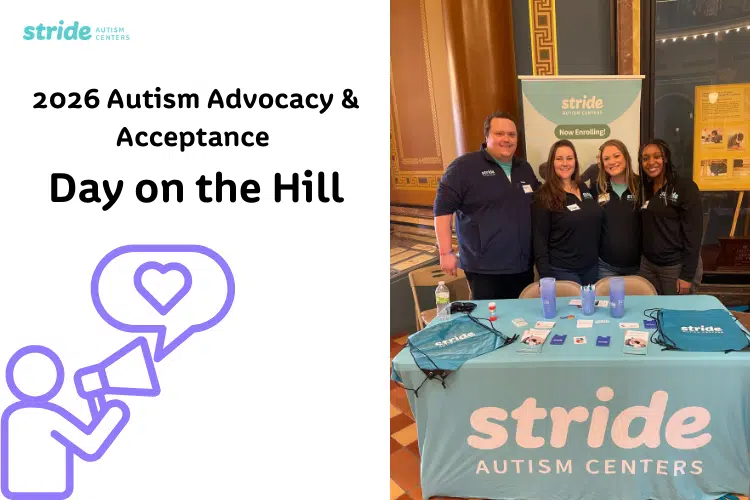
Stride was proud to return to the Iowa State Capitol this year for the 16th Annual Autism Advocacy & Acceptance Day on the Hill, hosted by the Autism Society of Iowa. The event brought together families, advocates, educators, students, school leaders, and lawmakers for a day dedicated to raising awareness, sharing lived experiences, and advocating for policies that support individuals with autism and their families across the state.
Our team hosted a table throughout the day, giving attendees an opportunity to meet Stride clinicians and team members, learn more about early screening and ABA therapy, and ask questions about how services are delivered in communities across Iowa. We were grateful for the thoughtful conversations and the chance to connect directly with families, advocates, and legislators alike.
Stride team members in attendance included Trent Hoffman, BCBA at our Johnston clinic; Amber Cardoza-Hartger, Clinic Coordinator at Park Fair; Jenn Dentler, Clinic Coordinator at Fleur; and Shakirah Warren, Recruiting Specialist. Together, they represented the many roles it takes to support children and families navigating autism.
“For me, the biggest takeaway was how nice it was to meet with both autism advocates and lawmakers and talk about all the awesome things we do at Stride,” said Trent Hoffman, BCBA. “I really think it’s important for us to keep showing up to events like this, especially with funding being cut for individuals with disabilities. It matters to advocate, to be part of the community, and to have face time with our state legislators.”
Stride founder and CEO Brad Zelinger emphasized the importance of early identification and support. “Early screening and intervention can change the trajectory of a child’s life,” he shared. “When kids receive the right support early on, they’re better positioned to thrive in elementary school and beyond. Advocacy events like this help ensure families have access to those critical pathways.”
We’re grateful to the Autism Society of Iowa for bringing the community together once again and for inviting us to be part of this important day. We’re already looking ahead to next year and are proud to continue standing alongside families and advocates working toward a more inclusive future.
Save the date: Autism Advocacy & Acceptance Day on the Hill returns January 28, 2027.
Venturing out into the community as a family can help autistic children engage and learn through new experiences. Taking the extra step to research some sensory-friendly activities that the whole family can enjoy will mean a lot to your child, allowing them to have fun in a safe environment. Here are some autism-inclusive activities in Des Moines for children of all ages.
Why Inclusive Activities Matter for Your Family
Inclusion is about providing support and services that enable everyone to participate in the same activities. Attending inclusive activities as a family can foster social development, increase self-esteem, and strengthen family bonds for a child with autism. These opportunities for shared experiences can ensure that your child feels a sense of belonging while reducing stigma and isolation.
Top Sensory-Friendly Activities in Des Moines
We’ve compiled some of the top family-friendly things to do in Des Moines for children with autism. Browse them below.
Blank Park Zoo
Zoos provide an excellent environment for children with autism. In general, zoos have a predictable structure, which can be reassuring for both children and parents. Additionally, the visual nature of animals can be very engaging and less overwhelming than other public spaces.
Blank Park Zoo in Des Moines emphasizes conservation, education, and recreation. While here, children can learn about various species, fostering their curiosity and a connection to nature in a safe environment. You can visit several endangered species that Blank Park Zoo has helped conserve, from the large eastern black rhinoceros to the tiny poison dart frog.
Des Moines Children’s Museum
Children’s museums offer a world of hands-on, interactive exhibits for children of all ages. These spaces provide self-directed play, where children can explore at their own pace and focus on their primary interests. Many exhibits are designed to engage multiple senses through touch, sight, and sound for safe and enjoyable stimulation.
The Des Moines Children’s Museum is the perfect example of learning through the power of play. They maintain a safe and family-friendly environment, including complete wheelchair accessibility.
Jester Park Sensory Trail
The Jester Park Sensory Trail in Des Moines is open to the public at no cost. This trail is designed to engage all the senses in a natural and calming outdoor environment. You and your child will have the opportunity to hear, touch, see, and explore nature with various interactive stations along the walk. The trail is 310 feet long with concrete, brick, and crushed limestone surfaces and a max slope of 5%.
Local Libraries and Theaters
Libraries offer a calm environment, many with dedicated areas for children to learn and relax without overstimulation. The Des Moines Public Library has an excellent children’s program, featuring events for all ages throughout the week and on Saturdays. From scavenger hunts to crafts, there is always some activity for your child to enjoy.
Similarly, local theaters provide live storytelling opportunities to engage your child. The Des Moines Playhouse offers sensory-friendly performances for select shows, modifying lighting and sound to enhance accessibility. Additional support is provided to make the theater a more comfortable environment for audience members who may find traditional theater overstimulating.
Get Air Trampoline Park
The Get Air Trampoline Park in Des Moines is designed with wall-to-wall trampolines, dodgeball courts, and foam pits to entertain children of all ages. Trampoline parks can provide a safe and controlled environment for your child with autism to release pent-up energy. It’s also a great outlet for developing gross motor skills and engaging in joyful play without the pressure of complex social interactions.
Some Tips for Enjoying Outings With Your Child
With understanding and the right preparation, your child can gain confidence in a variety of social settings. Here are some tips to help your kiddo enjoy their outing:
Set clear boundaries with your child in a new environment, helping them understand the area they are allowed to explore safely.
Walk your child through the event or activity before leaving home, so they know what to expect.
Allow your child to take a favorite toy whenever possible.
Praise and reward your child with frequent positive feedback for appropriate behavior.
Help Your Child Thrive With Stride Autism Centers®
Stride Autism Centers® understands the unique challenges families can experience with their children with autism. We have two centers in Des Moines, Iowa, that offer personalized, center-based applied behavior analysis (ABA) therapy that helps children aged 2 to 6 learn skills for independence and confidence.
With our family-centered approach, you can be involved throughout the entire process. Contact our team today to get started.
From beautiful parks and colorful playgrounds to fascinating museums and other indoor activities, Cedar Rapids, Iowa, is an excellent place for families. But what if your little one has autism spectrum disorder?
Thankfully, Cedar Rapids is becoming an autism-inclusive community, offering plenty of sensory-friendly activities that everyone in your family will enjoy.
What Makes an Activity Autism Inclusive?
As a parent of a young child with autism, you want to see your kiddo learn, laugh, and thrive, especially when spending quality time together outside the home. The number of autism-inclusive activities in Cedar Rapids is increasing as many family-focused locations open their minds and hearts to inclusion, ensuring these spaces appeal to everyone.
Here are some key features to look for:
Accommodates sensory sensitivities: From sensory-friendly hours to special events, many places provide opportunities that minimize stimuli, such as crowds, lights, and sounds, to create a more welcoming environment.
Provides clear and predictable structures: In a world that can feel chaotic or overwhelming, some inclusive activities offer visual schedules, social stories, and clear signage to help kids with autism understand expectations and routines.
Allows for flexible participation: Inclusive activities give children the freedom to participate at their own pace, take breaks when needed, or move around to support focus and self-regulation without judgment.
Offers access to sensory tools: Some venues provide sensory tools to help kids manage overstimulation and regulate their sensory input, such as noise-canceling headphones or fidget toys. Others offer quiet spaces where children can self-soothe and remain comfortable during activities.
Incorporates your child’s special interests: The best experiences feature themes, activities, or materials that reflect your child’s unique passions, making participation more meaningful and enjoyable.
The Autism Society of Iowa offers comprehensive listings of autism-inclusive activities and events throughout Eastern Iowa.
6 Fun Autism-Inclusive Activities Near Cedar Rapids
Here are our top six sensory-friendly activities in Cedar Rapids, promising fun and a sense of belonging for your whole family.
1. The Iowa Children’s Museum
The Iowa Children’s Museum is a space that celebrates curiosity, play, and childlike wonder. From swashbuckling adventures at Coral Cove to musical exploration in the City Music room, each space is designed to elicit joy and encourage imagination. The museum is Sensory Inclusive™ certified through KultureCity, ensuring a warm and accessible experience for children with autism.
Thoughtful accommodations include:
Compassionate staff and PLAYologists trained to identify and support guests with sensory needs
Sensory bags with items to help lessen sensory overload
Clear signage highlighting louder Headphone Zones and peaceful Quiet Zones
The Family Sanctuary, a private space with soothing lights and cozy seating
2. We Rock the Spectrum — Cedar Rapids
Experience a low-stress environment where your child can play, socialize, and, most importantly, have fun. We Rock the Spectrum is a vibrant yet sensory-friendly play space featuring large trampolines, rock climbing walls, zip lines, and more. The gym encourages children to explore at their own pace and developmental level.
Enjoy a judgment-free zone, featuring sensory-safe elements like a calming room where little ones can take a breath and decompress. The staff is always there to help you feel at ease as you connect with families with similar stories to your own.
3. Noelridge Park
Playgrounds are designed to accommodate children of all abilities, allowing them to play, explore, and learn side by side. While Cedar Rapids natives enjoy visiting Noelridge Park for its diverse gardens, beautiful ponds, and scenic walking trails, this location also features an inclusive playground.
Your kiddo can enjoy the fresh air as they share the saucer swing with a friend or zoom around on the merry-go-all. The playground’s inclusive design helps break down barriers while promoting a sense of belonging with other kids.
4. Cedar Rapids Public Library Sensory Storytime
Cedar Rapids Public Library’s Sensory Storytime program is a welcoming, interactive event designed for children with autism and sensory needs. Each session features engaging stories, songs, and hands-on activities — all presented in a calm, sensory-friendly setting where children can participate comfortably and at their own pace.
The library is sensory-inclusive certified and provides resources such as sensory bags, oral cue cards, and weighted lap pads to help kids feel secure and focused. Designated quiet rooms offer a peaceful retreat for children who need a break.
5. Indian Creek Nature Center
Indian Creek Nature Center is a local home for outdoor sensory exploration. This calming environment features over seven miles of accessible trails, where your child can explore the great outdoors.
You can participate in a variety of educational programs and nature-inspired events, allowing your kiddo to engage hands-on with wildlife, plants, and science activities. These experiences foster curiosity, alleviate stress, and encourage sensory exploration in gentle, open environments.
6. Sensory Friendly Planetarium Shows at the Grout Museum
Awaken your child’s love of stars, planets, and the universe with a sensory-friendly stargazing experience. The Grout Museum District’s state-of-the-art Norris Corson Family Planetarium offers a 30-minute show on the first Saturday of each month, carefully adapted to meet the needs of children with autism and sensory sensitivities.
During the presentation, the planetarium lights remain softly dimmed, and music and sound effects are muted to create a calming atmosphere. The door stays open throughout the show, giving guests the freedom to move around, take breaks, or quietly explore the room as needed. This warm, flexible environment ensures that everyone can enjoy the wonders of the night sky in comfort.
Discover More Resources and Guidance at Stride Autism Centers®
Stride Autism Centers® is all about community connections and providing personalized care to young children with autism, ages 2-6 years old. Whether you’re new to the area or ready to learn about the benefits of applied behavior analysis (ABA) therapy, we can help.
Our compassionate team in Cedar Rapids looks forward to helping you discover more joyful, inclusive experiences in this fantastic city. Call us today at (319) 469-8246.
We were proud to see one of our Northwest Omaha families recently featured on KMTV, sharing their experience supporting their young son, Cooper. In the interview, Cooper’s parent Ryan spoke with our CEO Brad Zelinger about what their family’s journey has looked like since beginning early intervention.
Stories like Cooper’s matter because many families are walking a similar path. When a child is diagnosed with autism, parents are often asked to make important decisions quickly, sometimes before they have had time to fully process the diagnosis. Hearing from another family can help parents feel less alone and better understand why early ABA therapy is often recommended after diagnosis.Many clinicians agree that the years between ages two and six are an especially important time for learning and development. During these early years, children’s brains are more open to learning new skills. Early, consistent support can help children build communication, social, and daily living skills that support independence over time. For many families, learning how to choose the right ABA program for their child is one of the first steps after diagnosisAt Stride, progress is not based on observation alone. Outcomes are measured so families and care teams can understand how children are developing over time. This focus on data and individualized goals is part of the Stride approach to ABA therapy, which emphasizes consistent measurement, collaboration with families, and treatment plans tailored to each childAcross Stride centers, caregivers report meaningful improvement across many areas within the first six months of therapy. According to collected outcomes data, caregivers report improvement in transitions for 100 percent of children within six months. Improvement is also reported in initiating communication at 98 percent, and in motor skills, self-care skills, and understanding communication at 96 percent. Progress is also reported in play skills and social interaction, both at 95 percent.Families also report improvement in areas that can strongly affect daily routines, including challenging behaviors, school readiness, and social-emotional skills, each reported at 93 percent. Even mealtime behaviors, which can be especially stressful for families, show improvement in 91 percent of cases. Across all of these areas, caregivers report improvement in an average of 95 percent of essential therapeutic goal areas within the first six months of treatment.These outcomes are often associated with intensive, center-based ABA therapy during the preschool years, where children benefit from structured routines, consistent expectations, and frequent opportunities to practice skills. Center-based ABA therapy allows care teams to work closely together and adjust plans as children grow and develop. For many families, this level of coordination and consistency is difficult to achieve in less structured settings.Cooper’s story, as shared on KMTV, is one example among many families we serve. We are grateful to his family for sharing their experience and helping other parents better understand what early intervention can look like. Early support cannot remove every challenge, but it can help families build skills and routines during a time that is especially important for development.We are grateful to KMTV for featuring Cooper and his family and for helping bring thoughtful attention to early autism intervention in Nebraska.Stride is the leading center-based ABA therapy program in Nebraska serving children 2-6 years old who have received an autism diagnosis. We have locations across the state in:
All Nebraska centers are currently enrolling, accept most major insurance plans including Medicaid, and do not have a waitlist at this time.Stride is also the only ABA therapy provider in the state of Nebraska fully accredited by the Autism Commission on Quality (ACQ), reflecting an ongoing commitment to clinical quality, consistency, and accountability in care delivery.
As a parent, you would love to give the perfect gift that lights up your kiddo’s face. Finding holiday gifts for children with autism involves considering their specific needs for predictability, routine, and sensory comfort, rather than traditional, overwhelming holiday experiences.
This quick guide for busy parents has been expertly curated to make holiday shopping joyful and stress-free.
Gifts for Calm and Comfort During the Holidays
The holiday season can be overwhelming for children with autism. Common stressors include changes to routines, large crowds, new foods, and the unpredictability of social gatherings. The rhyming picture book, “Too Much! An Overwhelming Day,” is a perfect starting point for your little one’s festive season: “When feelings go on overload, I pause and breathe, and all is… slowed.”
Weighted Items for Security
Weighted items provide deep pressure, mimicking a hug and calming the nervous system for children with autism spectrum disorder. This deep touch regulates stress, promotes relaxation, reduces anxiety, and improves focus. The pressure helps children feel secure.
For a fun, gift-worthy take on the usual items, weighted stuffed animals make particularly comforting Christmas gifts for kids with autism. If you can’t make up your mind between Pookie the Panda and Sunnie the Sloth, consider ordering a family pack so your kiddo always has one nearby.
Keep safety and supervision in mind when using weighted items, and consult with your child’s clinic team for specific weight guidance.
Personal Sensory Retreats
Even adults need a quiet place where they can retreat from all the noise and bustle of the festive season. It is especially important for children with autism to have a calm space at this busy time to avoid sensory overload from the increased activity and stimulation. A solitary designated area becomes a safe haven for them to decompress, recharge, and feel strong, even when things feel overwhelming.
A sensory tent of their own is one of the best holiday gifts for children with autism — a space where they can feel a sense of control over their environment. Most are easy to set up and may come with comfort-enhancing features like mesh storage and straps for fidget toys or escape holes so your child never feels trapped. Some even have a single-button light, allowing your kiddo to feel in control of the space.
Presents That Build Skills Through Play
There is a wide selection of toys that are so much fun, your kiddo won’t even realize they’re developing crucial skills. Use your child’s interests to structure activities and combine different types of play, like sensory, pretend, and cause-and-effect games. This helps develop foundational, cognitive, social, and motor skills by providing a safe and engaging environment to practice new abilities at their own pace.
Fine Motor Skill Toys
Fine motor toys can improve hand-eye coordination, finger strength, and dexterity through engaging, hands-on activities. They also support cognitive skills like problem-solving and spatial awareness, and can build confidence and independence by breaking down complex tasks into manageable, fun steps.
Two exciting examples are magnetic building blocks and threading boards. Kids love magnetic blocks because they provide a fun, open-ended way to be creative, explore, and build things.
For kids 3 and up, threading boards help strengthen grip, improve coordination and motor planning, and build concentration and self-regulation. Lacing and threading toys are a beautiful addition to any selection of holiday gifts for children with autism.
Oral, Motor, and Chewable Tools
Oral, motor, and chewable toys can encourage sensory regulation by providing calming oral input and strengthening the oral motor skills needed for speech and eating. These toys also have the potential to build concentration skills.
A discreet chewable necklace and textured fidget pencil toppers or grips are popular examples of sensory-friendly gifts for children.
If you’re looking for additional options, explore seven of the best chewie toys for children with autism.
Gifts to Encourage Social Connection
Family gatherings offer opportunities for connection and celebration, but your kiddo may find these events challenging. Thoughtful planning and understanding make gatherings enjoyable and inclusive for all. There are toys that can help.
Cooperative Board Games
Cooperative board games offer a structured environment to practice social skills like communication, turn-taking, and emotional regulation in a low-pressure setting. Encouraging teamwork toward a shared goal can reduce the anxiety of competition and help children develop cognitive abilities like problem-solving and decision-making without the fear of losing individually.
One of the best gifts for a child with autism that encourages bonding and communication is “Do You Know Your Peeps?” and the “Social Skills” collection of six board games.
Role-Playing and Imagination Sets
Role-playing helps preschoolers with autism by providing a safe and structured way to practice crucial social and communication skills. This includes interpreting social cues, engaging in conversations, and navigating social situations. It also helps them develop flexibility in thinking and behavior, build confidence, and improve their language development as they practice social scripts through play.
Play sets are a fun way to get into role-playing. Scenarios can include preparing a meal in a make-believe kitchen or visiting a veterinarian’s office. This is also a great way to prepare your little one for visits to the doctor, the grocery store, or their first hiking trip.
How to Choose a Gift Your Kiddo Will Love
Use this quick and easy checklist to help you choose the perfect gifts for your child this festive season:
Observe their current passions and the toys or objects that hold their attention.
Select gifts that build on the child’s strengths and think about a “just-right” challenge — a toy that encourages growth without causing frustration.
Consider whether they are sensory-seeking or sensory-avoiding.
Pick sensory-friendly items, like soft, tag-free clothing or calming textures.
Avoid gifts with loud noises, flashing lights, or overstimulating features.
Check for potential safety risks, like choking hazards.
Don’t be afraid to ask for a list or ideas from your kiddo or their therapists.
Give the Lasting Gift of Confidence and Growth
While your kiddo’s enthusiasm for their favorite toy may dim over time, developmental support is a gift that will last them a lifetime.
ABA therapy is the evidence-based approach that incorporates structured play to build foundational skills. This can lead to improvements in cognitive abilities, social skills, and communication. Starting early, especially between ages 2 and 6, is crucial because the brain is highly adaptable. ABA therapy works by breaking down complex behaviors into smaller steps and using positive reinforcement to help your little one learn new skills that will help them thrive.
Stride Autism Centers® in Illinois, Iowa, and Nebraska offer ABA therapy for children aged 2 through 6 and their families. Contact our dedicated team by calling 515-207-5251 today to learn more about how our programs can be tailored to your child’s unique needs.
Finding fun activities for children with autism can feel easier when you know which venues offer sensory supports, quieter times, and flexible experiences. We’ve put together all the information you need for inclusive activities in Omaha.
Our aim is to help your family discover new favorites at your kiddo’s pace. You’ll also find local resources and gentle next steps if you’re exploring additional support.
Henry Doorly Zoo & Aquarium
Autism Action Partnership (AAP) — an organization dedicated to providing support for children and adults on the Autism Spectrum in Nebraska — hosts monthly Making Memories events at various locations throughout Omaha.
Henry Doorly Zoo & Aquarium is one recurring destination. During the Making Memories event, families in the autism community can visit the zoo after hours for a more sensory-inclusive experience. While some animals will be asleep, several exhibits remain open for exploration. Concessions and the gift shop are also available.
Be sure to follow AAP on social media to be the first to see when new Making Memories dates are posted. They share upcoming events on their website’s calendar and social media accounts on the first Friday of the month.
Omaha Children’s Museum
The Omaha Children’s Museum encourages hands‑on, child‑led play, which is a treat for sensory seekers. Your kiddo can expect from their trip to the museum:
Service animals are welcome, and one-on-one aides and therapists get in for free.
Sensory bags, including headphones, gloves, sunglasses, and other goodies, are available at the front desk.
School weekday afternoons are generally calmer than weekends and holidays.
Quiet spots include the Family Discovery Room, Curiosity Corner, and the Wiggle Room for kids 3 years or younger.
We Rock the Spectrum Kid’s Gym
We Rock the Spectrum is a win for the whole family. One of the top destinations for autism-inclusive activities in Omaha, the controlled environment helps reduce surprises and empowers kids to engage at their own pace. OT-inspired swings, climbing structures, crash mats, and other proprioceptive tools give them safe, satisfying ways to move their bodies. By creating fun spaces where children of all ability levels can play together, kids learn quickly and are inspired to thrive by their peers.
Sensory-wise, lighting and sound are steady and predictable. There’s always space to step away for a breather if your kiddo needs a reset. Parents and caregivers, you’re supported here, too. Ask about We Rock Care for added flexibility and respite-style options when you need a little backup.
With a bit of prep, you’ll find We Rock the Spectrum quickly becomes your easy, go-to “yes” for playtime.
ALLPLAY Complex
Got a little one dreaming of the big leagues? This sensory-smart space lets future sluggers practice big swings, build balance and confidence, and learn from teammates of all abilities without the overwhelm. If they aren’t yet ready to try out the ALLPLAY Miracle Baseball League, the complex is open to the public and free to use during park hours, from 5 a.m. to 11 p.m.
Located in Seymour Smith Park, ALLPLAY Complex is one of the finest barrier‑free sports and recreation facilities in the nation. It’s designed so children with diverse abilities can participate side by side. Its inclusive design and programming make movement, friendship, and sensory exploration accessible and truly memorable.
Here you’ll find some of the most popular sensory-friendly activities in Omaha. The first is the playground — the largest in the city, featuring 21 unique active and 11 passive elements. The playground’s surface is 5-inch-thick rubber for extra peace of mind. Next is the water park, which has no curbs or steps for easy movement. The water park’s continual fresh water flow can be experienced in different forms depending on your little one’s preferences — from spray, shoot, and sprinkle to a gentle mist.
Lauritzen Gardens
For many children with Autism Spectrum Disorder (ASD), nature generously offers fresh air, soft textures, gentle sounds, and wide-open choices that let them explore on their own terms.
Sensory integration can be tricky, with some kids seeking input while others avoid it. A garden is a series of adjustable, opt‑in experiences across all the senses, from the crunch of gravel underfoot and the scent of lavender to bright tulips to spot and cool water to touch. This kind of environment can support movement, self‑regulation, and simple social moments while encouraging overall calm and confidence.
Lauritzen Gardens offers a peaceful, low‑stimulation setting where families can stroll through garden “rooms” and repeat familiar routes. The wide paths and natural rhythm of the space support calm exploration.
Fontenelle Forest Nature Center
Fontenelle Forest is another great option for parents seeking nature-based, sensory-friendly activities in Omaha. Just 15 minutes from downtown, the 17 miles of trails are designed for people of all ages and abilities. Fontenelle combines gentle trails with indoor and outdoor play spaces, giving you options regardless of the weather.
The Fontenelle Forest MudPies program runs Tuesdays and Thursdays from 9:30 to 11:00 a.m. MudPies is a guided, play-based class for ages 3 to 5 and their grown‑ups. It’s a simple, joyful way to connect with your child while discovering the natural world together.
Each week spotlights a fresh nature or science theme and combines make‑and‑take crafts with outdoor exploration, songs, stories, and short, staff‑led walks. Every session includes a new activity or craft, a cozy read‑aloud, and a guided walk so you can keep coming back to share the wonder of nature with your little explorer.
A social story is available on each show’s page, to prepare your child for this experience.
Sensory‑friendly performances for neurodiverse audiences, with adjusted lighting and sound and a relaxed environment.
Kiddos can enjoy the show in the noise-proof Restless Room that has a live video feed of the mainstage production.
Automatic hand dryers are deactivated during sensory-friendly performances.
Staff are welcoming and supportive of flexible seating and exits, and offer a private post-show question and answer session for your little one.
Mahoney State Park
Between Omaha and Lincoln, Mahoney State Park offers outdoor and indoor options you can scale to your child’s needs. Build a mix of active and calm moments across trails, biking paths, the aquatic center, and an indoor playground.
The environment offers a variety of sensory-friendly activities that allow you to choose short loops and repeat preferred routes for familiarity and confidence. The aquatic center can provide soothing, deep‑pressure input, but visit during slower hours for a calmer feel.
Alternate active play with scheduled breaks in shade or a quiet picnic spot, and pack:
This way, your kiddo will always feel comforted as they experience and explore.
Sky Zone Trampoline Park
Sky Zone often hosts sensory‑friendly hours at participating locations, offering dimmed lighting, reduced noise, and smaller crowds. Call the Omaha park to confirm current availability and specifics.
Sky Zone’s Toddler Zone makes it easy to entertain toddlers while keeping big kids happy. This fenced-off area is reserved just for little jumpers, so your tiny explorer can bounce, toddle, and giggle without older kids zipping by. Hands-on movement supports balance, coordination, confidence, and lets them burn off that endless energy.
Help Your Child Thrive at Stride Autism Centers®
Stride Autism Centers® provides compassionate, center‑based ABA therapy for children ages 2 through 6, helping strengthen communication, play, and daily living skills while preparing for kindergarten. For parents looking for ABA therapy in Omaha, our program offers personalized support for young learners, and parent training and support.
Call our caring team at (515) 207-5251 or get started online to learn how we can support your child’s development of foundational skills so they can lead the most independent, joyous life possible.
Get the Stride Family Newsletter
Get practical tips, stories, and fun at-home activities designed to help your child thrive.
Success!
Thank you for your submission. We will be in touch soon.




 These items can help you and your kiddo enjoy a successful trip to the movies:





 For a fun, gift-worthy take on the usual items,
 Between Omaha and Lincoln,