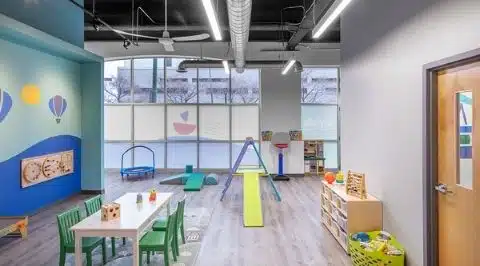
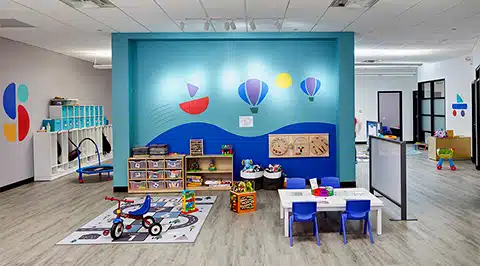
Now Enrolling Ages 2-6!

Learn more

Stride Autism Centers® Expands Its Presence in Illinois with New Orland Park Location

Committed to assisting preschool aged children with autism and their families, Stride Autism Centers® (“Stride”) is proud to announce the opening of our brand new location in Orland Park, Illinois. Enrollment is now open for children ages 2 to 6 at this new center, which is conveniently located at 18080 Wolf Rd. This represents our tenth location in the Midwest and the third in Illinois. The Stride team is looking forward to continuing our mission of providing effective, evidence-based therapeutic programs that help children with autism thrive in school and beyond.

Striving to serve clients no matter the specific funding source involved, we accept most private insurance plans including Blue Cross and Blue Shield of Illinois, Cigna, Optum and United Healthcare.

Stride is recognized across the Midwest for providing personalized support to children as they progress through their most critical developmental periods. We exclusively serve children ages 2 to 6, and keep a 1:1 therapist-to-child ratio to enable each child to get the most attention and assistance possible. Stride’s results-driven, center-based operating model allows children to participate in naturalistic group activities and expand their social skills as they connect with their peers in the program.

An important part of Stride’s continued success is our exceptional team of empathetic and experienced clinicians. These clinicians use a therapeutic approach based in Applied Behavior Analysis (ABA) therapy, which has been thoroughly evaluated and is widely regarded as the gold standard of autism treatment. Each child that participates in Stride’s full-day program gets a fully customized treatment plan meticulously crafted by one of our Board Certified Behavior Analysts (BCBA).

Brad Zelinger, Stride’s Founder and CEO, explained that “Stride’s mission to provide the best possible support to children with autism and their families is deeply personal to me. My sister has an autism-related disorder called Rett Syndrome. She is nonverbal, and requires substantial support in everyday activities. I founded Stride so individuals like her can get the effective therapy they need as early as possible to live more independent, joyous lives. As a Chicago native, I’m particularly motivated to bring Stride’s services to underserved areas near where I was raised.”

Speaking on the philosophy behind the program, Stride’s Clinical Director and University Chair of ABA at the Chicago School of Professional Psychology, Dr. Ashley Whittington-Barnish, PhD, LCP, BCBA-D, NCSP said that “Decades of research demonstrating the effectiveness of early intervention for children with autism underlie our decision to specialize in the early treatment of young learners.”

“Our mission-driven team is incredibly motivated by Stride’s unwavering commitment to meaningful outcomes. We’re grateful that our singular focus on the highest quality care has allowed us to attract outstanding clinical leaders and therapists alike,” Dr. Whittington-Barnish added.

About Stride Autism Centers®

Stride Autism Centers® is a mission-driven organization that provides evidence-based ABA therapy to children with autism ages 2 to 6. Stride has numerous locations throughout Illinois, Iowa, and Nebraska. Stride’s full-day program combines structured one-on-one therapy with naturalistic group activities. It is designed to assist with communication, emotional regulation, school readiness, social skills, self-care, play and leisure, and transitioning skills. Families interested in learning more can contact Stride Autism Centers® at 312-554-5578 (Illinois) or 515-207-5251 (Iowa and Nebraska).

If you’re interested in a rewarding career assisting children with autism, please visit stridecenters.com/careers to view our available positions.

What to Do If Your Toddler With Autism Is Not Sleeping

Sleep difficulties are common in children with autism spectrum disorder (ASD) aged 1-3, ranging from 50% to 80% of cases. Stride Autism Centers® can partner with your family to help understand your child’s specific needs and provide the necessary support.

Why Sleep Matters for Your Child’s Development

Sleep is fuel for growing bodies and brains. During deep sleep, the brain organizes new information, builds connections, boosts learning, and enhances problem-solving skills. Proper sleep can help kids manage their emotions and strengthen their immune system.

Common Causes of Sleep Problems in Toddlers With Autism

Sleep deprivation is often overlooked as a cause of a child’s performance or behavioral concerns, especially in children with autism. Many kids with autism struggle to fall or stay asleep, which can raise irritability, meltdowns, and attention problems, making learning harder. The cause of a child’s sleep disturbances can vary depending on several factors, including:
  • Bedtime or daytime habits
  • Mental health conditions, such as anxiety or attention-deficit/hyperactivity disorder (ADHD)
  • Biological causes, including sleep hormone imbalances
  • Bedwetting and toilet training difficulties
  • Night terrors and nightmares
  • Restless sleep, such as body-rocking, head-rolling, and head-banging
  • Social communication difficulties

How to Help a Toddler With Autism Sleep Through the Night

What your child does during the day can significantly affect their sleep. Here are a few tips to implement into your day-to-day schedule to encourage your toddler to sleep at night:
  • Establish a consistent schedule: Sticking to a predictable bedtime routine can help your toddler know when to start settling for bed. For example, create a visual aid to walk your child through the same schedule every night, helping them understand what to expect next.
  • Optimize the sleep environment: A stimulating environment can make it difficult for toddlers with autism to relax. Modifying their room can promote comfort, such as using blackout curtains to adjust light and sound or changing bedding to be soft and breathable.
  • Encourage daytime activity: Regular physical exercise and access to natural light during the day can promote better sleep for toddlers with autism. However, avoid rigorous activities one to two hours before bedtime, as their adrenaline can keep them awake.
  • Limit stimulating activities and foods: Restrict screen time from TVs, phones, or tablets at least an hour before bed, as blue light can interfere with sleep. It’s also essential to limit caffeine and sugary foods close to bedtime.
  • Try a natural sleep aid: For a child with autism, a natural sleep aid, like melatonin, can be helpful to fall asleep faster and sleep longer. Be sure to consult your doctor before trying this method.

How ABA Therapy Can Help a Toddler With Autism Sleep

If nothing seems to help your toddler settle down for sleep, it may be time to consider behavioral interventions. Applied behavior analysis (ABA) is a therapeutic strategy that can identify the connection between your child with autism and sleep disturbances. At Stride Autism Centers®, we work with children and collaborate with parents to develop a personalized plan for sleep optimization. Specifically, we can help identify why falling and staying asleep is challenging for your child and establish positive reinforcement methods to encourage milestones.

When to Seek Professional Support

It may be time to seek professional support for a toddler with autism who is not sleeping if the issue persists for more than a few weeks. During this time, it can significantly impact your child’s behavior and development and cause some family stress. Here are some signs it’s time for your child to have an autism and insomnia evaluation:
  • Your child is experiencing more frequent and intense hyperactivity, aggression, or irritability during the day.
  • Your toddler has difficulty relaxing around bedtime.
  • Sleep deprivation has intensified self-stimulatory behaviors.
  • Your child takes longer than 30-60 minutes to fall asleep or wakes frequently for over an hour at a time.
  • Your toddler has not responded well to the recommended sleep routines.

Take the Next Step With Stride Autism Centers®

Take the Next Step With Stride Autism Centers®

Together, let’s craft a daytime plan that feeds into a good night’s rest for your child. Stride Autism Centers® serves families in communities across Illinois, Iowa, Nebraska, and South Dakota. Contact our expert team today to get started.

Tips for Explaining Autism to Siblings

When one of your children gets diagnosed with autism spectrum disorder (ASD), it can feel like your focus narrows. From that point on, a lot of your attention goes toward helping that child navigate the unique path in front of them.

If you have other children, you may feel tension in trying to support both children equally despite one child requiring additional help. While your child on the spectrum does need attention and care, so do your other children.

Your neurotypical child probably has questions about their sibling. Therefore, you have the opportunity to explain autism to your other children. And the way you explain your child’s disorder will likely shape the way they see and interact with their sibling. Here are five tips that can help.

Find a Common Vocabulary

ASD is a highly complex and heterogenous disorder, so even adults can have a difficult time understanding it. That doesn’t mean you should ignore addressing it with their siblings. Doing so could leave them confused.

Instead, learn to talk about autism in ways they can understand. To do this, start by asking questions like, “Have you noticed that your sibling plays differently than you?” or “Have you heard of autism? What do you know about it?”

To help your child talk openly about what they notice in their sibling, you might ask about things they do that may be different from their peers, including behaviors, play styles, and communication.

It’s not important that your child walks away with a technically correct definition of ASD. Instead, what matters is that they have the words to talk with you about what they notice in their sibling.

Create a Safe Space for Them to Ask Questions

You should continually remind all of your children that they can ask you questions. You might have a conversation with one of your kids about their sibling’s ASD, but your child might not be ready to dig into the details at that point. Give them time to ponder and process, then check back in periodically to see if they have anything they want to talk about.

In fact, it can help to schedule one-on-one time with your typically developing child or children. This can remind them that you love them just as much as their sibling with ASD even though they may get less attention. Just as importantly, it gives them an opportunity to talk with you and ask any questions they may have.

Let Them Feel Their Feelings

Especially early after your child’s diagnosis, their siblings might feel confused, frustrated, or resentful. Their home life is likely shifting as your family works to support your child with autism.

It’s okay for kids to feel those feelings. Letting them know that you might feel frustrated or sad sometimes, too, can help them emotionally regulate during what might be a difficult time.

Help Them Celebrate Their Sibling

Like all other individuals, each child with autism is unique and may have specialized skills or interests and a different way of interacting with the world around them.

Help your neurotypical siblings appreciate those special characteristics in your child with ASD. Not only can this help them to be a more empathetic, well-adjusted sibling. Also, it can help them be kinder to everyone they encounter.

Talk to Other Parents and Experts

You’re not in this alone. Every family dynamic is unique, but rest assured that other parents have traveled in your footsteps. Find families with kids on the spectrum and don’t be afraid to ask the parents what’s worked for them.

You can also talk to our team. At Stride Autism Centers®, our ASD experts can help you plan not only the best program for your child on the spectrum, but also for your whole family. Get started today.

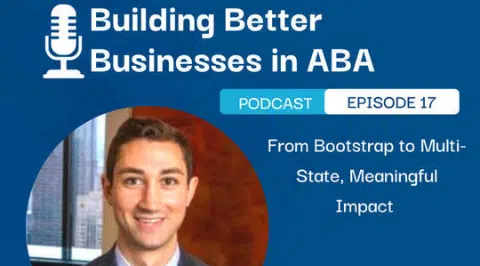
Brad Zelinger, Stride’s Founder and CEO Featured on “Building Better Businesses in ABA” Podcast

Brad Zelinger, Founder & CEO of Stride Autism Centers®, was recently a featured guest on the “Building Better Businesses in ABA” podcast, hosted by Jonathan Mueller. He talked about how his sister’s autism-related disorder drew him into working with people with developmental disabilities. He also provided some insight into what distinguishes Stride from other applied behavior analysis (ABA) therapy organizations. Check it out!

https://elementrcm.ai/building-better-businesses-in-aba/

The Benefits of Group Activities for Preschool Children in Autism Therapy

How Group Activities Work in an Autism Therapy Setting

As a parent of a child with autism, you might be skeptical about group sessions. You may have watched your child struggle on the playground or worried about them getting along with their peers.

Within these tailored group sessions, we give kids the chance to explore their innate creativity and work on their social skills at the same time. Many children with autism benefit from observational learning from their peers and a supportive, safe environment where they can work on following group instructions.

Tailoring Group Play to Your Child

All this said, we know that different children have different needs and comfort levels. When your preschooler gets put in a group situation, it’s important that the therapist works flexibly with them.

For example, at Stride Autism Centers®, we meet our learners where they’re at. Some kids love working on a multi-step art project alongside their peers, while others want to forge their own art exploration path. We might set those kids up with art and sensory materials like paint, water beads, or beans.

Again, we know that children learn best when they’re having fun, and we know fun looks differently for different children. We always return to that core value when we’re planning group activities for each individual child.

Some examples of group activities for preschoolers with autism

Let’s give you some solid examples of what group play might look like for your child. At Stride Autism Centers®, our group learning sessions vary throughout the day, but they generally include:

    • Art: At Stride, children have opportunities to explore using different materials to express themselves creatively, like paint, drawing implements, and glue. This isn’t just a great opportunity to practice working with different school supplies. It’s also a chance to work on following directions, completing a task, and writing/identifying their name. Our art projects give learners a rough outline (e.g., “make a snowman”) while allowing them to individualize what they create. At the same time, we weave in developmentally appropriate goals, like matching, identifying colors, differentiating textures, and following steps.
    • Music: With Stride, children will learn “Hello” and “Goodbye” songs. If they want to, we also give them the chance to interact with different toys and musical instruments to work on rhythm and imitation skills. Music gives early learners the opportunity to practice greetings, learn names, and tap into clear cues that the day is beginning and ending.
    • Dance and play: To music, we dance together to give kids an encouraging space in which to practice learning routines and following directions. These dance and play sessions also allow children to practice imitation skills, which play a key role in learning.
    • Spirit days: Periodically, we host fun (but completely optional) dress-up days, like hat day, dress-as-your-favorite-superhero day, or mismatch day. These help us build a sense of community and belonging for our preschool learners and our staff. Our spirit days give children the opportunity to flex their creativity and step a little bit outside their comfort zones, too.

Additionally, we integrate other group activities like:

    • Sensory play
    • Group games (e.g., freeze dance, Simon says, duck duck goose)
    • Snack time and lunch
    • Circle time for counting, names, calendar skills, and more

Group activities can help preschoolers with autism learn key skills and feel more comfortable socially, all without pushing them too far or putting them on edge. If you want to learn more about what group activities could look like for your unique child, don’t hesitate to get in touch with our team.

3 Tips for Parents when Looking for an ABA Therapist

When you have a child with autism, finding the most effective treatment possible often becomes your highest priority. While many treatment approaches are available, Applied Behavior Analysis (ABA) has been extensively evaluated over decades of clinical research and is considered to be the gold standard.

Endorsed by the U.S. Surgeon General and prominent American medical associations, this treatment for autism draws on fundamental principles of learning to help children with autism develop critical skills. At the same time, ABA supports the child’s independence while addressing challenging behavior patterns.

Once you determine that ABA is for your child, you naturally look for the best ABA therapist. These three guidelines can help you identify the best candidate to meet your child’s unique needs and support your family.

1. Find a Therapist with a Strong Background & Thoughtful Treatment Plan

Not all ABA therapists have the same level of expertise. While some ABA therapists are Behavior Technicians (BTs) and Registered Behavior Technicians (RBTs), only Board Certified Behavior Analysts (BCBAs) are required to hold a Ph.D. or master’s degree. BCBAs must also pass the certification examination. These board-certified therapists oversee BTs and RBTs.

By choosing a treatment program led by a BCBA for your child, you connect your child with an experienced, knowledgeable individual who is passionate enough to have invested years into earning their certification and degrees. They have the expertise and compassion necessary to create a tailored treatment plan that drives meaningful outcomes for your child.

That being said, education and experience alone do not guarantee the right care for your child. Because there is no one-size-fits-all ABA treatment strategy, you need a therapist willing to develop a comprehensive and personalized treatment plan. As each child with autism has unique needs and challenges, you should seek to find an ABA therapist committed to individualizing the treatment plan for optimal results.

Ultimately, an ideal ABA therapist is one that has the requisite education and experience to pinpoint areas for improvement, paired with the willingness to craft the treatment plan to address those particular areas for your child.

2. Find a Therapist Who Makes Your Child Feel Comfortable

In the search for an ABA therapist, it’s also important to find someone whose personality and demeanor mesh well with that of your child.

ABA therapy, as with any type of autism treatment, is most effective when a strong rapport is built between the therapist and client. Additionally, the best learning takes place in fun and exciting environments. While it may take some time for a strong relationship to form, it is essential that children eventually open up and become receptive to what the therapist is trying to accomplish.

The right ABA therapist will have the skills and patience necessary to build a bond of trust with your daughter or son. Capable ABA therapists working with young children should demonstrate that they can keep sessions enjoyable for the child even as they work on critical skills in challenging areas.

3. Find a Therapist That Coordinates Their Efforts Well with You

ABA therapy tends to be most successful when parents both participate and “buy-into” the treatment plan.

Parents should be on the same page as the ABA therapist so that they know what to do — and not do — to support the therapeutic approach when the child is at home or otherwise not in session. Optimizing the effectiveness of ABA requires consistency. Therefore, parents should consider aligning their approach at home with the approach at the clinic.

That requires an open line of communication and a foundation of understanding between you and your child’s therapist. The better you and the therapist can coordinate your efforts, the more you improve the likelihood of positive outcomes.

Ultimately, you should work to find a therapist with whom you can interact and communicate easily. Your child’s treatment program will be more successful — and easier to integrate into your home life — if you have confidence in the therapist and the plan they’re building for your son or daughter.

Stride Employs Qualified ABA Therapists to Help Preschool-Age Children with Autism

With locations in Illinois, Iowa, and Nebraska, Stride Autism Centers® is dedicated to delivering truly meaningful outcomes for children with autism ages 2 to 6 — and their families. We have full-day ABA programs that combine individual therapy with structured group activities.

Each child enrolled at Stride has a highly personalized treatment plan that is carefully developed by our BCBAs and guided by a Ph.D. in Clinical Psychology. Our BCBAs manage all aspects of your child’s treatment, and we maintain a strict 1:1 therapist-to-child ratio.

If you’re interested in finding out more about our experienced, dedicated ABA therapists and our full-day program, please give us a call at 515-207-5251 (Iowa & Nebraska) or 312-554-5578 (Illinois). You can also get started by filling out our website contact form.

A Stride representative will then be in touch as soon as possible to discuss your family’s needs. We look forward to speaking with you and helping your child take their best stride forward.

Communication & Autism: Identifying Clues in Your Child

Blocks

In the United States, the average age of a child diagnosed with autism is over 4 years old. While that may seem young, that average is actually far older than experts say is ideal. The American Academy of Pediatrics suggests that autism can be reliably diagnosed as early as 18 months. Identifying this disorder early matters because the sooner parents and guardians can begin autism treatment for their child, the better the outcomes for the child and the family.

As the medical community learns more about autism, parents have increasing opportunities to learn the key indicators of this disorder. Today, we know clues that arise as early as a child’s first birthday.

To a large extent, these early signals center around communication. While communication delays do not always indicate autism, parents should be informed about what to watch for in their young children.

Communication at 12 to 18 Months

By their 18-month mark, most children have developed a small vocabulary. Because children develop at different rates, however, this is not always true.

That said, parents should observe how their sons and daughters attempt to interact with them. Neurotypical children with limited to no vocabulary at 18 months may use hand signals or other gestures to communicate with their parents. They may seek out eye contact or point and grab, for example. Children with autism, however, usually exhibit little to no effort to communicate with the people around them.

Similarly, children with autism generally do not respond to attempts to communicate with them. Neurotypical children will learn their names and turn their heads to the sound when called, for example, while a child with autism generally will not. If you have ever wondered if your child has hearing problems, it could potentially be communication barriers presented by autism, not their ears, at the heart of the issue.

Other Communication Clues That Can Signal Autism

As they get older and begin communicating more, many children with autism display specific communication styles. As a parent, you should be on the lookout for:

  • Trouble with conversation. If you notice that your child seems to be particularly challenged to follow a conversation or continually redirects back to a limited set of topics, it could be indicative of autism. Notice if your child seems to have difficulty responding to open-ended questions or following along with new topics.
  • Echolalia. Many parents first notice that their child may be living with autism because the child repeats phrases back to them, potentially even in the same tone of voice. This echoing of things exactly as they hear it is called echolalia. Echolalia can also cause children to continuously use phrases from movies, books, shows, and songs.
  • Limited engagement. Neurotypical children are generally very quick to point out — oftentimes literally — things that catch their interest. It is not uncommon to see a neurotypical child gesturing excitedly or dragging a parent over to see something that caught their eye. Children with autism, on the other hand, are generally slower to share their excitement. If you notice that your daughter or son rarely shows things to you, monitor their communication to determine if you should talk to a doctor.

Diagnosing Young Children With Autism

Far too many parents delay bringing their children to a doctor even when they have a hunch something may be atypical because they fear bad news. However, the sooner you support your child with the care they need, the more likely they are to be able to enjoy a happy, productive life. This is true with any health condition or disorder, including autism.

If the communication clues we just outlined sound familiar to you, trust your instincts. Talk with your family doctor and advocate for your child to get further care as needed. Seeking out the right support for their development makes all the difference as they grow up.

If you want to talk to a team of experts who specialize in caring for children with autism, contact our team at Stride Autism Centers® today.

When is the Best Time for My Child to Start ABA Therapy?

Receiving an autism diagnosis can be overwhelming for families, especially as they begin to explore the numerous considerations that come with getting their child the best care available. Fortunately, they can turn to Applied Behavior Analysis (ABA).

ABA therapy has been shown to help children with autism improve their communication and social skills and develop self-care proficiencies, like toileting and feeding. When it comes to this treatment method, time is of the essence.

Start ABA Therapy as Soon as Possible

The research supporting ABA therapy suggests that early intervention is key to helping children realize their full potential. Therefore, healthcare providers typically recommend starting ABA services as soon as possible.

Without intervention, the gap in development between children with autism and their neurotypical peers widens over time. As a result, families should aim to enroll in an ABA program at the earliest possible moment to provide their children the greatest opportunity to overcome the challenges related to their autism.

Furthermore, early autism services can help provide a strong foundational skill set that reduces the likelihood of problematic behaviors down the road. A greater ability to communicate and regulate emotions tends to reduce frustration associated with children not having their needs met.

Delaying the Start of ABA Therapy can Prove Problematic

When it comes to ABA therapy, or assisting children with autism in general, families benefit from starting as soon as possible after diagnosis. Delaying treatment can have consequences.

Some families are unaware of ABA therapy or otherwise choose not to start it right away. While some parents may hold off because they believe that their child’s challenges will resolve over time, others are concerned about committing to ABA therapy.

Concerns are certainly understandable, but clinical research continues to indicate that postponing treatment can make existing problems worse while leading to new problems over time. Thankfully, the personalized nature of ABA programs means every child will get a customized treatment plan aimed at promoting key skills. The Board Certified Behavior Analysts (BCBAs) who tailor ABA programs to children with autism are adept at evaluating an individual’s needs and current circumstances. Such assessments are leveraged to formulate an optimal therapy strategy.

Stride Autism Centers® Provides a Full-Day ABA Therapy Program for Children Ages 2 to 6

At Stride, we firmly believe that every child with autism deserves a future filled with joy, success, and independence. That is why our centers use an ABA therapy-based approach and cater exclusively to children with autism ages 2 to 6.

Stride’s best-in-class professionals understand the importance of comprehensive early intervention, and utilize one-on-one therapy in conjunction with structured group activities. Our full-day program is currently available in multiple conveniently located facilities across Illinois, Iowa, and Nebraska, with more centers planned in the future.

If you would like to learn more about our ABA program or are interested in enrollment for your child, please give us a call at 312-554-5578 (Illinois) or 515-207-5251 (Iowa & Nebraska). We look forward to speaking with you.

New Centers for Children with Autism Open in Omaha and Lincoln, with Additional Centers Planned for 2022.

Stride Autism Centers® Seeks to Help Nebraska Families with Its Center-Based ABA Therapy Program.

As a provider of evidence-based therapy for preschool-age children with autism, Stride Autism Centers® is thrilled to announce two new convenient locations in Nebraska. Enrollment for children ages 2-6 has begun for our Lincoln clinic, located at 4545 S 86th St, Suite 101, and for our Omaha clinic, located at 310 Regency Pkwy #115. We are planning more center openings in Omaha and throughout Nebraska to serve more families in need.

In keeping with our mission to help as many children and families as possible, Stride accepts Nebraska Medicaid as well as a majority of private insurance plans. We are committed to serving clients regardless of their funding source.

Stride’s empathetic and highly skilled clinical team relies on a thoughtful approach based on Applied Behavior Analysis (ABA) therapy. ABA therapy is widely considered to be the most well-supported and optimal treatment for individuals with Autism Spectrum Disorder.

One of the biggest advantages of Stride’s program is that it offers personalized support and guidance during a child’s most critical time of development (ages 2-6). As a means of giving each child the care and attention they deserve, we keep a 1:1 therapist-to-child ratio. Our refined center-based model enables children with autism to develop and improve communication and social skills while engaging with peers and participating in fun and educational group activities.

To be effective and deliver the best results possible, we have our Board Certified Behavior Analysts (BCBAs) put together treatment plans meticulously customized for each child that enrolls in the program.

Brad Zelinger, Stride’s Founder and CEO, explained that “Stride’s mission to provide the best possible support to children with autism and their families is deeply personal to me. My sister has an autism-related disorder called Rett Syndrome. She is nonverbal, and requires substantial support in everyday activities. I founded Stride so individuals like her can get the effective therapy they need as early as possible to live more independent, joyous lives. As a Midwesterner myself, I’m particularly motivated to bring Stride’s services to underserved communities throughout the Midwest.”

Discussing their program, Stride’s Clinical Director and University Chair of ABA at the Chicago School of Professional Psychology, Dr. Ashley Whittington-Barnish, PhD, LCP, BCBA-D, NCSP commented that “Decades of research demonstrating the effectiveness of early intervention for children with autism underlie our decision to specialize in the early treatment of young learners.”

“Our mission-driven team is incredibly motivated by Stride’s unwavering commitment to meaningful outcomes. We’re grateful that our singular focus on the highest quality care has allowed us to attract outstanding clinical leaders and therapists alike,” Dr. Whittington-Barnish also stated.

About Stride Autism Centers®

Stride Autism Centers® is a mission-focused organization that provides evidence-based ABA therapy to preschool-age children with autism. Stride has locations throughout Nebraska, Iowa, and Illinois. Our well-rounded program includes structured one-on-one therapy as well as naturalistic group activities. It is designed to assist with self-care, school readiness, social skills, emotional regulation, communication, transitioning, and play and leisure. Families interested in learning more about the full-day program can contact us at 515-207-5251 (Iowa and Nebraska) or 312-554-5578 (Illinois) or reach out online.

Are you interested in a career helping children? Visit our Careers page to browse open roles.

Stride Featured in the Lincoln Journal Star

A recent piece written by Lauren Dietrich for the Lincoln Journal Star discusses the exciting launch of our Lincoln location. The article provides a wonderful overview of Stride’s evidence-based program, operating philosophy, and commitment to helping local families get the support they need. It also includes insight from Founder and CEO Brad Zelinger, as well as Ryhanna Singleton, our lead Board Certified Behavior Analyst (BCBA) in the Des Moines Metro area.


Here is the article in full:

Brad Zelinger has two identities: One shaped by his background in the business world and the other shaped by his sister’s autism disorder.

He combined his knowledge in the two subjects to create Stride Autism Centers® less than two years ago, and has opened several locations across the Midwest. The latest location will open in Lincoln near 84th Street and Pioneers Boulevard on Dec. 13.

The preschool-like center will provide Lincoln with what Zelinger describes as the gold standard of treatment for children with autism ages 2-6. It’s called Applied Behavioral Analysis. Each child enrolled at the center receives a customized plan based on in-person assessments by licensed clinical staff. The number of school days, or therapy sessions, the child attends will depend on their medical necessity, and can be up to five days a week.

The center maintains a 1:1 therapist-to-child ratio with at least one board certified behavior analyst per center. Communication and social skills are at the core of what they work on, Zelinger said, because the kids they work with often face behavioral challenges in potty training and feeding goals, so these skills help them communicate what they need.

“For example, kids come into our program nonverbal or minimally verbal,” he said. “And even if they have some issues of speech, they need more support; to request things they want in order to have their needs met and better express themselves.”

Ryhanna Singleton is the lead board certified behavior analyst at one of the Iowa locations. She said one of the biggest improvements she sees in students who attend the center is a greater ability to communicate, whether that be with verbal words, picture icons, or sign language. It is important to give the kids a voice, she said.

“It helps to decrease the heat, because they’re getting what they need and what they want, they’re able to tell people what they need,” Singleton said.

The model consists of two types of therapies. One is a highly structured, individualized therapy, and the other is a more naturalistic therapy. The structured therapy is often delivered with just the therapist and the child working on building skills for the child’s long-term independence.

“Particularly when kids are younger and have not built up a lot of skills, they need to rapidly acquire those skills in a distraction-free environment,” Zelinger said.

In contrast, the naturalistic therapy introduces children to slides and swings and tricycles and all sorts of fun equipment that they can engage with.

“And as the child is learning and playing, we find teachable moments, to kind of help them gain skills in a more naturalistic manner,” Zelinger said. “A child may find it really exciting to use the swing, but they don’t know how to request anything, let alone a swing. We can teach them to start requesting access to the swing, and then build upon that skill to start requesting all sorts of things that they need.”

Zelinger said that is one of the reasons Stride decided to provide a center-based model for therapy.

“So that children could interact with other children in a physical space that sort of looks and feels like a preschool, and gives kids an opportunity to develop those social skills that are so critical for their long-term success in the next phase of their evolution,” Zelinger said.

Behavioral analyst Singleton said the need for centers like Stride is extremely high. She has parents who drive an hour and a half to her center so their kids can get the therapy.

Zelinger said he wishes his family had access to a similar center when he and his sister were growing up. His sister, currently in her 30s, has an autism disorder, is nonverbal and needs a lot of support to have her needs met.

“When she was a young kid, access to ABA therapy wasn’t widely available,” he said. “So my sister never received this, and I feel like if she actually had a resource like this, she’d be a lot more independent than she is.”

Zelinger, who plans on opening another center in Omaha in 2022, said he uses personal experience as his motivation.

“It’s really motivating for me to build something and go to communities that have no access (to centers like Stride),” Zelinger said. “To really give families like my own the opportunity to overcome a lot of these challenges.”

Call Now Button