Now Enrolling Ages 2-6!

Learn more

WHO 13 News Spotlights Stride Autism Centers®’ ABA Therapy Services During Autism Acceptance Month

As part of its Autism Acceptance Month efforts, WHO 13 News — Des Moines’s local NBC station — sat down with Brad Zelinger, our Founder and CEO here at Stride Autism Centers®. Not only did they discuss the new Stride location opening up in Des Moines, but Zelinger and Anchor, Erin Kiernan, also explored effective treatment for kids with autism spectrum disorder (ASD).

Learning more about ABA

At the top of the interview, they discussed Applied Behavioral Analysis (ABA) therapy, which Zelinger described as the “Gold Standard” in treatment for individuals with autism. He explained that at Stride, we use ABA to customize a treatment plan to help young children overcome their unique challenges.

Kiernan shared that her own son attends an ABA program. Her primary takeaway, she said, was that she often observes her son and other children playing as part of the program.

“The most effective therapy is when it’s fun,” Zelinger explained. He said that Stride Autism Centers® specialize in supporting children ages 2–6. “They’re really young and they should be playing and having a good time, and there’s a lot of research supporting that. The more fun kids are having, the more engaged they are in those skill-building exercises,” he said.

How Stride gots its start

During the interview, Zelinger also shared how the founding of Stride was born of his experiences with his older sister, Marissa, who has Rett syndrome, a severe autism-related disorder. “Knowing that there was a type of therapy that could make a huge difference and change the arc of someone’s life, and not only for them but for their whole family, I decided to leave my old career in the business world to build something that would make an impact.”

The result is Stride Autism Centers®. We currently operate sixteen centers throughout Iowa, Illinois, and Nebraska, with new locations in the works. One of them, in particular, will be opening right in the heart of Des Moines. This will be our fourth Stride location in the greater Des Moines area.

“I’m really motivated to bring this type of care to communities in need,” Zelinger said as the interview wrapped up.

If you’re the parent of a young child diagnosed with autism — or you think your child might be living with ASD — don’t hesitate to contact the Stride team. To get started, fill out our brief contact form.

Join Us at 2023 Omaha Funfest

Stride Favicon

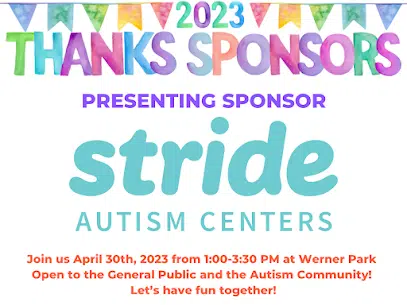
Stride Autism Centers® is thrilled to announce our Presenting Sponsorship of the upcoming Omaha Funfest on April 30th! Taking place in Werner Park from 1PM-3:30PM, this is going to be an incredibly fun and inclusive event. Whether you or someone you know is impacted by autism, or if you’re just looking for something new and exciting to do, you won’t want to miss out on this event.

We know how important it is for all of us to get together and have a good time, and we hope that Funfest will be the perfect way to do so! We can’t wait to come together in Werner Park and celebrate with you all. See you there.

Register for the event by clicking here.

Catch Up on Our Free Webinar: A Guide to Autism Diagnosis and Treatment for Caregivers

Did you miss the recent “Orientation to Autism Diagnosis and Treatment” webinar by Stride Autism Centers® and Blank Children’s Developmental Center? Don’t worry, you can still catch up on the valuable information shared during the session.

As a caregiver for a child with autism spectrum disorder (ASD), it can be overwhelming to navigate the steps involved in getting your child diagnosed and accessing appropriate treatment. That’s why Stride Autism Centers® and Blank Children’s Developmental Center partnered to offer a free webinar aimed at providing guidance and support during these early stages.

During the webinar, which took place on March 22, attendees learned about:

  • Navigating the autism diagnostic assessments
  • The post-diagnosis applied behavioral analysis (ABA) therapy assessment and treatment process
  • Strategies to implement at home while on a waitlist

The session was tailored to the earliest days of getting your child diagnosed with autism, helping attendees learn what to expect and how to best support their child through it.

If you missed the live session, you can still watch the recording and benefit from the expert insights shared by the presenters. Simply visit the Stride Autism Centers® website and look for the webinar video.

By taking advantage of resources like this webinar, caregivers of children with autism can gain the knowledge and skills needed to provide the best possible support for their child’s development and well-being. We hope you find this information helpful!

A special thanks to Blank Children’s Developmental Center for partnering with us on this helpful webinar.

Stride Partners with Blank Children’s Hospital to Offer Free Workshop

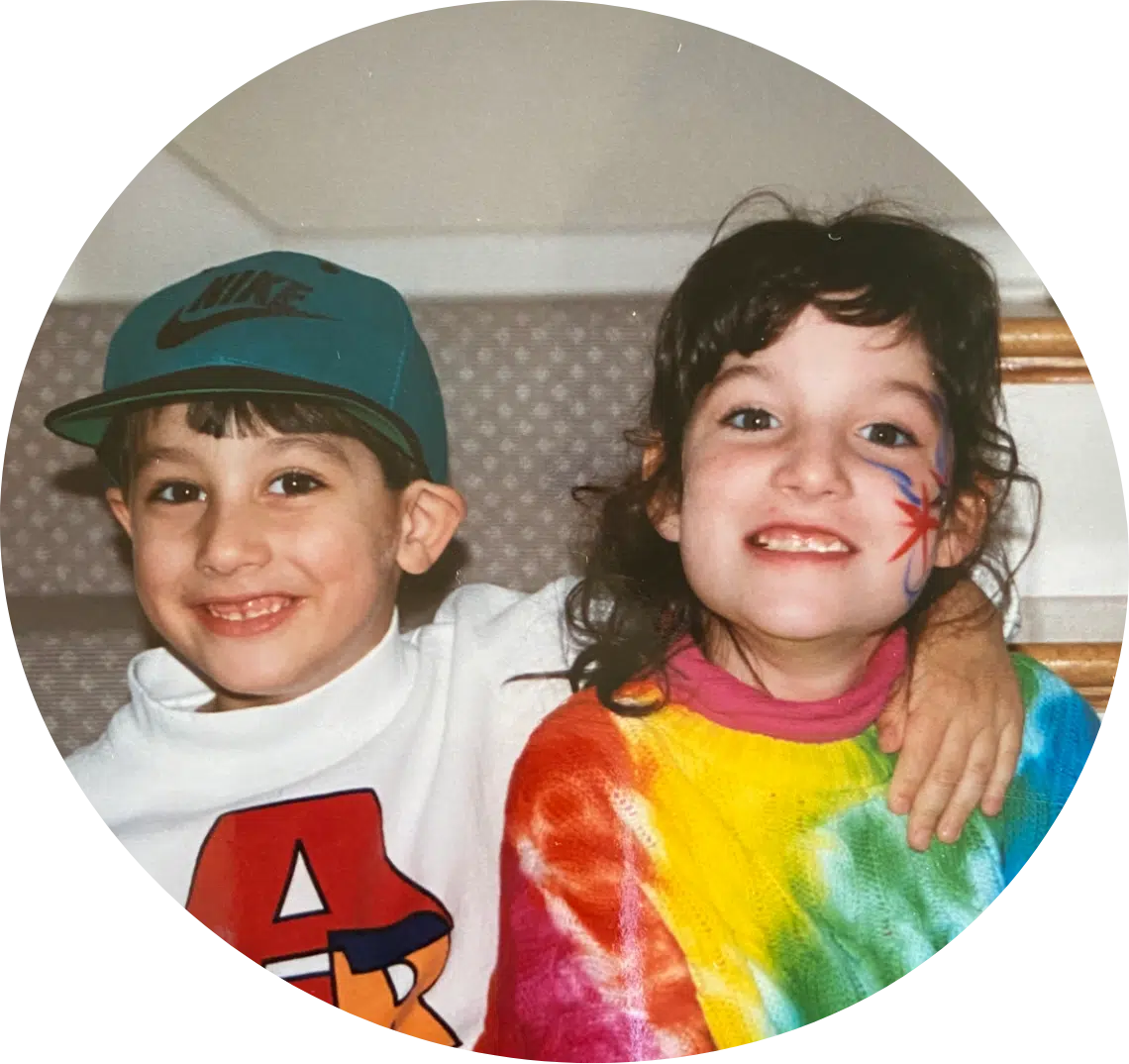
Our founder and his sister circa 1990

When you’re dealing with a new autism diagnosis or starting to suspect your child might have autism, you want information — and fast. As a caregiver for a child with autism spectrum disorder (ASD), you might be feeling like you need to learn a whole new language. Figuring out how to navigate the steps ahead may feel daunting.

We want to help. Blank Children’s Developmental Center and Stride Autism Centers® have partnered together to provide free workshops for caregivers of children with autism. And our first one is coming up on March 22 at 5:30 pm, delivering an “Orientation to Autism Diagnosis and Treatment.”

What you’ll learn

At this orientation-focused session, we aim to help you map out the ground ahead. We’ll be discussing:

  • Navigating the autism diagnostic assessments
  • The post-diagnosis applied behavioral analysis (ABA) therapy assessment and treatment process
  • Strategies to implement at home while on a waitlist

In other words, this session is tailored to the earliest days of getting your child diagnosed with autism. It helps you learn what to expect and how to best support your child through it.

How to join the first workshop

Good news: we’re offering these educational events completely free of charge. We believe it’s important to empower the caregivers of children with autism with the information they need.

In fact, to make it as convenient as possible to join us, we’re offering all of our workshops, including this first one, both in-person and on Zoom. You can join us live at:

Blank Children’s Developmental Center (2nd floor)

4055 Westown Parkway
West Des Moines, IA 50266

Or, if you’d prefer to attend virtually, sign up for the workshop and we’ll send you a Zoom link.

To save your spot at the “Orientation to Autism Diagnosis and Treatment” either way, register today.

Join Our Open House in Orland Park

Our Stride Autism Centers® team recently opened a new location in Orland Park, Illinois. We’re elated to be part of the community and we can’t wait to help local preschoolers with autism thrive.

As we get settled and established in our new home, we wanted to invite you to check us out. With that in mind, we’re holding an open house on Wednesday, March 1 and we hope you can join us! We’ll be offering everything from guided tours and appetizers to free autism screenings for kids under 6.

Orland Park open house event details

Where: 18080 Wolf Rd, Orland Park, IL

When: March 1 from 4:30–7:30 pm

Who: Everyone is invited (bring the kids)!

What to expect: if you want to learn about autism, the leading treatment for it (applied behavioral analysis [ABA] therapy), or what a preschool specifically designed for children with autism looks like, this event is for you.

At this open house, our clinical, enrollment, and recruiting teams will all be available to answer any questions you might have. We’ll also be offering an information session on autism and ABA therapy along with guided tours of the new center.

Perhaps most importantly, our team of autism specialists will be offering free on-site autism screenings for children under the age of 6. We’re setting up this screening because we know a lot of parents want clarity about their children but don’t know where to get it. With a free screening built into a fun event for the whole family, we’re aiming to provide a comfortable way for you and your kids to get the information you need.

If you have any questions about the event, don’t hesitate to email us at [email protected]. Or if you know you’d like to attend the open house, reserve your free spot today!

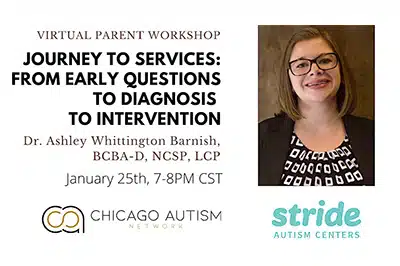
Webinar: Journey to Services: From Early Questions to Diagnosis to Intervention

Stride Autism Centers® invites you to a free virtual event tomorrow evening specifically tailored to parents of children with autism. Join Ashley Whittington-Barnish, PhD, LCP, BCBA-D, NCSP, our Clinical Director, as she explores “Journey To Services: From Early Questions to Diagnosis to Intervention.” The no-cost online event runs from 7–8 pm CST. Sign up here to join us.

Sleeping Strategies for Kids with Autism

Sleep matters for everyone, but it can become especially important in households with children with autism. When kids aren’t getting the rest they need, they have a more difficult time reguating their emotions and reactions.

At the same time, when children aren’t sleeping, it’s harder for parents to get the time they need for themselves. That could interfere with your own sleep, too.

There are, however, specific actions to make everyone’s nights easier. Here are a few sleep strategies you can employ to help your child (and yourself) to get a good night’s sleep.

#1: Optimize their bedroom

Because autism changes sensory perception, your child’s surroundings when they go to bed matter a great deal. Ask them about how they like their bedroom to be when they go to sleep. They might be able to tell you specific things that bother them, like a night light that’s too bright or bedsheets that feel scratchy.

It might also be helpful to change their bedroom so that there’s less visual clutter they can see from their bed. Fill the room with soft materials — both in terms of texture and color. You want to create a calming, comfortable environment that encourages rest and relaxation. Stray from bright colors and bold patterns.

Also, think through their pajamas. They should also be soft and comfortable, especially if your child has hypersensitivity to touch.

#2: Establish a routine

Children with autism spectrum disorder usually struggle with the unexpected. To make getting to bed each night easier on the family, set a bedtime routine and stick with it. That means starting to think about getting to bed at the same time each night.

For example, if your child has an 8 o’clock bedtime, you might start changing into pajamas and brushing teeth at 7:30. After that, you could get into bed and read one or two bedtime stories.

Once your child learns this routine, it should help them prepare themselves — both physically and mentally — for going to sleep on a nightly basis.

#3: Talk to their therapist

You don’t have to navigate your child’s sleep challenges on your own. If they’re seeing an applied-behavior analysis (ABA) therapist — something that has been backed by research for the benefit of preschool-aged children — that person can help.

It is recommended to share sleep obstacles with them. They can work with your child during the day to modify problematic behaviors at night. At the same time, the therapist may be able to recommend specific tools you can use during bedtime to help your child.

What your child does during the day, including their time with an ABA therapist, can help you at night. Don’t hesitate to involve your child’s ABA team in any sleep challenges. Doing so can help your child get the rest they need, supporting their day-to-day happiness and their healthy development.

If you want to talk to a team of ABA specialists about sleep strategies for your child, get in touch. At Stride Autism Centers®, we offer ABA programs for preschoolers that are designed to support them in their overall lives — and that includes at bedtime.

Navigating the Holidays with Autistic Children

The holidays can be overwhelming for any of us. When a child lives with autism, though, many things can be especially challenging. Sources of comfort — like their normal routine — get stripped away and replaced with things that can be overstimulating, like new people and environments. The sights, sounds, and smells of the season can quickly feel like too much.

You want your child to be able to enjoy what many consider the most wonderful time of the year.

Fortunately, with some tools at your disposal, you can help them do just that. Here are a few ways to support autistic children during the holiday season.

Helping children with ASD prepare for the holiday season

Talk with your children before the holiday plans start to let them know what they can expect in light of celebrations. Explain what will happen in as much detail as they’re ready to process.

For activities outside the house, explain where you’re going and what you’ll be doing. Call out anything that you think might get them excited (e.g., “When we go to grandma’s house, you’ll get to play with the car toys there”).

Start these conversations well in advance. If you begin introducing them to what’s coming now, you can help to eliminate some of the newness and fear of the unknown that can come with holiday activities.

Changes in your home can also feel disruptive, so put some preparation work in there, too. You might show your child a picture of the Christmas decorations from last year before putting them up this year, for example. Or if new people will be coming over, talk about them and show your child pictures of them in advance.

Incorporate their passions

Many kids with autism have areas of specific interest, like trains, dinosaurs, or certain types of movies. The holidays offer a time to celebrate those interests.

Bring them up at the family dinner or when everyone is sitting around enjoying each other’s company. You may even want to brief friends and family members on the interest area beforehand so they can have something to talk about that your child will enjoy. Even if your child feels socially overwhelmed and doesn’t participate in the conversation, kids enjoy the opportunity to sit and take in people talking about something they like.

Those interest areas can also give you a great source of gift ideas, too. Consider sharing their favorites with anyone who might get them a gift. Getting a treasured toy can distract from the challenges of a missed routine.

Have a backup plan

Make a plan for what you’ll do if your child experiences sensory overload while you’re at a holiday event. If you’re going to a family member’s house, for example, you might ask them if there’s a quiet room you could use. That way, you have a place you can take your child to help them escape the overstimulation.

Also, remember that you can always leave. Friends and family will understand that you’re prioritizing protecting your child. With that in mind, you may want to take your own car to events this holiday season.

We’re also here to help. To work with our team that specializes in supporting preschool-aged kids with autism, get in touch.

How Does Behavior Therapy Help ASD?

Behavior therapy is therapy with the goal of helping the individual modify their behaviors. That could mean adopting healthier behaviors or working toward eliminating problematic ones.

When it’s tailored to kids with autism spectrum disorder (ASD), behavior therapy can be a powerful tool both for the kids and their families. By enforcing positive and healthy actions, it helps to set children up for success. At the same time, the therapist can share tools the family can use at home to further support the child with ASD.

Applied-behavior analysis therapy for ASD

Experts — including medical associations and the U.S. Surgeon General — recommend a specific type of behavior therapy for kids with ASD. It’s called applied behavior analysis therapy, or ABA therapy, for short.

As the name suggests, this type of therapy roots itself in the analysis of both behaviors themselves and the rationale behind them. In other words, ABA therapy explores how we act and why we act the way we act.

That makes it uniquely useful for children with autism. By incorporating what we know about autism with best practices in behavioral therapy, we can tailor sessions to give your child what they need to lead their healthiest, happiest life.

What ABA does for ASD

What does that look like, exactly? With ABA therapy, we can help kids:

  • Learn new verbal and nonverbal communication skills
  • Increase their capacity for focus/attention and memory
  • Move away from problem behaviors
  • Build social skills
  • Improve self-care and hygiene
  • Develop academically

ABA can take different forms. Children with autism often benefit from one-on-one sessions with a trained therapist alongside group sessions that use ABA principles. Here at Stride Autism Centers®, for example, Board Certified Behavior Analysts (BCBAs) oversee programs for both one-on-one therapy sessions and group activities.

Starting ABA early

ABA can help people of any age, but studies show that it’s more helpful for kids with autism when they start it young. Specifically, children benefit from beginning this specialized form of therapy between the ages of two and six.

That’s partially because ABA therapy evolves with your child. Through ongoing assessment, our BCBAs adapt your child’s program as they develop. This way, we can help your child get the support they need in the areas where they need it. While one child might struggle with communication, another may need help moderating harmful behaviors. What’s more, their growth areas will likely change through the years. With ABA, we tailor care to set your child up for success as they grow and develop.

If you’d like to learn more about how behavior therapy can help with ASD, don’t hesitate to talk to our team of ABA specialists. At Stride Autism Centers®, we offer ABA programs for preschool-aged kids with ASD. We blend one-on-one therapy with naturalistic group activities, all tailored to your child to help them thrive.

If you’d like to see what a behavior therapy preschool could do for your child with ASD, contact us.

What is Sensory Overload in ASD?

Anyone can get sensory overload. It can occur when an individual is in a loud or colorful environment. It can feel as though you’re taking in too much, leading to a pressing sense of overwhelm.

When someone lives with autism, this experience may become commonplace. A person with autism spectrum disorder (ASD) often has sensory hypersensitivity. For example, what might not sound loud to you can seem blaring to them.

Ultimately, supporting someone with autism means being aware of their heightened potential for sensory overload.

Sensory overload: one of the challenges of autism

Here, we’re talking about sensory overload, which people with autism more commonly experience because of oversensitivity in combination with their balance and spatial awareness. On the flip side, ASD can cause undersensitivity, making it hard to see details or discern verbal cues.

Ultimately, the sensory differences that someone with autism experiences present a significant challenge. And while hyposensitivity can make social settings and general daily living more difficult, hypersensitivity can send a person into sensory overload. As a result, they might have a meltdown or shut down completely.

To better understand sensory overload, let’s look at the way it affects the individual senses:

  • Sight: Things might seem brighter and it may be difficult to focus on the whole rather than individual details
  • Hearing: Settings might sound overly loud and background noise can be more difficult to filter out
  • Taste: Foods and drinks taste stronger or feel textured, which can result in picky eating
  • Touch: Being touched can feel uncomfortable and even painful, clothing may feel scratchy or otherwise intolerable, and certain food textures may be problematic
  • Smell: Odors are heightened, which can make perfume smell overpowering and bathroom activities challenging

Sensory overload can also affect someone with ASD’s balance and their awareness of their body, both as they move through the world and as it sends them cues (e.g., tells them they need to use the bathroom).

Signs of sensory overload

To be aware of sensory overload, look for these indicators.

  • Avoidance. Once the person with ASD recognizes that something overstimulates them (e.g., bright lights, certain fabrics in clothing), they usually actively try to avoid it. That can lead to challenges in adopting certain behaviors. That could be picky eating or refusal to enter certain environments, do specific activities, or wear certain clothes.
  • Stimming. Many children with ASD self-soothe through self-stimulatory behavior, or stimming. This usually looks like repetitive sounds or body movements.
  • Meltdown. A strong expression of emotion indicates that the person is experiencing sensory overload.
  • Shutdown. In sensory overload, the child may stop talking or responding in general. They may even cover their eyes or ears in an effort to block out the overstimulation.

If you have a child with ASD, tune into how they experience the world. Once you learn what’s bothering them, you can start making modifications to help them. That may mean dimming the lights, enjoying quiet time at home, choosing softer clothing for them, etc.

Here at Stride Autism Centers®, we can also help you both identify hypersensitivity in your child and find the right modifications to help them succeed. What’s more, we’ll adopt those modifications here at our Centers so they can enjoy their time with us as much as possible.

To learn more about how we help preschoolers with ASD, get in touch.

Call Now Button