
On September 25, the University of Illinois College of Education hosted its 21st annual Goldstick Family Lecture, made possible through the generosity of the Goldstick-Zelinger family. This year’s event featured Dr. Zach Rossetti, a nationally recognized scholar focused on inclusive education and friendships among children with intellectual and developmental disabilities (I/DD).
Dr. Rossetti’s talk, “Prioritizing Friendship in School and Community,” emphasized why friendships are not just “nice to have” but essential relationships that foster belonging, growth, and joy for all children.
Why Friendship Matters
Friendships are more than playdates or shared activities. They are personally valuable and developmentally vital. For children with autism and other developmental disabilities, friendships often serve as a bridge between isolation and inclusion. “Friendship can be the bridge between isolation and belonging, between silence and laughter, between being seen and being celebrated.” — Dr. Zach Rossetti This powerful reminder framed the lecture’s message: friendship is not simply about practicing social skills, but about creating authentic human connectionsBarriers Are About Opportunity, Not Just Skills
One of the lecture’s key takeaways is that opportunity barriers, not a lack of social skills—often prevent friendships from developing.- Children with I/DD are too often separated from peers in classrooms or community settings.
- Adults may unintentionally over-structure interactions, making them less natural.
- Without purposeful inclusion, chances for real peer connection are missed.
Adults Play a Critical Role
The lecture emphasized that direct support from adults is a critical facilitator of friendships. Teachers, families, and service providers can help by:- Creating shared experiences where children of all abilities learn and play together.
- Supporting peers in learning how to communicate and include.
- Valuing relationships alongside academic or therapy goals.
How Stride Brings This to Life
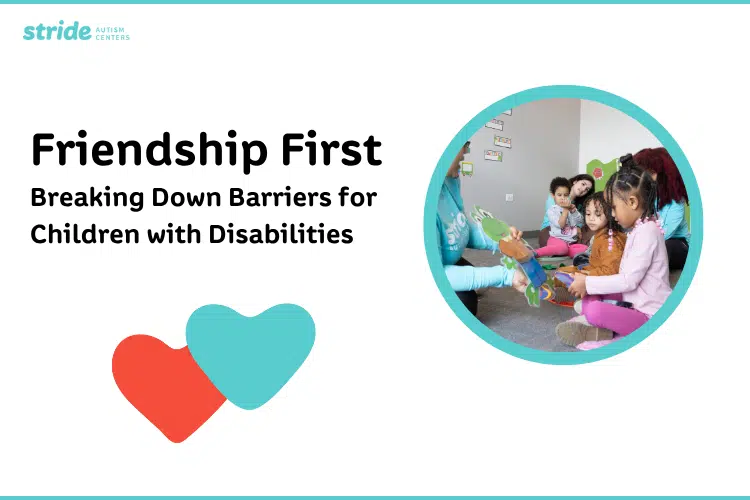
At Stride Autism Centers®, we see every day how friendships strengthen children’s confidence and social growth. Our center-based model is uniquely designed to support this balance:- Personalized 1:1 therapy ensures each child is working toward their individual goals.
- Natural group activities give children the chance to practice those skills in real social settings like playing, sharing, learning, and making friends.