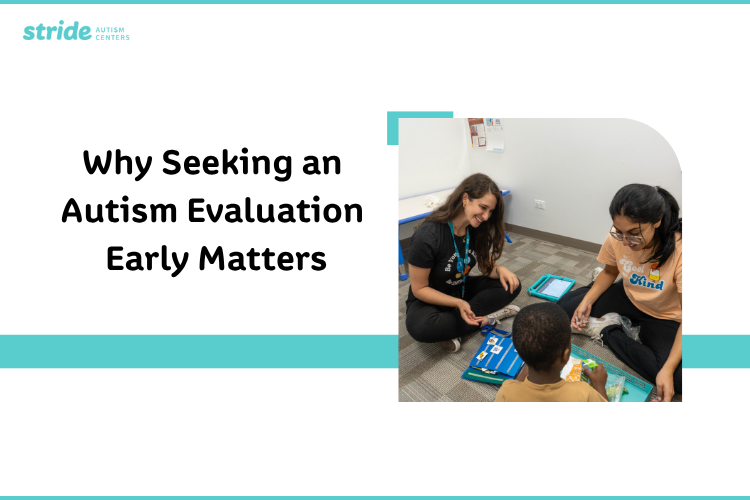
If you’ve noticed your child is developing differently, whether that’s in speech, social interactions, or daily routines, you may be wondering if autism might be a possibility. The thought of an evaluation can feel overwhelming, and it’s common to wonder if you should “wait and see.”
But here’s the truth: the sooner you seek an evaluation, the better. Early evaluations are not about labeling your child, they’re about unlocking support, therapies, and resources during the years when they matter most.
What an Autism Evaluation Involves
Autism evaluations are typically conducted by developmental pediatricians, child psychologists, neurologists, or multidisciplinary teams. While every clinic or hospital may do things a little differently, most evaluations include:- Parent or Caregiver Interview: You’ll share your child’s developmental history, behavior patterns, and everyday routines.
- Observation and Interaction: A professional will watch how your child communicates, plays, and responds to different prompts.
- Standardized Tool: Tests such as the ADOS-2 or ADI-R are often used to guide diagnosis.
- Review of Records: The clinician may consider notes from your pediatrician, teachers, or other therapists.
Why Timing Is Critical
One of the biggest hurdles families face is waitlists. In many areas, it can take 6–12 months or more to get an appointment for an evaluation. Every month matters in early childhood, when the brain is most adaptable and children are learning at lightning speed. By getting on a waitlist right away:- You secure your spot, even if the appointment is months away.
- You prevent the regret of realizing, a year later, that your child could already be receiving support.
- You open the door to insurance-covered therapies like ABA, speech, and OT, which generally require a formal diagnosis.
A To-Do List for Parents
If you suspect your child may have autism, here are steps you can take today:- Call your pediatrician – Ask for referrals to specialists who conduct autism evaluations.
- Contact your insurance company – Request a list of in-network providers who perform developmental assessments.
- Reach out to local hospitals or university clinics – Many children’s hospitals have developmental centers, though waitlists can be long.
- Ask about Early Intervention programs – If your child is under age three, state-funded early intervention may help connect you to evaluators quickly.
- Get on multiple waitlists – Don’t stop with one provider. Call several and book the earliest available appointment, even if it’s months away.
- Consider nearby communities – While evaluations typically need to be completed in-state for insurance purposes, many families travel outside their immediate city to secure an earlier appointment. If a diagnostic provider in a neighboring community has shorter wait times, it may be worth the extra drive.
- Write everything down – Keep notes on who you called, dates offered, and any paperwork required. This will help you stay organized and avoid delays.
What Happens After a Diagnosis
If your child receives a diagnosis, it opens doors to services that may otherwise be difficult to access. For most insurance providers, a formal autism diagnosis is required before they will cover ABA therapy and related supports. With a diagnosis in hand, families often move forward with:- ABA therapy, which helps build communication, social, and self-care skills.
- Speech therapy, supporting language or augmentative communication.
- Occupational therapy, strengthening independence in daily routines.
- Educational supports, such as early intervention or IEPs once your child begins school.
Managing the Emotions
Hearing the words “autism diagnosis” can bring up a mix of emotions, relief, sadness, fear, or uncertainty. All of these feelings are normal. Here’s what’s important to remember:- Autism is not your fault. Parenting doesn’t cause autism. It’s how your child’s brain is wired.
- A diagnosis doesn’t change who your child is. They are the same child you love today as they were yesterday.
- Autism is part of your child’s identity. It shapes their perspective, their creativity, and what makes them uniquely them.
- Support is available. With the right therapies, coaching, and community, your child can build confidence, independence, and joy.